ERBIL, Kurdistan Region - The Islamic State (ISIS) continues to pose a threat in Iraq and Syria, the United Nations’ top counter-terrorism official warned, noting that the prompted withdrawal of Kurdish-led Syrian Democratic Forces (SDF) from a camp holding suspected ISIS affiliates in northeast Syria has created new security and humanitarian challenges.
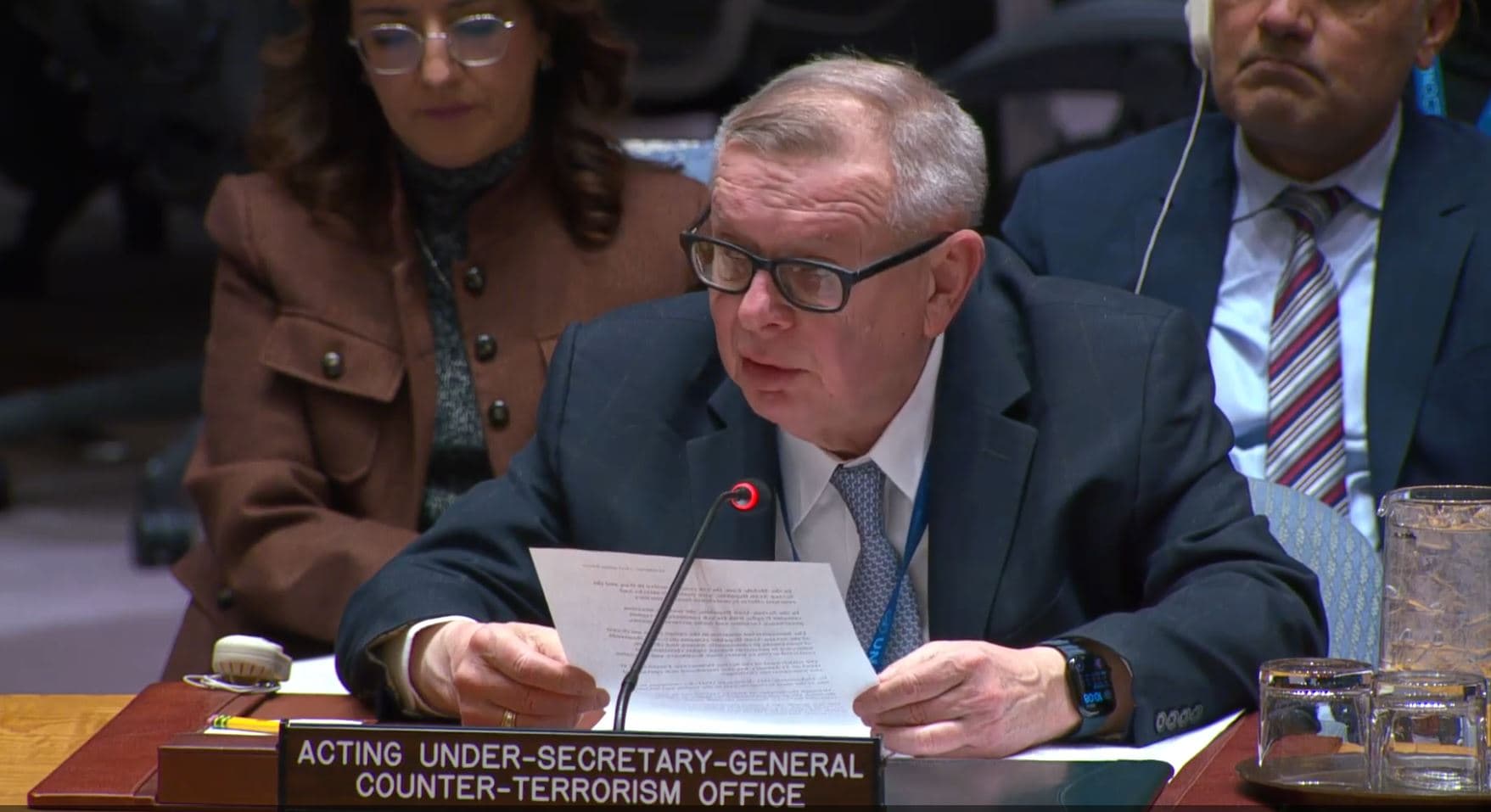
In his Wednesday report to the UN Security Council’s member-states on the threats to international peace and security, Alexandre Zouev, acting under-secretary-general of the UN counter-terrorism office, said that in the Middle East, “Daesh [ISIS] remains active in Iraq and the Syrian Arab Republic, with continued attacks and renewed efforts to destabilize local authorities.”
He added that in Syria, “the security situation remains very fragile, with Daesh [ISIS] continuing to exploit governance vacuums and incite sectarian tensions.” Zouev also noted that “the withdrawal of the Syrian Democratic Forces (SDF) from al-Hol camp on January 21 has introduced new operational and humanitarian challenges.”
Al-Hol camp, located southeast of Hasaka in Rojava, was secured by the SDF and Kurdish Internal Security Forces (Asayish) until late January. The camp housed suspected ISIS affiliates, including women and children of militants, and has long been notorious for dire conditions and the presence of radicalized individuals.
In mid-January, the Syrian Arab Army and allied armed groups advanced into SDF-held areas across eastern Aleppo, Deir ez-Zor, Raqqa, and Hasaka province. The SDF, a key ally of the US-led Global Coalition to Defeat ISIS, had previously liberated these areas and maintained control to prevent an ISIS resurgence.
Amid the Syrian offensive, the SDF stated, “Due to the international indifference toward the issue of the ISIS terrorist organization and the failure of the international community to assume its responsibilities… our forces were compelled to withdraw from Al-Hol Camp.”
Sheikhmous Ahmed, an official from the Kurdish-led administration in Rojava, overseeing internally displaced persons (IDP) camps, told Rudaw English that “a total of 7,130 families - 25,183 individuals - were held at al-Hol camp prior to the SDF’s withdrawal.” He added, “It remains unclear how many detainees have fled and who currently controls the camp.”
Around the same period, the SDF also said it lost control of al-Shaddadi prison in southern Hasaka to Damascus-affiliated armed groups. An SDF spokesperson, Farhad Shami, then told Rudaw that around "1,500 ISIS militants - including both foreign and Syrian nationals - had been released" by Damascus-affiliated armed groups from the facility.
The SDF continues to control several prisons in Rojava, including the high-security Ghuwayran facility in southern Hasaka.
Ghuwayran drew international attention in January 2022 when ISIS launched a massive operation to free thousands of fighters, including hundreds of minors raised under the extremist group’s “Cubs of the Caliphate.” After a brutal 10-day battle, the US-backed SDF regained control, though the facility is still considered a “ticking time bomb.”
The Syrian offensive also triggered a wave of displacement, with UN officials estimating that 100,000 people, mostly Kurds, were forced to flee affected areas.
Zouev emphasized on Wednesday that “the humanitarian situation in the camps in northeast Syria remains dire, with thousands of individuals, predominantly women and children, subjected to persistent human rights violations and restricted access to water, food, healthcare, and education.”