
ERBIL, Kurdistan Region - The Turkish defense ministry announced on Thursday that its cross-border operations against the Kurdistan Workers’ Party (PKK) continue. The statement comes just days after the Kurdish group declared its decision to dissolve itself and disarm, expressing hope that Ankara would take concrete steps to advance the emerging peace process.
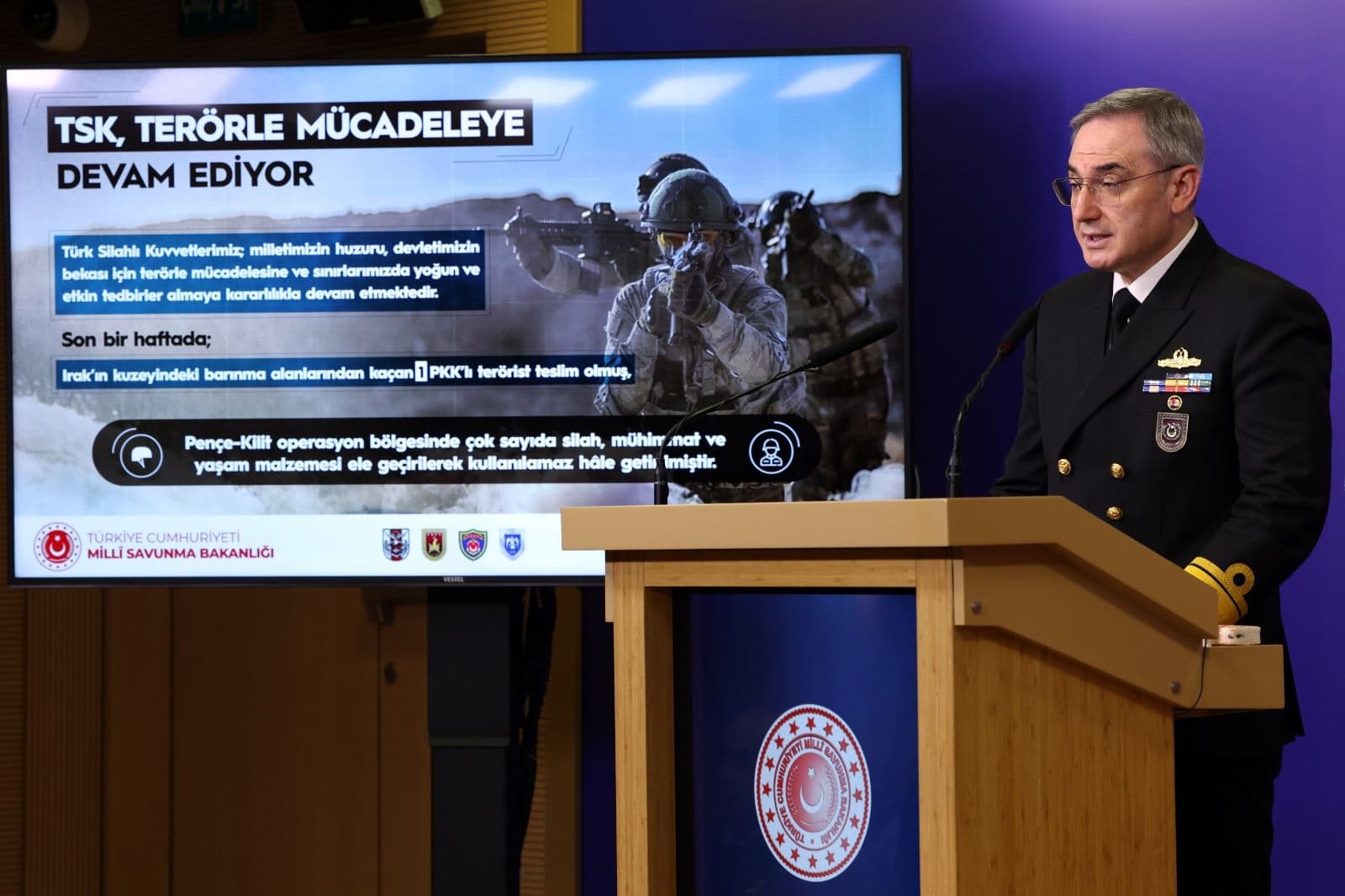
In a Thursday briefing, the Turkish defense ministry’s Spokesperson Zeki Akturk stated that the Turkish Armed Forces (TAF) are continuing to take “intensive and effective measures” against the PKK at Turkey’s borders with the Kurdistan Region and northeast Syria (Rojava).
Akturk noted that "within the scope of the ongoing Operation Claw-Lock," Turkish forces have recently seized "a large number of weapons, ammunition and living materials from the caves” belonging to the PKK, rendering them unusable. He also reported that one PKK member “surrendered” during the week, highlighting what he called “the effectiveness of the ongoing search and screening activities” in the region.
Operation Claw-Lock was launched by Turkey on April 18, 2022 with the goal of targeting PKK positions in the Metina, Zap, Avashin, and Basyan areas in northern Duhok province along the Turkish border.
In Syria, Turkish forces have destroyed extensive underground infrastructure used by the PKK and the People’s Protection Forces (YPG), Akturk said, elaborating that “since January 8, approximately 99 kilometers of tunnels in the Tal Rifaat region and 112 kilometers in the Manbij region have been destroyed.”
The YPG is the backbone of the Kurdish-led Syrian Democratic Forces (SDF) – de facto army of Rojava.
Founded in 1978, the PKK initially sought an independent Kurdish state but later shifted its focus toward securing broader political and cultural rights for Kurds in Turkey.
The group announced on Monday that it would disband and end its decades-long armed conflict with the Turkish state, calling it a step toward a peaceful resolution. The group reported intense bombardment by Turkey while they were holding their much-anticipated congress.
Turkish President Recep Tayyip Erdogan stated on Wednesday that Turkey’s intelligence services will closely monitor the PKK to ensure the group follows through on its pledge to dissolve and disarm.
Erdogan described the PKK’s decision as indicative that “we have entered a new phase in our efforts for a terror-free Turkey.”
“The era of terror, guns, violence, and illegality has now come to an end,” he stressed.
For his part, Akturk, stated in his Thursday briefing that the PKK’s decision “should be implemented without wasting time,” warning, “We are careful and prepared against any situation that could sabotage the process, including verbal and action-based provocations.”
Akturk concluded, “Land search and scanning operations, detection and destruction of caves, shelters, mines and homemade explosives… will continue with determination until it is ensured that the area is cleared and will no longer pose a threat to our country.”
Meanwhile, a member of the Community Peacemaker Teams (CPT) - a US-based human rights organization monitoring Ankara’s operations in the Kurdistan Region - told Rudaw on Thursday that Ankara has “bombed Mount Metina and Mount Gara in [the Kurdistan Region’s northern] Duhok province eight times since the PKK’s decision.”
Kamran Osman added, “In addition to the bombings, Turkish drones are still flying over the villages along the slopes of Qandil, Khwakurk, and Khunera.”
According to the American organization’s statistics, the Turkish military has carried out more than 500 airstrikes in the Kurdistan Region since the beginning of this year, most of them targeting the borders of Duhok province, followed by Erbil and Sulaimani.