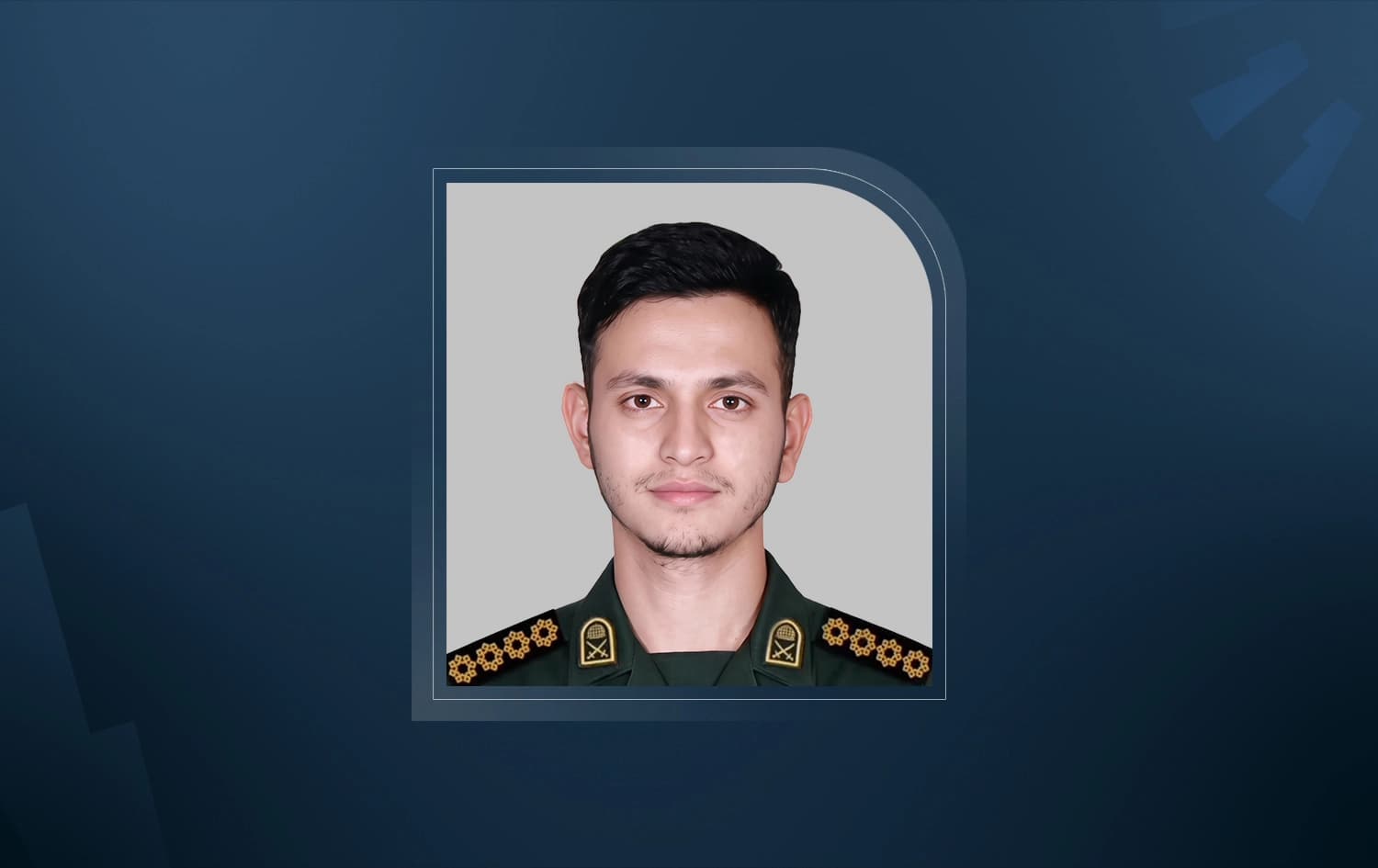

Erbil, Kurdistan Region - Iranian authorities executed a 19-year-old protester, detained during the nationwide anti-government protests in January, in the early hours of Thursday - coinciding with a speech by US President Donald Trump to the American public about the war in Iran.
Amir Hossein Hatami was arrested by agents of Tehran’s Islamic Revolutionary Guard Corps (IRGC) in early January and convicted of participating in an attack on a restricted military facility during the antigovernment protests.
Iranian authorities claimed that during the protests - which they frequently label as riots - Hatami and six others attempted to seize a small arms cache from an IRGC-affiliated Basij base armory in eastern Tehran.
Hatami was forced to make televised confessions, apparently under duress, with the IRGC-affiliated Tasnim News Agency on Thursday claiming that he admitted that his aim was to overthrow the Iranian regime.
The 19-year-old was later charged with moharebeh, waging war against God, and efsad-e-fel arz, spreading corruption on earth. The two offenses are punishable by death in Iran.
Hatami's execution on Thursday followed the rejection of his appeal.
The backdrop
Earlier this year, Iran faced its most significant internal security crisis in years, sparked by a wave of anti-government protests following a historic currency collapse that sent the Iranian rial to a record low of 1.45 million rials per US dollar.
The uprising began on December 28, when merchants closed their shops at the Alaeddin Mall in Tehran’s Grand Bazaar, and quickly spread to at least 27 of Iran’s 31 provinces.
Tehran has not released an updated death toll, but the government crackdown resulted in the killing of thousands of demonstrators, particularly on January 8 and 9, when security forces used live ammunition in events documented by Amnesty International and other monitoring groups. Shocking images of body bags in a morgue in southeast Tehran Images of body bags in a morgue in southeast Tehran then sent shockwaves across the world.
According to the US-based Human Rights Activists News Agency (HRANA), as of February, over 7,000 protesters had been killed, roughly 11,750 deaths remain under review, and more than 5,800 others were seriously injured.
Additionally, around 53,000 people were arrested, with authorities labeling them as agents of Israel and the United States, and vowing to avenge the deaths of security personnel during the unrest.
The timing
The timing of Hatami’s execution notably coincided with the 33rd day of the Iran-Israel-US war on Thursday.
Washington and Tel Aviv on February 28 launched a coordinated military campaign against Iran. The US Central Command (CENTCOM) reported on Thursday that since the start of the operation - dubbed Operation Epic Fury - its forces have conducted more than 13,000 combat flights, targeted over 12,300 sites and destroyed or damaged more than 155 Iranian vessels.
CENTCOM Commander Brad Cooper stated last week that the operation aims to “eliminate Iran’s ability to project power in meaningful ways beyond its borders.”
Coinciding with Hatami’s killing, US President Donald Trump addressed the American public on the ongoing war, threatening to strike Iran “extremely hard over the next two to three weeks,” adding, “We’re going to bring them back to the Stone Ages, where they belong.”
Coinciding with Hatami’s killing, the US President was addressing the American public on the ongoing war, threatening to strike Iran “extremely hard over the next two to three weeks.”
“We’re going to bring them back to the Stone Ages, where they belong,” Trump said.
He further stated that Washington had deliberately refrained from targeting Iran’s oil infrastructure, describing it as “the easiest target of all,” and warned that striking it would leave the country with “not even a small chance of survival or rebuilding.”
Trump also accused Iranian authorities of killing 45,000 protesters during the January uprising.
Wartime reprisal?
Since the outbreak of the Iran war in late February, the Iranian government has launched a sweeping domestic crackdown. Official figures released by Tehran indicate that at least 1,500 people were arrested in March alone - a number independent groups, including Human Rights Watch (HRW), warn is likely far higher.
Iranian police on Tuesday announced the arrest of 446 individuals over online activities, including filming sites hit by missile strikes and sharing footage of labor strikes and civil unrest. The Iranian judiciary has also frequently charged those who record or distribute such material with moharebe and of engaging in “propaganda for the enemy;” another offense that can carry the death penalty.
Volker Turk, the United Nations High Commissioner for Human Rights, criticized the arrests on Wednesday, stating in a video message, “As if the pain and the suffering brought on by the war is not enough, some Iranians are being arbitrarily rounded up, jailed, prosecuted without due process and, in some cases, even executed by their own government.”
He noted that at least eight executions have already been reported, three of them linked to the January protests, while estimating that around 2,345 people have been arrested in Iran on charges tied to national security - including “terrorism, dissent, alleged espionage, and ‘cooperation with the enemy.’” These arrests are unfolding as a nationwide internet blackout in Iran enters its fifth week, Turk noted.
Meanwhile, Bahar Saba, a senior Iran researcher at HRW, noted in a Wednesday report that “prisoners, including thousands of arbitrarily detained people in Iran, are facing dual threats: violence at the hands of authorities with a track record of prison massacres, as well as US and Israeli bombs.”
Saba added that detainees - “many of whom should never have been detained in the first place” - are “unable to seek safety” and “are facing human rights violations, serious injury, and death.”
Along with Hatami, six other protesters accused of participating in the same alleged attack on a Basij base in early January are also on death row.