ERBIL, Kurdistan Region - As Iran expands use of state-approved platforms and limited government-controlled internet access following the war with the US and Israel, many Iranians are turning to underground VPN networks to stay connected, with prolonged restrictions increasingly disrupting businesses, communication, and daily life.
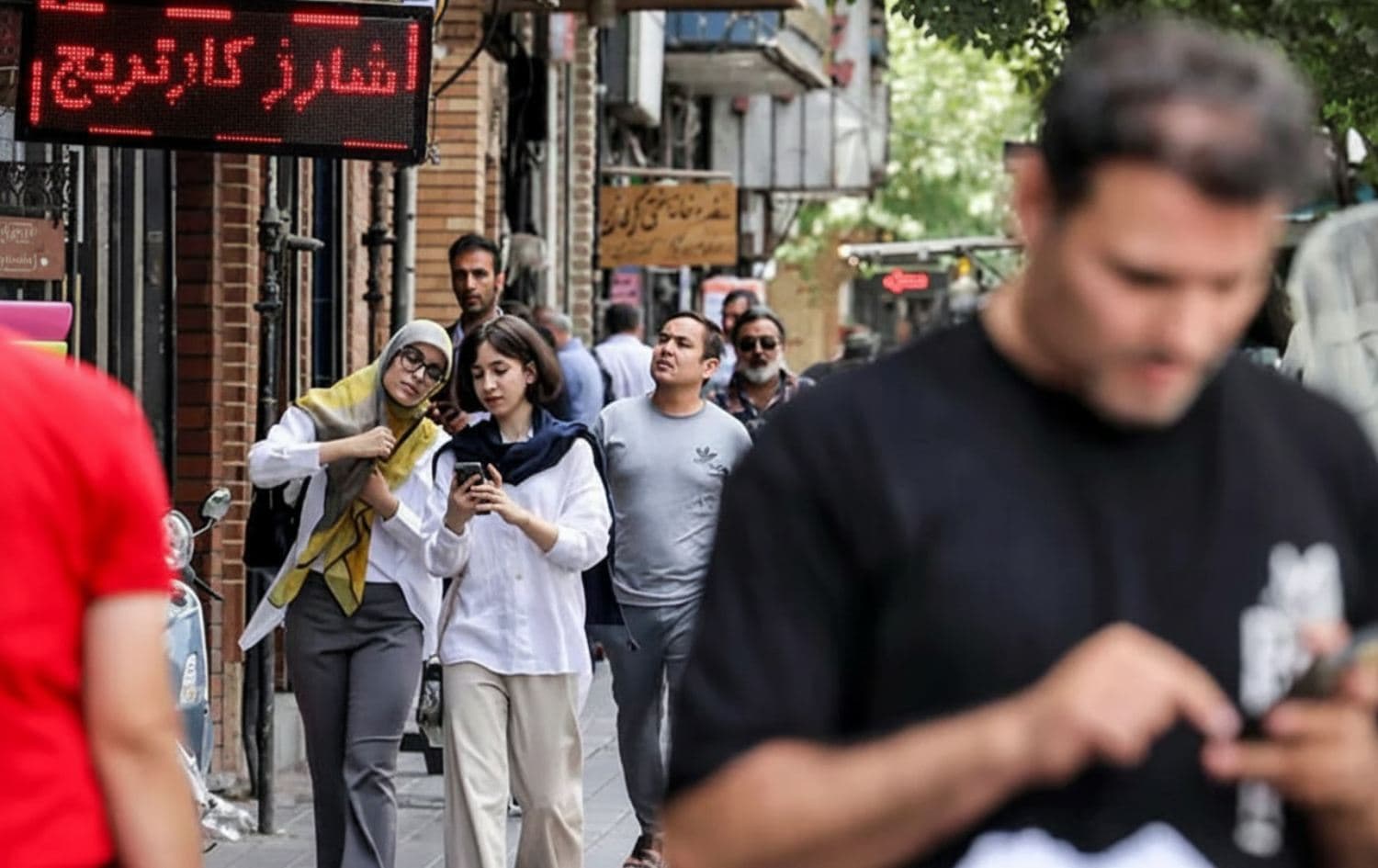
I visited a small shop on a main street that sells SIM cards and internet services. Three or four people were inside. I greeted them. Two men working there responded without looking up from their screens.
"So, could there be anything that might help us?" I asked. One of them looked up and recognized me. "Unfortunately, no," he responded with a smile. "My work is urgent, even something limited…” I said.
"There isn't. You know how the situation is,” he replied.
I said goodbye and left.
The conversation felt more like one between people trading illegal substances. In reality, I was trying to buy a VPN, something that has effectively become prohibited in Iran in recent months.
More than two months have passed since the start of the US-Iran war on February 28. Since then, access to the global internet has been heavily restricted in Iran.
Over the past 25 years, internet access has gradually expanded across the country, though never at the level of openness seen elsewhere. Platforms such as Facebook, YouTube, Instagram, and Telegram, along with many international media websites, were already filtered under normal circumstances. Still, people had become accustomed to bypassing restrictions using VPNs and other filtering circumvention tools.
In the past decade, particularly after the development of digital banking systems and social media platforms, Iran’s digital economy grew rapidly. Online services expanded into commerce, education, the arts, and other sectors, especially after the COVID-19 pandemic accelerated internet-based services.
During nationwide protests in January, Iranian authorities imposed a near-total internet blackout across the country. Less than a month after access partially returned, the outbreak of war with the US and Israel brought another round of severe restrictions.
The repeated shutdowns have placed enormous pressure on Iran’s digital economy. The issue has become a major public concern, with demands growing daily for internet access to return to normal.
Iranian Social Affairs Minister Ahmad Meydari said 50 days after the war that "due to the war situation, one million businesses disappeared and two million people became unemployed."
Iran's Digital Commerce Council also said in a recent statement that "in the three months of winter, 120,000 billion tomans ($800 million) in damages hit the digital economy sector."
For years, Iranian authorities have prepared for this kind of isolation by developing the National Information Network (NIN), a domestic intranet system designed to keep banking, government, and administrative services operational even while disconnected from the wider global internet.
While many citizens had long resisted using state-approved platforms, recent restrictions have forced increasing numbers of people onto local applications such as Rubika and Eitaa.
Still, many needs cannot be met through Iran’s internal network. Large numbers of people - including both users of government platforms and those who avoid them - continue searching for ways to access unrestricted internet through VPNs, known locally as “filter-breakers.”
To better understand how this underground system works, I spoke with Farzad, a 46-year-old computer engineer working in software and networking.
"The filtering issue dates back to the emergence of the internet in Iran. I myself participated in the first filtering congress in 2003 in Tabriz [city]. From day one, the government didn't like people using the open internet,” he said. “Iran has continued for over 20 years to organize an internal internet, and with Chinese assistance has been able to advance. But Iran's project to close the open internet faces obstacles in the short term. It can't fulfill some needs.”
Farzad said VPN providers generally fall into two groups.
The first group, he explained, consists of small IT teams “who try to make free VPN to help people and activists.”
“I myself help that group,” he said. He added that Iranian authorities cannot fully stop such groups.
“We work voluntarily… and are connected together - we're also very few. During the 12-day war, several people from that group were arrested,” he said, referring to the Iran-Israel war in June.
The second group, he said, includes individuals “who have access to open internet in some government places, government media agencies, or other places, and secretly tunnel traffic through their servers to themselves.”
“Based on that, they make limited VPN and sell it,” he added.
According to Farzad, the largest part of the market is controlled by “some mafia within the army and security facilities who systematically have access to equipment and sell it. Their purpose is profit and money."
I asked him how authorities could simultaneously restrict internet access for security reasons while government officials provide access underground.
"In reality, the government knows that with complete closure, there are many people in society whose life and livelihood are tied to the internet. So they've understood that if it's not available in a limited way, people will resort to buying Starlink, and they'll lose control,” he responded.
“They want VPN to be expensive in the market and used minimally, and those who really need it, instead of Starlink, resort to something less prohibited,” he added.
In recent months, thousands have been detained for accessing the global internet without authorization, including through satellite services such as Starlink, which provide high-speed connectivity.
Farzad also said Iran’s internet restrictions have “become strong with Chinese equipment and support.”
He noted that programmers and scientists opposing the Chinese government have increasingly relied on V2Ray, an open-source protocol designed to bypass advanced censorship systems in countries such as Iran and China.
I also met Hemn, a mobile phone and accessories seller who secretly sells VPN services.
"I've been selling filter-breakers for a while due to weak business. I don't sell unless it's to someone I know and trust,” he said. “From the start of the war, they [authorities] monitored the market very carefully.”
“The police came to the shop twice and warned me against selling it,” he said. “They have tracked and questioned some shop owners.”
“From the start of the war, one giga[byte] sold for one and a half million [Iranian currency], equivalent to ten dollars. Now the price has dropped to half because there are many sellers,” he added.
Hemn said he receives VPN access from another broker and that by the time it reaches him “it's been transferred four times.”
Despite high demand, he said, sellers cannot serve everyone because of the risks involved.
The restrictions have also devastated many small businesses that relied on social media and online commerce.
Milad, a 30-year-old electronics seller, spent years importing products and marketing them online through Instagram and his website.
"For several years, like other people in Iran, with the help of my shop's Instagram page, I sold my goods. I also had special foreign goods - my goods in the market were somewhat different,” he said. “Due to the lack of internet, I lost all my online business.”
“Now I can't sell things online. Here, everyone was making business through Instagram, but there are many other people whose businesses have completely collapsed,” he added.
To survive financially, he said he began repairing mobile phones and merged his inventory with another business owner to split rent costs. “I'm trying to just save my business.”
Independent journalism has also been affected.
Over the past decade, many local news initiatives emerged through Telegram and Instagram pages covering local events and public affairs.
Jamal, a 44-year-old man with a doctorate in history, said he was unable to secure employment in Iran’s education sector and instead turned to digital media.
“With the development of members and followers of my page, by publishing advertisements, I earned an income,” he said.
But the blackouts destroyed that source of revenue.
I also spoke with Runak, a 39-year-old woman whose spouse lives in Germany. She is waiting to complete immigration procedures and says internet access is essential for communication with consulates and her family abroad.
"If the demonstrations and war hadn't happened, now the embassy section work would be at its end. My situation is such that I can't be cut off from the internet,” she said.
Runak said she has paid large sums for internet access that often stops functioning after only a short time. “Sometimes after one day it would stop working, and no one would respond because the sellers would say, ‘It's your luck how long it stays active. We too buy it like you and don't know how long it will work.’”
"Without free internet, I can't contact my spouse. I must wait for instructions and letters from the consulate and embassy emails. So I need it. It can't be done with the Iranian [government's internet],” she said.
She added that many people have relied on VPN access to communicate with worried relatives abroad. “They were very worried about their families,” she said.
Recently, Tehran has rolled out Internet Pro, a state-approved, paid, and filtered internet service designed to provide limited global internet access to approved businesses, academics, and specific professionals. Applicants must register, complete forms, and provide legal and security commitments to obtain access.
The service is not available to the general public, remains expensive, and still limits access to some social media platforms.
A special correspondent in Iran’s Kurdish-majority western areas (Rojhelat) contributed to this report. The correspondent’s name has been withheld for security reasons.
Names in this report have been changed to protect identities.