


Iran

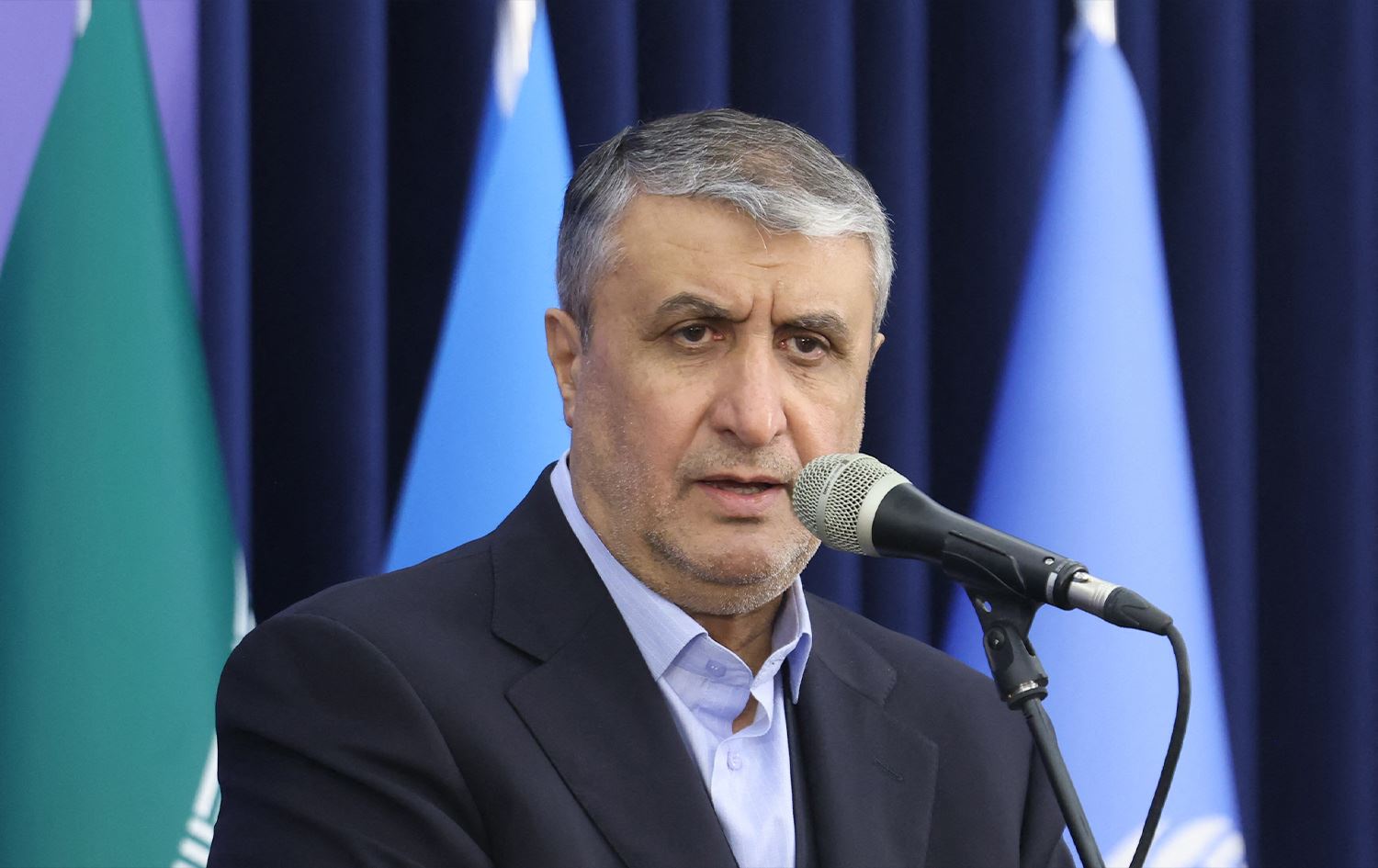
Mohammad Eslami, head of the Atomic Energy Organization of Iran (AEOI), speaks during a joint press conference with the United Nations nuclear chief in Tehran on November 14, 2024. Photo: Atta Kenare/AFP
ERBIL, Kurdistan Region - Iran’s nuclear chief on Sunday described as a “red line” the Islamic republic’s right to enrich uranium, a week after the UN’s nuclear watchdog reported an increase in Tehran’s highly-enriched uranium and despite Washington insisting on zero enrichment in ongoing negotiations.
“This issue is known as the red line of the Islamic Republic of Iran. No one can claim that Iran does not have the right to enrich, because this issue depends on its own frameworks and regulations,” Mohammad Eslami, head of the Atomic Energy Organization of Iran (AEOI), said in a televised interview.
A report by the UN’s International Atomic Energy Agency (IAEA) on Saturday said that Iran has stepped up its production of highly enriched uranium to up to 60 percent in recent months, calling it an issue “of serious concern.”
Tehran responded by condemning the nuclear watchdog’s report as biased, politically motivated, and relying on “extensively forged documents” provided by Israel.
“In the nuclear industry, enrichment is like the power plant in the electricity industry, it forms the bae and essence of the entire process,” Eslami said, explaining that Tehran cannot pursue research in medicine and industry without enrichment.
He also condemned the latest IAEA report as “legally baseless and lacking substantive content,” saying it pleases “the Zionist community opposed to Iran.”
On Saturday, Iranian Foreign Minister Abbas Araghchi stressed that Tehran remains resolute in its rejection of nuclear weapons.
Araghchi is set to meet IAEA chief Rafael Grossi in a tripartite meeting in Cairo with his Egyptian counterpart Badr Abdelatty on Monday, according to an Egyptian foreign minister statement.
Western powers have long accused Tehran of seeking to acquire a nuclear weapon despite top officials repeatedly stating that such arms have no place in the Islamic republic’s doctrine.
Washington’s negotiator, Steve Witkoff, has said that Iran must agree to zero uranium enrichment, that the US “could not authorize even one percent” enrichment by Tehran.
Iran has emphasized that the talks will fail if the US sticks to this demand.
Indirect, Oman-mediated talks between Tehran and Washington began on April 12, with the fifth and most recent round held on May 23.
The revived talks mark the most substantial engagement between the two sides since the US withdrew from the 2015 nuclear deal - known as the Joint Comprehensive Plan of Action (JCPOA) - under which Iran agreed to limit its nuclear activities in exchange for sanctions relief.
In 2018, President Trump, during his first term in office, withdrew the US from the agreement and reimposed sweeping sanctions on Iran. In response, Tehran gradually scaled back its compliance with the deal.
“This issue is known as the red line of the Islamic Republic of Iran. No one can claim that Iran does not have the right to enrich, because this issue depends on its own frameworks and regulations,” Mohammad Eslami, head of the Atomic Energy Organization of Iran (AEOI), said in a televised interview.
A report by the UN’s International Atomic Energy Agency (IAEA) on Saturday said that Iran has stepped up its production of highly enriched uranium to up to 60 percent in recent months, calling it an issue “of serious concern.”
Tehran responded by condemning the nuclear watchdog’s report as biased, politically motivated, and relying on “extensively forged documents” provided by Israel.
“In the nuclear industry, enrichment is like the power plant in the electricity industry, it forms the bae and essence of the entire process,” Eslami said, explaining that Tehran cannot pursue research in medicine and industry without enrichment.
He also condemned the latest IAEA report as “legally baseless and lacking substantive content,” saying it pleases “the Zionist community opposed to Iran.”
On Saturday, Iranian Foreign Minister Abbas Araghchi stressed that Tehran remains resolute in its rejection of nuclear weapons.
Araghchi is set to meet IAEA chief Rafael Grossi in a tripartite meeting in Cairo with his Egyptian counterpart Badr Abdelatty on Monday, according to an Egyptian foreign minister statement.
Western powers have long accused Tehran of seeking to acquire a nuclear weapon despite top officials repeatedly stating that such arms have no place in the Islamic republic’s doctrine.
Washington’s negotiator, Steve Witkoff, has said that Iran must agree to zero uranium enrichment, that the US “could not authorize even one percent” enrichment by Tehran.
Iran has emphasized that the talks will fail if the US sticks to this demand.
Indirect, Oman-mediated talks between Tehran and Washington began on April 12, with the fifth and most recent round held on May 23.
The revived talks mark the most substantial engagement between the two sides since the US withdrew from the 2015 nuclear deal - known as the Joint Comprehensive Plan of Action (JCPOA) - under which Iran agreed to limit its nuclear activities in exchange for sanctions relief.
In 2018, President Trump, during his first term in office, withdrew the US from the agreement and reimposed sweeping sanctions on Iran. In response, Tehran gradually scaled back its compliance with the deal.


Comments
Rudaw moderates all comments submitted on our website. We welcome comments which are relevant to the article and encourage further discussion about the issues that matter to you. We also welcome constructive criticism about Rudaw.
To be approved for publication, however, your comments must meet our community guidelines.
We will not tolerate the following: profanity, threats, personal attacks, vulgarity, abuse (such as sexism, racism, homophobia or xenophobia), or commercial or personal promotion.
Comments that do not meet our guidelines will be rejected. Comments are not edited – they are either approved or rejected.
Post a comment