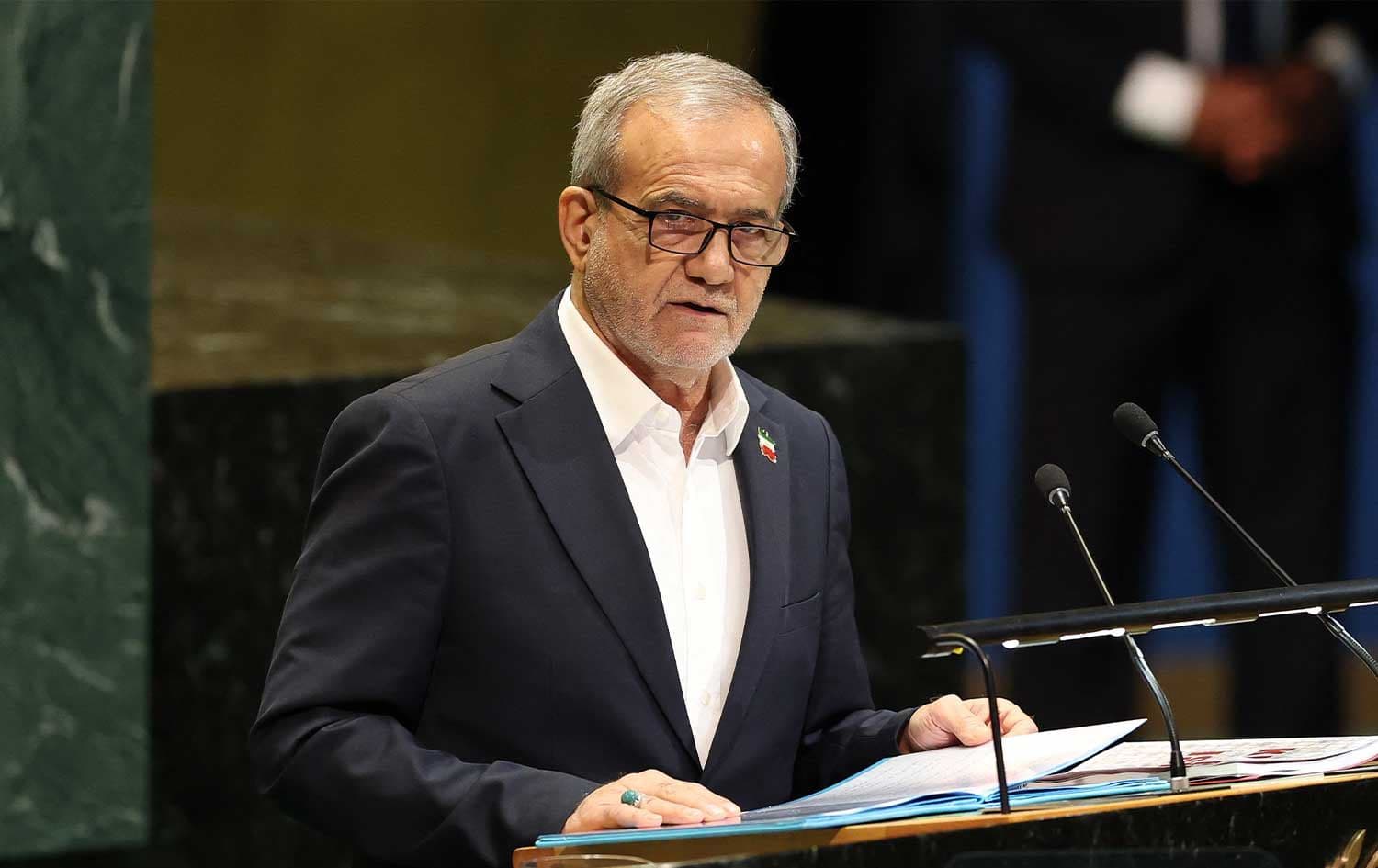
ERBIL, Kurdistan Region - Iranian President Masoud Pezeshkian said Tuesday that Tehran is prepared to pursue negotiations with the United States if an appropriate diplomatic environment is established, marking conditional openness to dialogue while stressing Iran’s national interests.
In a post on X, Pezeshkian said the move comes “in light of requests from friendly governments in the region” following a proposal by the US president to open talks.
“I have instructed my Minister of Foreign Affairs [Abbas Araghchi], provided that a suitable environment exists - one free from threats and unreasonable expectations - to pursue fair and equitable negotiations,” Pezeshkian said.
He added that any talks would be “guided by the principles of dignity, prudence, and expediency.”
The Iranian president stressed that negotiations would not be open-ended or unconditional, saying they “shall be conducted within the framework of our national interests.”
His remarks come amid heightened pressure from Washington, with US President Donald Trump weighing military action if Iran fails to reach a nuclear agreement. Trump said on Sunday that Tehran is “seriously talking” to Washington, expressing hope that negotiations would lead to an acceptable deal as American warships remain stationed off Iran’s coast.
A top Iranian official said Monday Iran will not move its enriched uranium stockpile out of the country and warned that any US military action would inevitably draw Israel into a wider regional war.
Speaking in military uniform, Ali Shamkhani, a senior advisor to Khamenei, said in an interview with al-Mayadeen, a Beirut-based pro-Iran news channel, that “there is no reason to transfer stored materials outside of Iran,” rejecting proposals raised in nuclear talks to relocate Iran’s enriched uranium abroad, including to Russia.
He added that negotiations with Washington must be limited strictly to the nuclear file and conditioned on an end to threats, while stressing that Tehran is prepared for the possibility of war.
He described Iran’s nuclear program as “peaceful and based on domestic capabilities,” adding that enrichment levels could be adjusted if Iran receives tangible concessions. Sixty percent enrichment “can be reduced and diluted to 20 percent if they are concerned,” he said.
Shamkhani also said Iran views the United States as the only credible negotiating partner, arguing that European powers proved unable to act independently after Trump withdrew from the nuclear deal in 2018 during his first term as the president of the US. “The subject of negotiation is only with the United States, and only regarding the nuclear issue on which an agreement can be reached,” al-Mayadeen cited him as saying, emphasizing that talks must move away from “the atmosphere and language of threats.”
He also acknowledged uncertainty over the exact size of Iran’s enriched uranium stockpile, citing past sabotage incidents. “The exact amount of the enriched uranium stockpile remains unknown, because some of the stockpile was under the rubble,” Shamkhani said, adding that Iran is in talks with the International Atomic Energy Agency over safe access and assessment.
Despite Western concerns, Shamkhani reiterated Iran’s rejection of nuclear weapons, saying the production and possession of such arms are haram - an Islamic word for 'forbidden.' “Iran does not seek a nuclear weapon, will not move toward producing a nuclear weapon, and will never stockpile a nuclear weapon,” he said.
Iranian Supreme Leader Ali Khamenei warned the United States on Sunday that any new conflict would escalate into a wider regional war.
“The Americans should know that if they start a war, this time it will be a regional war,” Khamenei said in a post on X.