


Iran

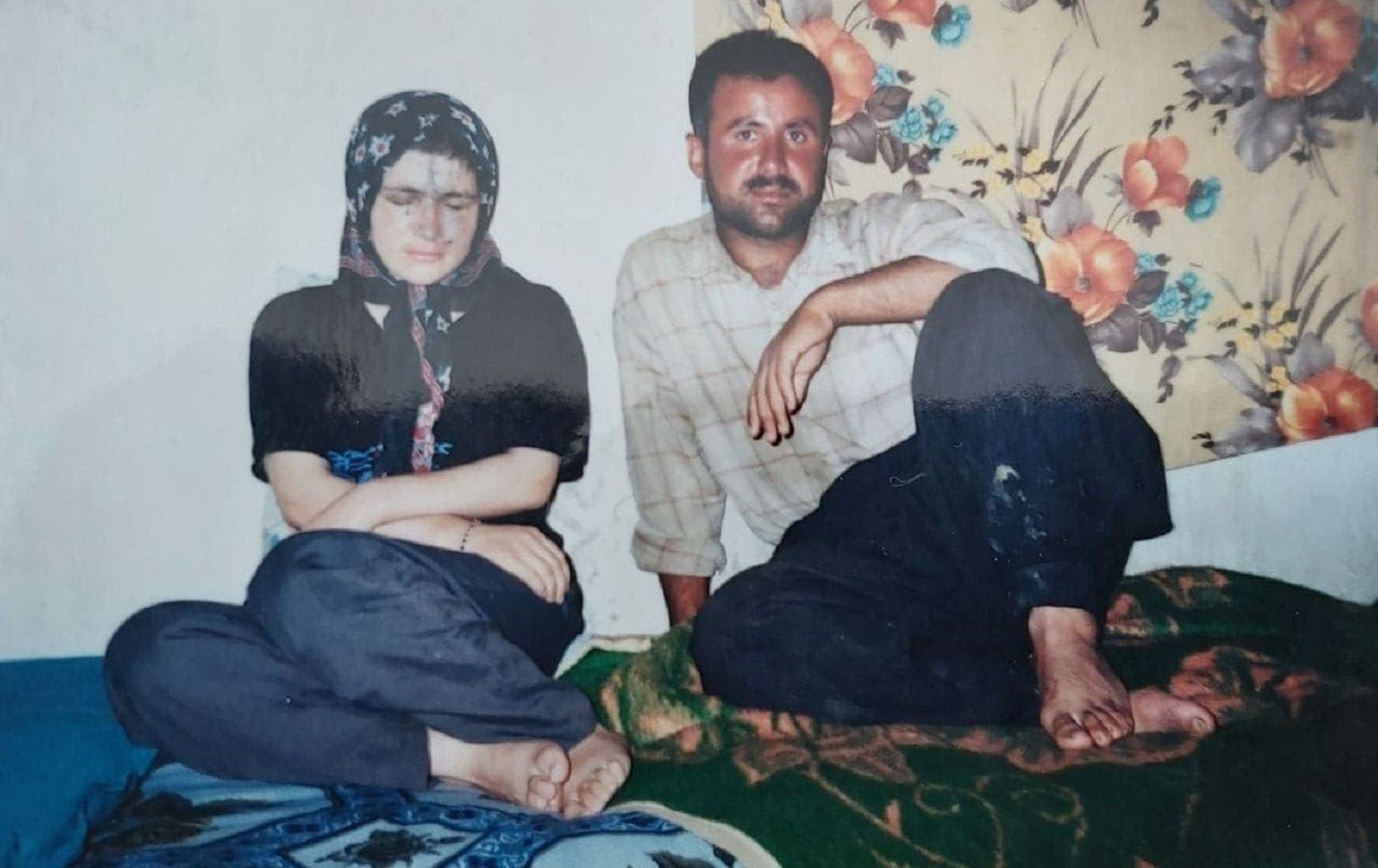
Zara Sleman Pana and her brother Luqman pictured two years after she lost her eyes in a landmine explosion. Photo: courtesy of the Pana family
SARDASHT, Iran — Nearly two decades ago, Zara Sleman Pana was a renowned beauty. The 18-year-old received many marriage proposals, but turned them all down because she wanted to focus on her dream of going to university. But her life shattered one idyllic spring afternoon on a mountainside near her village when an exploding landmine took her eyes.
Zara, now 36, is from the Sardasht area in Iran’s West Azerbaijan province. Both sides of the mountainous borders between Iran and the Kurdistan Region are littered with millions of landmines, most of which were left behind after the Iran-Iraq war of the 1980s. They are hazards that every year take lives and limbs, leaving people like Zara and her family living with a never-ending agony.
"I was born in 1985 in Bawe village of Sardasht,” Zara recounted to Rudaw English. “I was the eighth child of a family of eleven members. I went to school in the village and I was a bright student. My teachers were always very helpful and I had my family's support until I was done with high school."
"I wanted to get my degree in psychology for I believed that the roots of most of our societal problems were the psychological issues that lie deep in people."
Zara had to pause and collect herself before she could tell the story of what happened the day she went blind.
"On April 10, 2003, I was busy getting ready for university admissions, but sometimes my friend and I would go for a walk in the mountains of the village. We decided to go for one of our walks and harvest some spring plants to eat with five other friends of mine, some of whom were older and some younger than me."
"It was a beautiful sunny day, the birds were chirping and the land was green and covered in spring flowers. Laughter and sweet conversation guided us to the base of the mountain and we started harvesting kangir and gelkha [edible plants growing in the mountains]. Our baskets were almost full when I saw a large kangir."
"I picked up the pickaxe that I had brought with me to harvest the plants and I swung it at the base of the kangir. At that moment, everything went black in an instant and all I could hear was a loud noise."
She had struck a landmine with her pickaxe. "I felt like I was in a dream and I was losing consciousness.”
The Geneva-based Landmine and Cluster Munition Monitor documented a total 2,823 deaths and over 7,000 injuries from landmines and explosive remnants of war in Iran between 1988 and 2017. Though Iran has asked for international help tackling the mammoth task of demining its land, it has annually abstained from signing on to the United Nations treaty banning landmines.
Zara’s mother, Base Azar Mehr, was at home, preparing lunch “because I knew Zara would be hungry by the time she got back,” she explained.
Base was expecting her daughter to walk through the door, “But, our neighbor's son came to our house and asked me to give him Zara's ID. It took me by surprise."
"He told me that Zara had fallen from the mountain and she had minor injuries. They didn't let me go see her,” Base recounted. “One of her brothers and sisters went with the little kid. I was home, crying.”
Zara’s memory of what happened after the blast is hazy. “I don't know when we got to Mahabad, but I was aware of being taken to the operating room. I felt weak and nauseous. The doctors had said that I shouldn't eat anything. I wasn't aware of what was happening."
At the time, Zara and her family didn't know she had lost her eyes, forever. After a month in Mahabad, Zara was taken to Tehran and spent six months in a hospital there.
"When I woke up in Tehran, my eyes were covered. I asked my brother and sister who were with me to uncover them for me, but they would tell me, ‘It's nothing, you will be fine.’ After six months and multiple surgeries, I came back to our village."
Zara’s mother said her daughter was unrecognizable when she came home from Tehran. “She looked so different. She didn't look like my daughter. Zara was weak and had lost her eyes. I blacked out the second my eyes fell on her,” said Base.
Zara slipped into depression.
"When my friends visited me at home, I could hear the sorrow in their voices and I sensed that it was something bigger than what my family had told me. Then, I knew that I wasn't going to see the beauty of this world ever again,” she said.
"My body was alive but my soul was dead, all my dreams were shattered. I didn't want to meet anyone and I felt uncomfortable around my friends. Three years passed like this and my family was also suffering because of what happened."
"I started thinking of resuming my education. I heard of blind people going to universities on TV and I decided to do the same. I enrolled in the university admissions system and got accepted into Bokan University's Psychology Department. College helped me forget about my misery, it was better than staying at home, even though the trips to and from college were not as easy for me. I also met a few loyal friends there. They took care of me and helped me when needed."
"After four years of studying, I got my Bachelor's degree, but depression became my friend again and I put an end to my career. I am mostly at home now. I don't like meeting with people. Sometimes I try not to think, but my destiny breaks my heart and I am helpless."
Base's eyes misted over as she talked about her daughter, but she stopped the tears before they were shed. "When Zara was done with high school, most of the village people knew how lovely she was and tens of families asked for her hand in marriage to their sons, but Zara would always say that she wanted to finish her education."
"We all took good care of her after she lost her eyes but she was always sad, still is. Sometimes she doesn't talk to any of us for days. She was doing better when she was going to college," said Base.
Zara’s sister said the accident has impacted the whole family. "The loss of Zara's eyes destroyed our lives. We were devastated,” said Zuhra Sleman Pana. “I usually help her get things done, but there are times when she gets mad at me and doesn't let me go near her for a week."
Translation by Layal Shakir


Comments
Rudaw moderates all comments submitted on our website. We welcome comments which are relevant to the article and encourage further discussion about the issues that matter to you. We also welcome constructive criticism about Rudaw.
To be approved for publication, however, your comments must meet our community guidelines.
We will not tolerate the following: profanity, threats, personal attacks, vulgarity, abuse (such as sexism, racism, homophobia or xenophobia), or commercial or personal promotion.
Comments that do not meet our guidelines will be rejected. Comments are not edited – they are either approved or rejected.
Post a comment