ERBIL, Kurdistan Region - A more than century-old healthcare facility in Tehran has been rendered unable to deliver services, the United Nations global health chief reported on Friday, adding that his organization has “verified over 20 attacks” on healthcare in Iran since early March, marking the first days of the Middle East war.
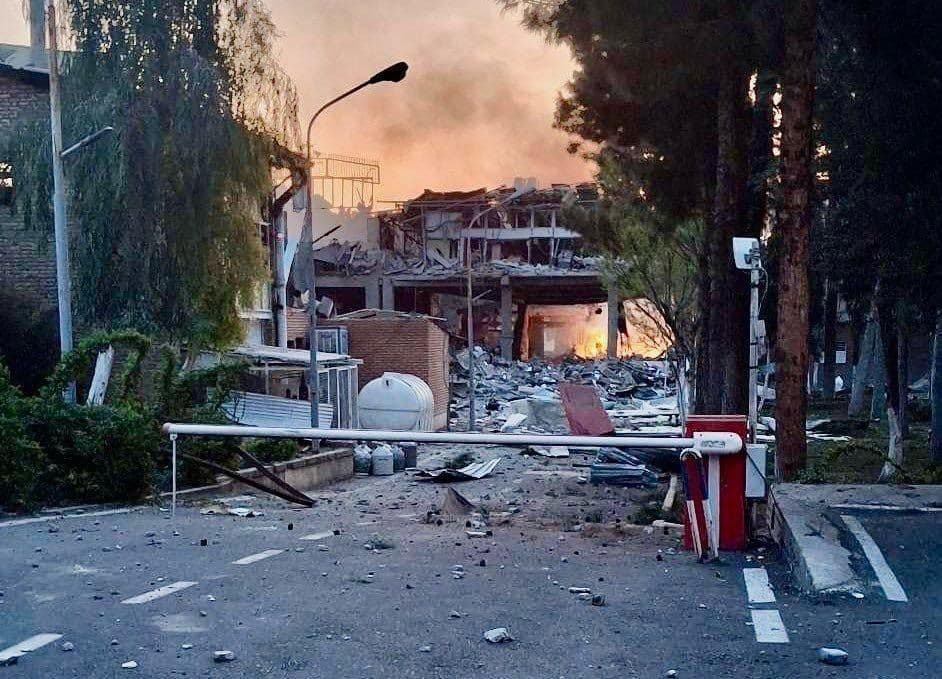
In a statement on X, Tedros Adhanom Ghebreyesus, Director-General of the World Health Organization (WHO), said that “multiple attacks on health care have been reported in the Iranian capital, Tehran, in recent days,” noting that the well-known Pasteur Institute of Iran “sustained significant damage and was rendered unable to continue delivering health services.”
Ghebreyesus added that the institute, established in 1920, has been “operating for over a century in multiple areas of medical research” and “plays an important role in protecting and promoting population health, including in emergencies.” He also noted that “two of its departments have been working with WHO as collaborating centres.”
Multiple attacks on health have been reported in the Iranian capital, Tehran, in recent days amid the escalating conflict in the Middle East.
— Tedros Adhanom Ghebreyesus (@DrTedros) April 2, 2026
The Pasteur Institute in Iran sustained significant damage and was rendered unable to continue delivering health services.
The Institute… pic.twitter.com/RHILHhy5Yv
Iranian health minister Hossein Kermanpour on Thursday slammed “the aggression against Pasteur Institute of Iran - a century-old pillar of global health and member of International Pasteur Network” as “a direct assault on international health security.”
In a post on X, Kermanpour shared images from the site showing the building heavily damaged, with parts of the facility reduced to rubble.
Beyond the Pasteur Institute, the head of the UN’s healthcare agency stated that “since March 1, WHO has verified over 20 attacks on health care in Iran, resulting in at least nine deaths, including an infectious disease health worker and a member of the Iranian Red Crescent Society.”
Ghebreyesus also reported that “attacks on health care have been recorded outside Tehran, including on 21 March, when an explosion near the Imam Ali Hospital in Andimeshk, Khuzestan province, led to the facility’s evacuation and cessation of services.”
Other incidents included the Delaram Sina Psychiatric Hospital, which “sustained significant damage due to a strike on 29 March,” and the Tofigh Daru pharmaceutical facility, which produces medicines for treating cancer and multiple sclerosis and “was damaged in another attack on 31 March.” No casualties were reported in those incidents.
The head of the WHO warned that the “conflict in Iran, and the region, is impacting the delivery of health services and the safety of health workers, patients, and civilians at health facilities,” urging that “peace is the best medicine.”
For its part, the Iranian Red Crescent said on Monday that 297 health centers across Iran had been targeted amid the war, including 18 of its own facilities in attacks that left two staff members dead and 17 others injured.
The US and Israel on February 28 launched a coordinated military campaign against Iran, with US Central Command (CENTCOM) reporting on Thursday that more than 12,300 targets across Iran have been struck so far.
In response, Tehran has carried out thousands of drone and missile strikes across the Middle East, targeting alleged US assets in the region - particularly in Gulf Arab states - as well as launching retaliatory attacks against Israel.