


Iran

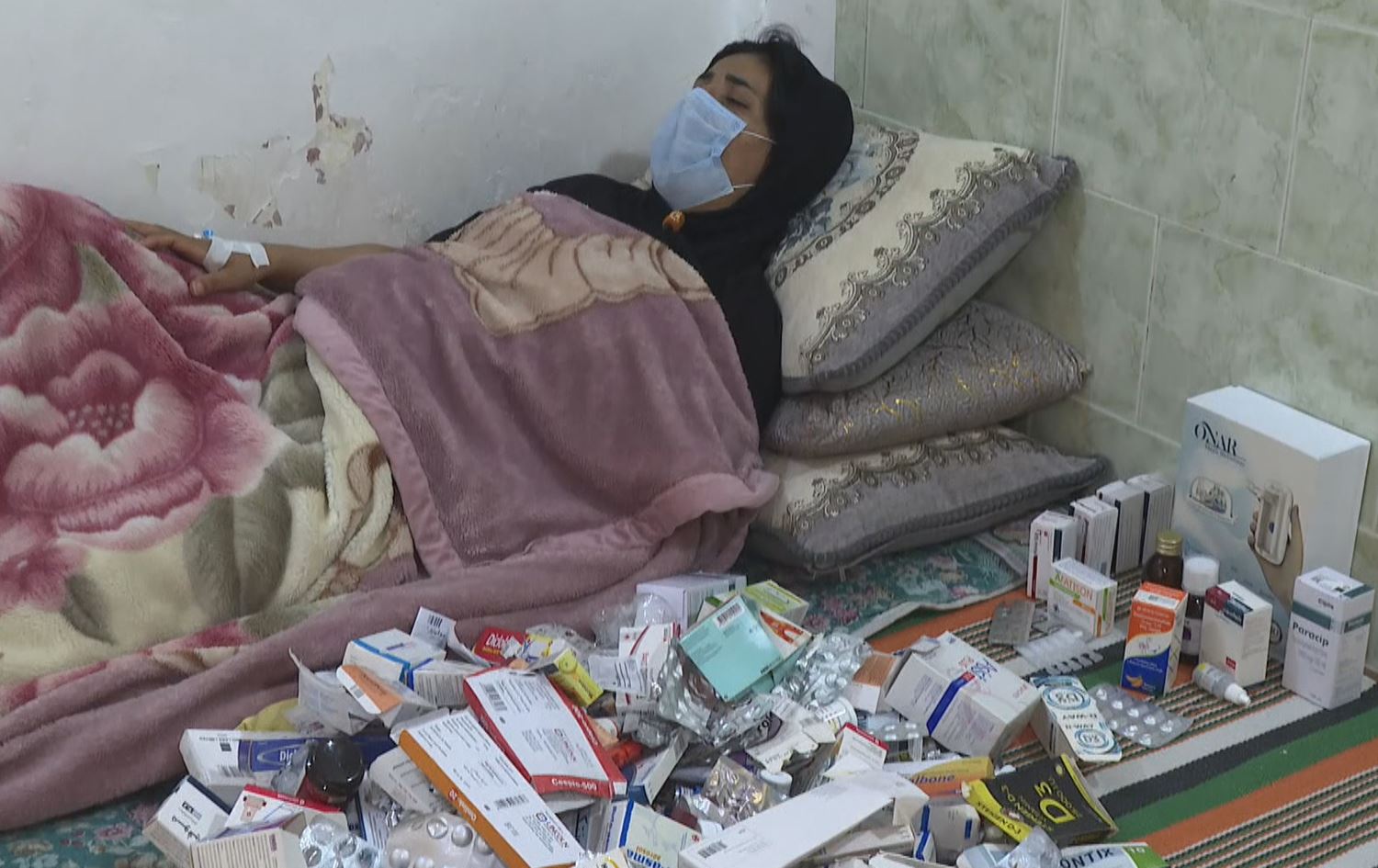
Roshna Hama Amin Halabja chemical attack survivor speaking to Rudaw on May 27, 2025. Photo: Screengrab/ Rudaw
ERBIL, Kurdistan Region - A survivor of the 1988 Halabja chemical attack has made a desperate plea to the Kurdistan Region’s ruling parties for urgent medical assistance abroad, as her condition continues to deteriorate.
Roshna Hama Amin was just six months old when the Baath regime, led by former Iraqi dictator Saddam Hussein, unleashed a devastating chemical weapons attack on the city of Halabja in mid-March 1988.
The gruesome attack claimed the lives of some 5000 people, including Roshna’s father, mother and two brothers.
Roshna lived, but her survival came with lifelong suffering. Now in her late 30s, she battles a severe lung condition - Pulmonary Hemorrhage - caused by the chemical exposure. The disease, marked by bleeding into the lungs, has left her in constant pain, short of breath, and often confined to bed.
She appealed to both the Kurdistan Region Prime Minister Masrour Barzani, who is also the deputy leader of the Kurdistan Democratic Party (KDP), and the leader of the Patriotic Union of Kurdistan (PUK) Bafel Talabani.
“I call on Mr. Bafel and Mr. Masrour from the [Kurdistan Region’s] two ruling parties, who feel responsible for the [Kurdish] people and nation, as well as sympathizers with the families of the martyrs to help me get better and access my treatment abroad,” Roshna told Rudaw.
Her sister, Shno, said Roshna’s health is in a critical and unstable state.
“She suffers from internal lung bleeding. Her condition is getting worse. She hasn’t received proper treatment in years,” Shno said, adding that Roshna used to travel to Iran every six months for care, but those trips have long ceased.
Luqman Abdulqader, head of the Halabja Chemical Attack Victims Association and himself a Halabja chemical attack survivor, expressed deep concern about the declining conditions of fellow victims.
“The situation for survivors has worsened significantly. Many no longer receive necessary medical treatment abroad,” he said.
Abdulqader noted that although a proposal was made to establish a governmental board - including a representative from the victims’ association - to manage the medical needs of survivors, it has stalled in bureaucratic limbo.
Halabja stands out as a powerful symbol of Kurdish resilience and suffering. Despite its extreme cruelty, the 1988 chemical attack on Halabja - officially recognized as an act of genocide by Iraq's High Court in 2010 - was only part of a wider genocidal campaign, Anfal, led by the Baath regime against the Kurdish people, killing some 182,000 of them.
Roshna Hama Amin was just six months old when the Baath regime, led by former Iraqi dictator Saddam Hussein, unleashed a devastating chemical weapons attack on the city of Halabja in mid-March 1988.
The gruesome attack claimed the lives of some 5000 people, including Roshna’s father, mother and two brothers.
Roshna lived, but her survival came with lifelong suffering. Now in her late 30s, she battles a severe lung condition - Pulmonary Hemorrhage - caused by the chemical exposure. The disease, marked by bleeding into the lungs, has left her in constant pain, short of breath, and often confined to bed.
She appealed to both the Kurdistan Region Prime Minister Masrour Barzani, who is also the deputy leader of the Kurdistan Democratic Party (KDP), and the leader of the Patriotic Union of Kurdistan (PUK) Bafel Talabani.
“I call on Mr. Bafel and Mr. Masrour from the [Kurdistan Region’s] two ruling parties, who feel responsible for the [Kurdish] people and nation, as well as sympathizers with the families of the martyrs to help me get better and access my treatment abroad,” Roshna told Rudaw.
Her sister, Shno, said Roshna’s health is in a critical and unstable state.
“She suffers from internal lung bleeding. Her condition is getting worse. She hasn’t received proper treatment in years,” Shno said, adding that Roshna used to travel to Iran every six months for care, but those trips have long ceased.
Luqman Abdulqader, head of the Halabja Chemical Attack Victims Association and himself a Halabja chemical attack survivor, expressed deep concern about the declining conditions of fellow victims.
“The situation for survivors has worsened significantly. Many no longer receive necessary medical treatment abroad,” he said.
Abdulqader noted that although a proposal was made to establish a governmental board - including a representative from the victims’ association - to manage the medical needs of survivors, it has stalled in bureaucratic limbo.
Halabja stands out as a powerful symbol of Kurdish resilience and suffering. Despite its extreme cruelty, the 1988 chemical attack on Halabja - officially recognized as an act of genocide by Iraq's High Court in 2010 - was only part of a wider genocidal campaign, Anfal, led by the Baath regime against the Kurdish people, killing some 182,000 of them.


Comments
Rudaw moderates all comments submitted on our website. We welcome comments which are relevant to the article and encourage further discussion about the issues that matter to you. We also welcome constructive criticism about Rudaw.
To be approved for publication, however, your comments must meet our community guidelines.
We will not tolerate the following: profanity, threats, personal attacks, vulgarity, abuse (such as sexism, racism, homophobia or xenophobia), or commercial or personal promotion.
Comments that do not meet our guidelines will be rejected. Comments are not edited – they are either approved or rejected.
Post a comment