
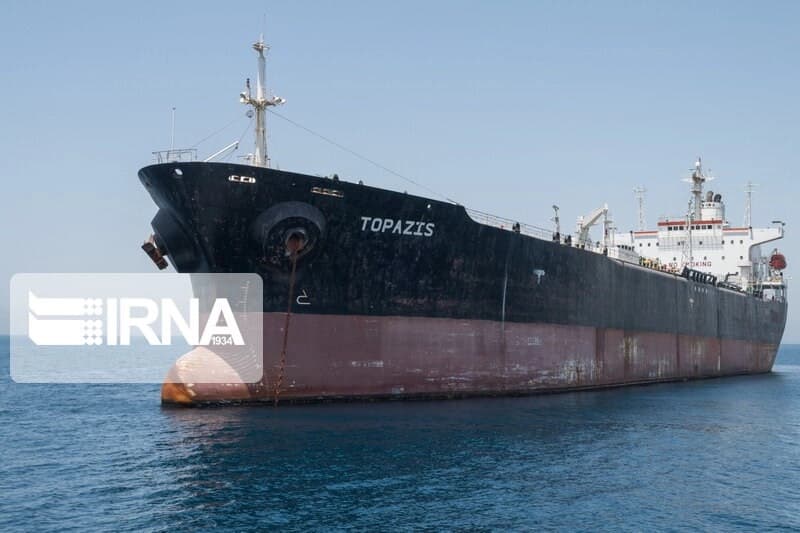

ERBIL, Kurdistan Region — Islamic Revolutionary Guard Corps (IRGC) said it seized an Iraqi vessel transporting smuggled fuel in the Persian Gulf as part of a continuing effort to combat organized fuel smuggling in the area, as the United States attempts to form a coalition to guard the highly strategic Strait of Hormuz oil transport route.
“On Wednesday evening, July 31 at 21:30, the patrol boats of the Second District Command of IRGC naval forces…seized a foreign ship carrying fuel,” said Second Brigadier Ramezan Zirahi, the 2nd Naval District Commander in the Persian Gulf.
“The ship had received fuel from other ships and was in the process of transporting it to Arab countries in the Persian Gulf…the ship which contained 700,000 liters of fuel was stopped and its seven foreign crews were arrested.”
Fuel smuggling often takes the form of a larger vessel hovering close to Iranian waters to collect fuel, usually oil, from several, smaller vessels. The statement did not give the nationality of the vessel crew detained in the operation.

In response to recent IRGC activities in the Gulf, Washington hopes to establish an international coalition to secure safe passage for vessels and oil tankers passing through the strategic Strait of Hormuz, through which over 20 percent of global oil supply is transported.
Iran has rejected the idea, instead insisting that the onus for providing Gulf security is on regional countries.
Australian Defense Secretary Linda Reynolds said on Sunday that her government was giving “serious consideration” to joining said coalition.
“To make the Australian Government’s position on this very, very clear, we are deeply concerned by the heightened tensions in the region and we strongly condemn the attacks on shipping in the Gulf of Oman,” Reynolds said in a joint press conference with US Secretary of State Mike Pompeo in Sydney.
“The request that the United States has made is a very serious one and it is a complex one. That’s why we are currently giving this request very serious consideration.”
At the same conference, US Defense Secretary Mark Esper described the operation’s aims, which have received a “good response” from partners and allies, as “a unity of effort with regard to ensuring freedom of navigation, freedom of the seas, and also deterring provocative behavior so that we get any type of discourse between the international community and Iran back on the diplomatic path, back on that track, and not on one headed toward conflict.”
Iran, however, has said that time for diplomatic de-escalation is running out.
Tehran has refused negotiation unless either the US cancels its economic sanctions, or European signatories of the 2015 nuclear deal fulfill their signed upon duties and relieve US pressure on its oil and financial sectors. Tehran scaled back on its nuclear commitments in early May and July.
Iranian Foreign Minister Javad Zarif, who, to Iranian regime indignation, was placed on a US sanction list on Wednesday, stated on Saturday that Tehran is set to scale back yet further in early September.
Tehran has been under intense economic pressure after the US government withdrew from the 2015 nuclear deal in May 2018, re-imposing crippling sanctions on the country six months later.
US cancellation of oil waivers to eight main customers of Iranian oil in May have been particularly damaging. Reuters reported that Iranian oil exports have dropped from around 2.5 million barrels per day (bpd) in April 2018 to just 100,000 bpd in July of this year.
President Hassan Rouhani and other officials have conceded that US sanctions have dealt a serious blow to the Iranian economy, but maintain that Tehran will not budge under what it calls “economic terrorism.”
Tensions between Iran and the US and its allies was worsened by the IRGC’s July 19 seizure of a British flagged vessel, in response to the early July seizure of an oil tanker carrying two million barrels of Iranian oil believed to have been bound for sanction- afflicted Syria by the British Royal Marines.
A New York Times investigation revealed on Saturday that Iran is continuing to sell its oil in defiance of sanctions.
“The Times examined the movements of more than 70 Iranian tankers since May 2, when the American sanctions took full effect. Twelve of the tankers loaded oil after May 2 and delivered it to China or the Eastern Mediterranean, where the buyers may have included Syria or Turkey,” according to the investigation.

_(1).webp&w=3840&q=75)