


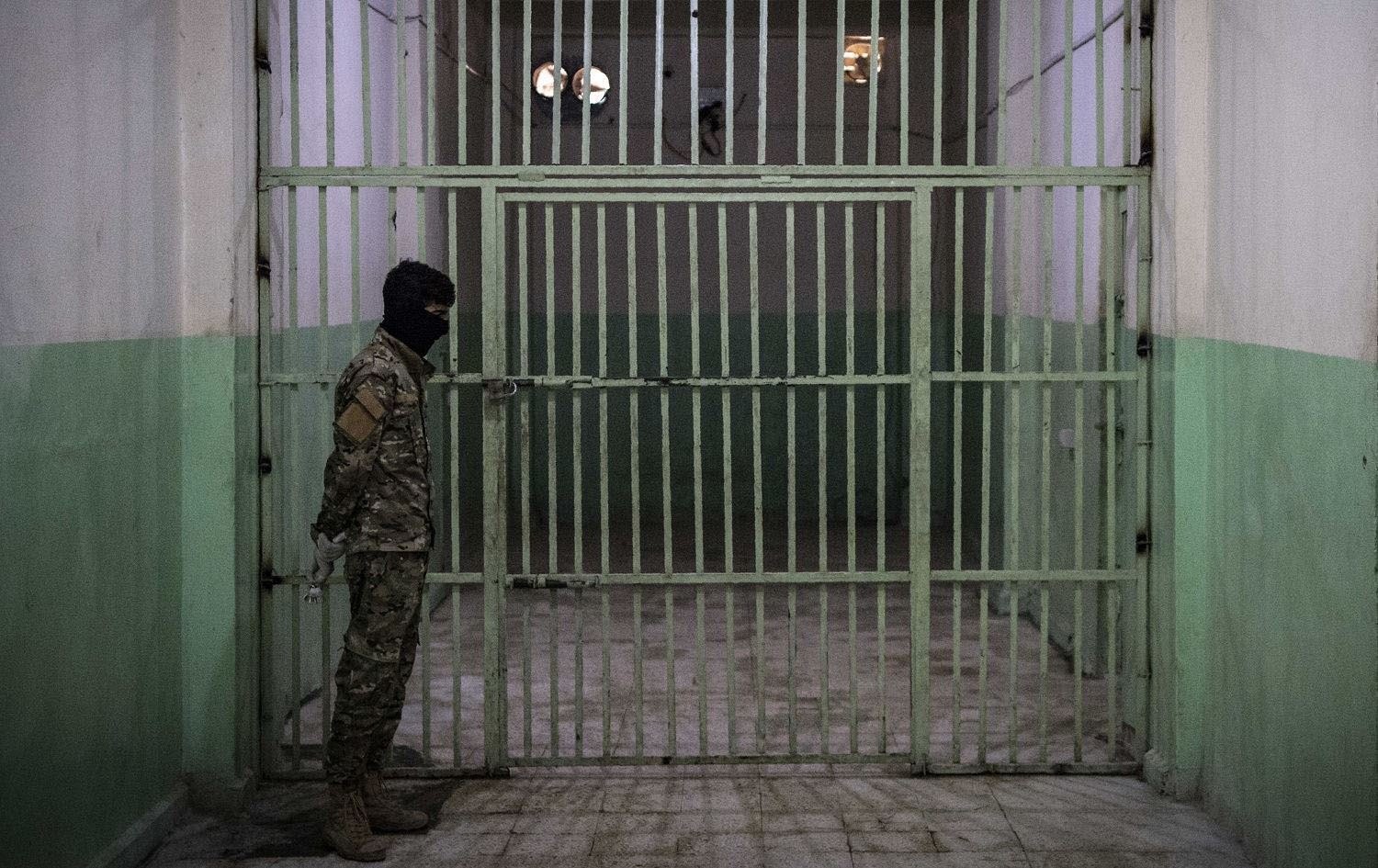
ERBIL, Kurdistan Region - Iran’s Islamic Revolutionary Guard Corps (IRGC) denied the conditional release of a Kurdish political prisoner despite the request being approved by the Yazd Central Prison after he served almost 17 years behind bars, a human rights watchdog reported on Sunday.
“Khaled Zamani - a Kurdish political prisoner, father of three daughters and one son, and a native of Khoy - remains deprived of both prison leave and conditional release, despite having served 6,151 days behind bars,” the Oslo-based Hengaw Human Rights Organization said.
Zamani, on a 30-year prison sentence, has faced the “ongoing denial of furlough by the IRGC’s Intelligence Organization,” Hengaw added, with the latest refusal coming despite his conditional release having been approved by the Yazd Central Prison and the city’s prosecutor.
The denial by the IRGC comes despite ”the approval of Zamani’s request by the Classification Council of Yazd Central Prison and the city’s prosecutor.”
He was arrested on July 1, 2008, by Iranian intelligence forces over charges of alleged membership in the Free Life Party of Kurdistan (PJAK).
PJAK was established in 2003 and is considered the Iranian wing of the Kurdistan Workers’ Party (PKK), but claims its links are only ideological.
After its establishment in the Qandil Mountains - an area on the Kurdistan Region’s border with Iran where the PKK is also headquartered - PJAK expanded its operations into the Kurdish areas of western Iran, recruiting hundreds of young men and fighting bloody battles with the IRGC.
Zamani was sentenced by the Urmia Revolutionary Court to amputation of his left hand and right foot on charges of moharebeh, or enmity against God. Following an appeal, he was sentenced to 30 years in Yazd Central Prison, according to Hengaw.
He has been denied furlough since then.
Hengaw also reported that he has been subjected to severe physical and psychological torture during his imprisonment.
Kurds and other ethnic minorities in Iran face systemic discrimination and disproportionately high rates of death sentences and executions, often on charges related to political activities such as baghi (armed rebellion) or moharebeh (enmity against God).
Amnesty International’s annual report, published in March, highlighted a sharp rise in executions in Iran in 2024, placing the country among the top three executioners globally. Iran, alongside Iraq and Saudi Arabia, accounted for 91 percent of all known executions worldwide.
The report also censured Iranian authorities over their continued weaponization of the death penalty against dissidents, including those who participated in the Jin Jiyan Azadi (Women Life Freedom) protests and especially the minorities.
In mid-September 2022, 22-year-old Kurdish woman Mahsa (Zhina) Amini died in police custody after being arrested for allegedly violating Iran’s compulsory hijab law. Her death sparked nationwide protests in Iran, the longest protest movement the country had seen in four decades.


Comments
Rudaw moderates all comments submitted on our website. We welcome comments which are relevant to the article and encourage further discussion about the issues that matter to you. We also welcome constructive criticism about Rudaw.
To be approved for publication, however, your comments must meet our community guidelines.
We will not tolerate the following: profanity, threats, personal attacks, vulgarity, abuse (such as sexism, racism, homophobia or xenophobia), or commercial or personal promotion.
Comments that do not meet our guidelines will be rejected. Comments are not edited – they are either approved or rejected.
Post a comment