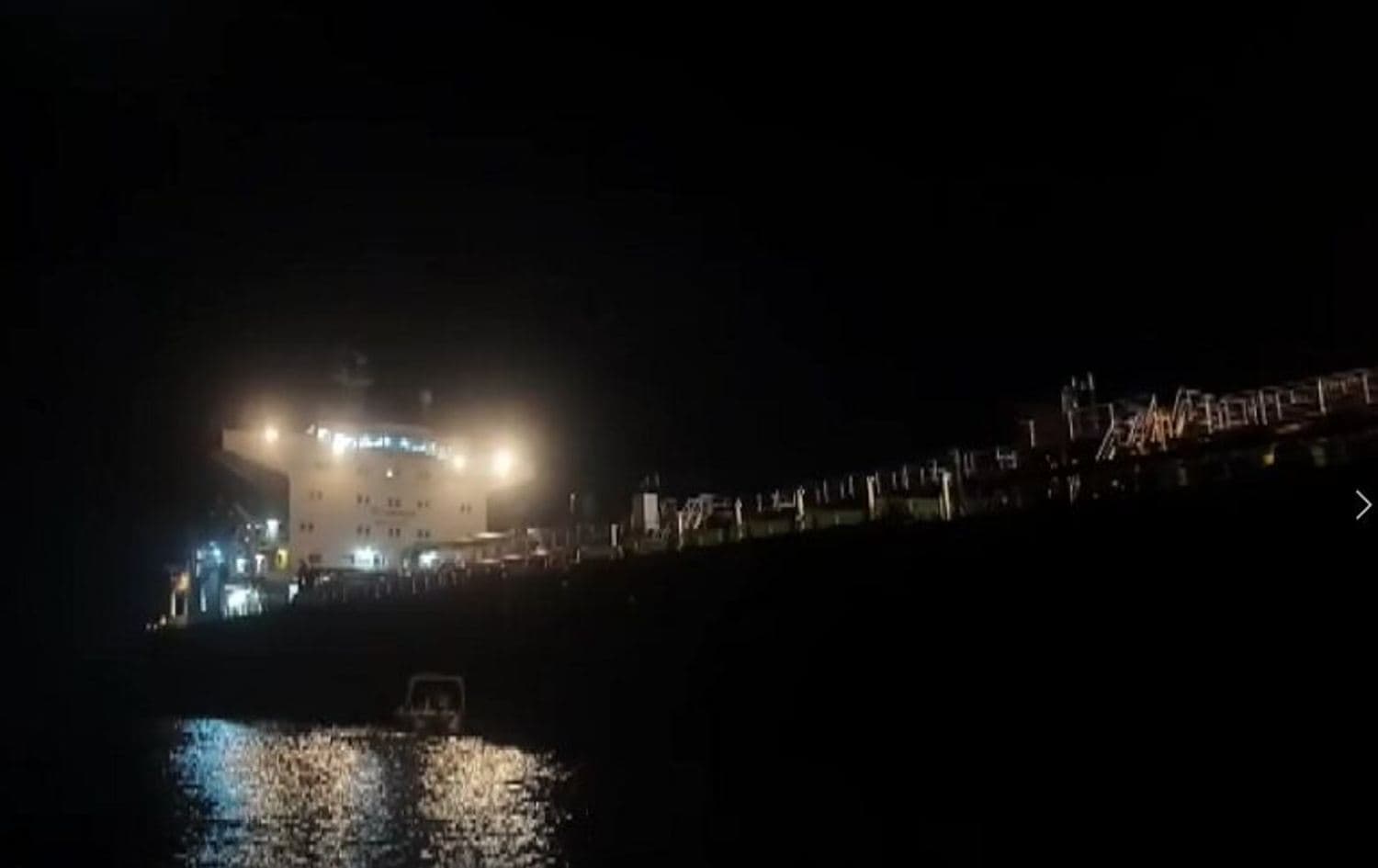
ERBIL, Kurdistan Region - Tehran’s navy on Friday seized the Barbados-flagged oil tanker Ocean Koi in the Sea of Oman and redirected it back to Iran, state media reported, adding that the vessel was carrying Iranian oil and attempting to undermine Iran’s national interests. Notably, the vessel was previously sanctioned by the United States for its alleged role in Iran’s “shadow fleet” oil network.
The Islamic Republic News Agency (IRNA) said that the Iranian navy “conducted a special operation in the Sea of Oman,” seizing the tanker Ocean Koi, which "was carrying an Iranian oil cargo” and “had been exploiting regional developments in an attempt to damage and disrupt Iran’s oil exports and national interests.”
Iranian “naval commandos and marines escorted the tanker to the southern coastal waters of the country and handed it over to judicial authorities,” IRNA added, quoting the navy as saying it remains committed to “firmly defending the interests and assets of the Iranian people in regional waters and will show no tolerance toward any violators or aggressors.”
Of note, the US Treasury’s Office of Foreign Assets Control (OFAC) in February identified the Ocean Koi as part of Iran’s “shadow fleet” used to transport sanctioned oil. The vessel is also reported to be linked to Ocean Kudos Shipping Co Ltd, a Marshall Islands-registered company that US authorities describe as a front entity associated with Iranian oil trading networks.
In a separate development, Iran on Friday accused the United States of “violating the ceasefire” by targeting two vessels near the Strait of Hormuz and striking “civilian areas” in Iran’s southern Hormozgan province.
“The US military violated the ceasefire by targeting an Iranian oil tanker near Jask heading toward the Strait of Hormuz, as well as another vessel entering the Strait near the Emirati port of Fujairah,” IRNA cited Ebrahim Zolfaghari, spokesperson for the Khatam al-Anbiya Central Headquarters, as saying.
“At the same time, civilian areas along the coasts of Bandar Khamir, Sirik, and Qeshm Island [in Hormozgan] were subjected to airstrikes with the cooperation of some regional countries,” the official said, adding that Iranian forces “responded by attacking US military vessels” near Hormuz and inflicted “significant damage” on them.
“The United States and its supporting countries should know that the Islamic Republic of Iran, as in the past, will respond forcefully and without hesitation to any act of aggression or violation,” Zolfaghari added.
Hours earlier, CENTCOM said US forces “intercepted unprovoked Iranian attacks and responded with self-defense strikes” after an assault targeted US Navy destroyers transiting the Strait of Hormuz into the Gulf of Oman on Thursday, rejecting Iranian claims of damage.
“Iranian forces launched multiple missiles, drones, and small boats” at the USS Truxtun, USS Rafael Peralta, and USS Mason, the Command detailed, affirming that “no U.S. assets were struck.”
US forces “eliminated inbound threats and targeted Iranian military facilities responsible for attacking U.S. forces, including missile and drone launch sites, command and control locations, and intelligence, surveillance, and reconnaissance nodes,” CENTCOM added, without specifying the exact locations of those sites.
Meanwhile, Fox News cited a “senior U.S. official” as stating that the American military carried out strikes on Iran’s Qeshm port and Bandar Abbas, adding however that the strikes do not mean a restarting of the war or an end to the ceasefire announced on April 8.
Importantly, the escalation came as Iran said it was still reviewing a US proposal aimed at ending the war.
The US and Israel launched a wide scale aerial campaign against Iran on February 28, striking more than 17,000 sites across the country over six weeks of hostilities before the sides agreed to a Pakistan-mediated ceasefire on April 8. The truce halted fighting for two weeks and paved the way for negotiations.
While the first round of talks concluded without a final agreement on April 11, a second round has yet to take place, with a comprehensive resolution to the conflict still pending.
In parallel with the diplomatic efforts, Iran and the US have engaged in tit-for-tat maritime measures. Tehran has tightened its grip on shipping in the Strait of Hormuz, while Washington initiated a maritime blockade on Iranian ports on April 13.