



Error occured during this request! Please try again later.
Iran

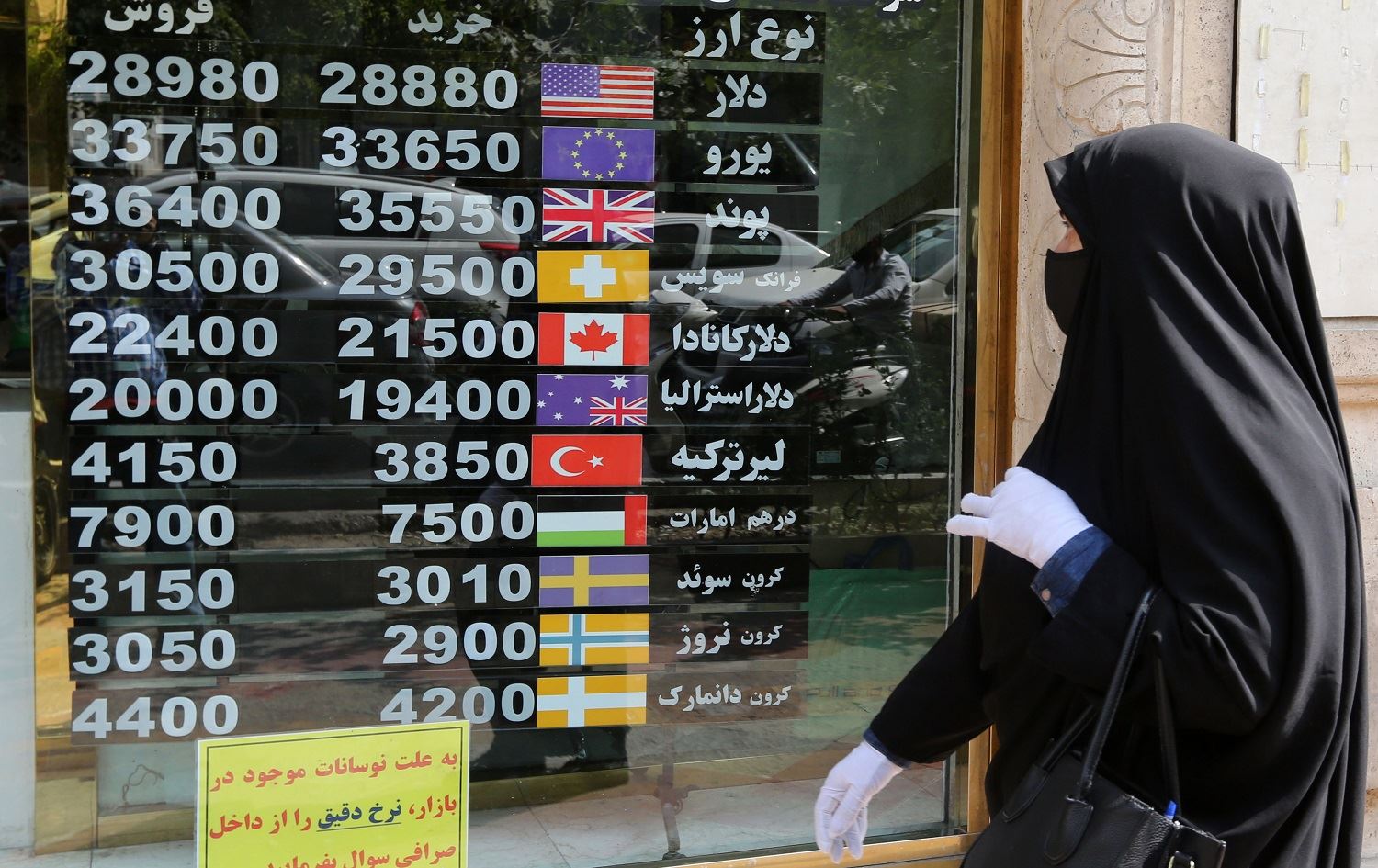
An Iranian woman checks a display board at a currency exchange shop as she walks by in the capital Tehran, on September 29, 2020. Photo: Atta Kenare / AFP
ERBIL, Kurdistan Region — Iran will be granted access to funds previously frozen in Iraqi banks to buy much-needed essential goods for the sanction-hit country, Iran’s central bank governor told state media on Monday.
"Iran has considerable funds in Iraqi banks from the export of electricity and gas," Abdulnaser Hemmati told state-run media outlet IRNA following negotiations with his Iraqi counterpart Mustafa Ghaleb and the head of Trade Bank of Iraq that led to the agreement.
Iran will not be allowed to withdraw the funds in cash or transfer them to Tehran, but instead must use them to buy essential goods in a process that circumvents severe US sanctions against Iran similar to Europe’s INSTEX trade mechanism, noted the official.
Hemmati arrived on Monday in Baghdad for a one day visit to discuss the outstanding payments that Baghdad owes Tehran to the tune of four billion dollars. He met with Iraq's Prime Minister Mustafa al-Kadhimi, Finance Minister Ali Allawi, Trade Bank of Iraq head Salem Chalabi, and Central Bank Governor Mustafa Ghaleb.
Iran has provided Iraq with large quantities of natural gas and electricity for over a decade to help the neighboring country cope with its dependent energy needs. War, corruption, insecurity and lack of investment have contributed to the country’s deteriorating energy infrastructure and capabilities.
Since US President Donald Trump withdrew from the Iran nuclear deal and re-imposed crippling sanctions on the country's oil and gas sectors as well as the banking and finance sectors, Iran has been unable to repatriate the hard currency in the form of dollars that it desperately needs.
The US extended Iraq’s sanctions waiver by another 60 days in September, allowing Baghdad to continue importing gas from Iran.
Kadhimi has welcomed the agreement and promised to follow up on the deal on a weekly basis, added Hemmati, who clarified that essential goods are not sanctioned by the United States.
Baghdad signed a two-year contract with Iran in early June, renewing commitments to import Iranian gas for electricity. Oil Minister Ihsan Abdul-Jabar has said he expects Iraq will be entirely self-reliant for its domestic gas needs within five years’ time. “We will not import gas by 2025,” Jabar told al-Iraqia TV in a televised interview. “At least 80 percent of the gas projects in Iraq are under implementation already.”
Iran exports 1200-1500 megawatts of electricity to Iraq on a daily basis, in addition to 38 million cubic meters of natural gas to feed several of Iraq’s power stations, according to Sayyid Hamid Hosseini, secretary general of Iran-Iraq Joint Chamber of Commerce.
"Iran has considerable funds in Iraqi banks from the export of electricity and gas," Abdulnaser Hemmati told state-run media outlet IRNA following negotiations with his Iraqi counterpart Mustafa Ghaleb and the head of Trade Bank of Iraq that led to the agreement.
Iran will not be allowed to withdraw the funds in cash or transfer them to Tehran, but instead must use them to buy essential goods in a process that circumvents severe US sanctions against Iran similar to Europe’s INSTEX trade mechanism, noted the official.
Hemmati arrived on Monday in Baghdad for a one day visit to discuss the outstanding payments that Baghdad owes Tehran to the tune of four billion dollars. He met with Iraq's Prime Minister Mustafa al-Kadhimi, Finance Minister Ali Allawi, Trade Bank of Iraq head Salem Chalabi, and Central Bank Governor Mustafa Ghaleb.
Iran has provided Iraq with large quantities of natural gas and electricity for over a decade to help the neighboring country cope with its dependent energy needs. War, corruption, insecurity and lack of investment have contributed to the country’s deteriorating energy infrastructure and capabilities.
Since US President Donald Trump withdrew from the Iran nuclear deal and re-imposed crippling sanctions on the country's oil and gas sectors as well as the banking and finance sectors, Iran has been unable to repatriate the hard currency in the form of dollars that it desperately needs.
The US extended Iraq’s sanctions waiver by another 60 days in September, allowing Baghdad to continue importing gas from Iran.
Kadhimi has welcomed the agreement and promised to follow up on the deal on a weekly basis, added Hemmati, who clarified that essential goods are not sanctioned by the United States.
Baghdad signed a two-year contract with Iran in early June, renewing commitments to import Iranian gas for electricity. Oil Minister Ihsan Abdul-Jabar has said he expects Iraq will be entirely self-reliant for its domestic gas needs within five years’ time. “We will not import gas by 2025,” Jabar told al-Iraqia TV in a televised interview. “At least 80 percent of the gas projects in Iraq are under implementation already.”
Iran exports 1200-1500 megawatts of electricity to Iraq on a daily basis, in addition to 38 million cubic meters of natural gas to feed several of Iraq’s power stations, according to Sayyid Hamid Hosseini, secretary general of Iran-Iraq Joint Chamber of Commerce.


Comments
Rudaw moderates all comments submitted on our website. We welcome comments which are relevant to the article and encourage further discussion about the issues that matter to you. We also welcome constructive criticism about Rudaw.
To be approved for publication, however, your comments must meet our community guidelines.
We will not tolerate the following: profanity, threats, personal attacks, vulgarity, abuse (such as sexism, racism, homophobia or xenophobia), or commercial or personal promotion.
Comments that do not meet our guidelines will be rejected. Comments are not edited – they are either approved or rejected.
Post a comment