Iran
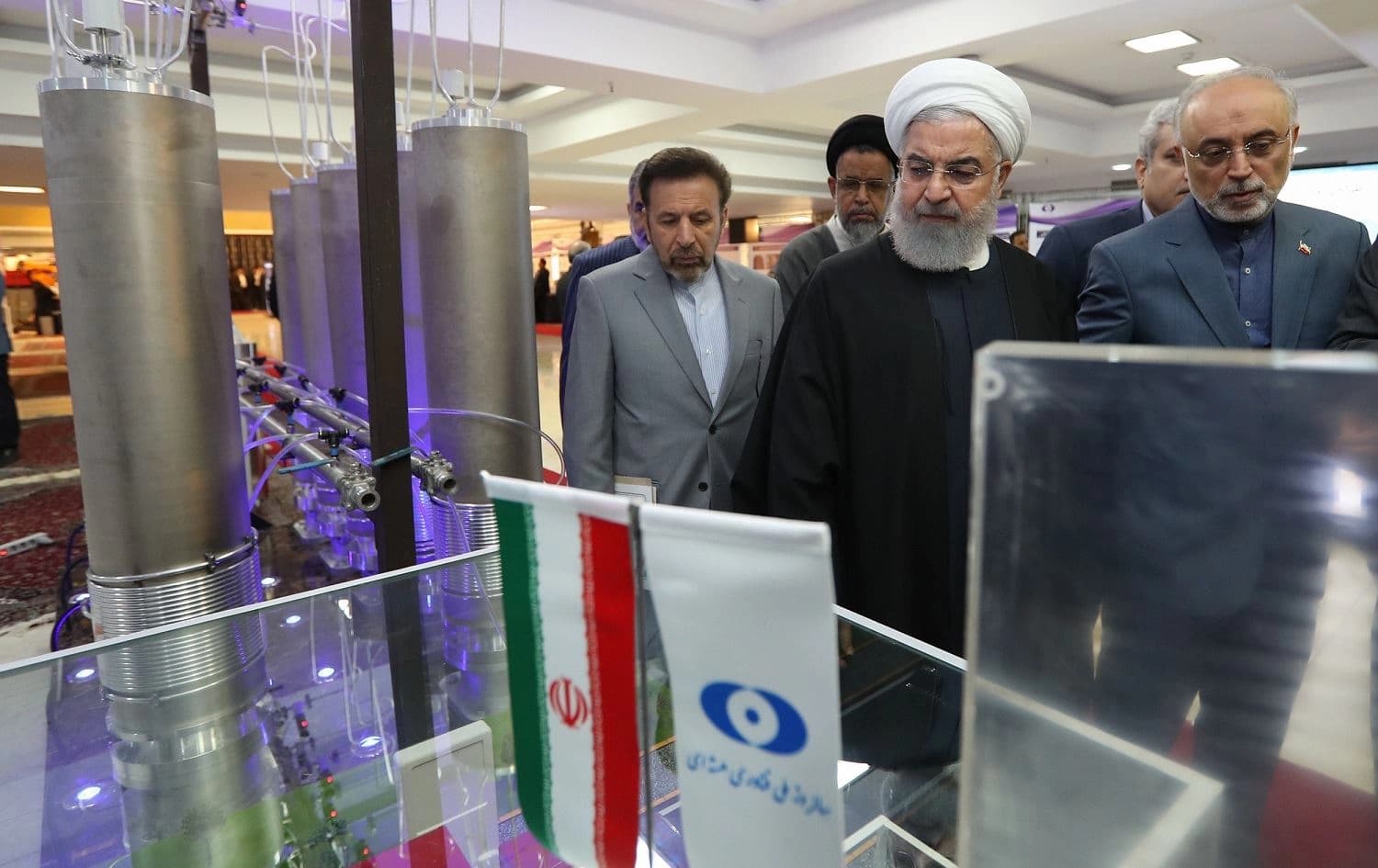
Iranian President Hassan Rouhani visits an exhibition of nuclear technology on April 9, 2019. Photo: handout/Iranian presidency
ERBIL, Kurdistan Region – Iran has 1,044 centrifuges active at its Fordow uranium enrichment plant, completing a fourth step to reduce its commitments under the nuclear deal, the head of Iran’s atomic energy agency said on Sunday.
“As per policies of reduction of JCPOA commitments, a sum of 1,044 centrifuges are engaging in enrichment process in Fordow,” Ali Akbar Salehi told Iran’s parliament. “The policies of the fourth step of reduction of JCPOA commitments have been fully implemented and we have activated a Fordow wing.”
Tehran has gradually resumed its nuclear program, stepping back from its commitments under the 2015 Joint Comprehensive Plan of Action (JCPOA) over the past year, after Washington pulled out of the deal and began re-imposing sanctions.
“We had made commitments in the JCPOA that these 1,044 centrifuge devices would not operate, but according to reducing the JCPOA commitments, we do the enrichment as needed and we will also pile up the enriched material,” Salehi said.
Other measures Tehran has taken to walk-back on the deal are exceeding restrictions on enriched uranium stockpiles and enrichment levels, developing advanced centrifuges, and exceeding limits on numbers of centrifuges.
The International Atomic Energy Agency (IAEA) said on September 4 that Iran now has more than 10 times the amount of enriched uranium permitted under the nuclear deal.
Iran’s capacity to enrich uranium is back up to pre-nuclear deal levels, Behrouz Kamalvandi, spokesperson for Iran’s atomic energy organization, told ISNA. “Concerning enriched UF6 production, at present, we possess more than three tons of enriched uranium, and, currently, between 250-300 kg can be produced per month, which is equivalent to the pre-JCPOA production capacity,” he said.
Tehran has continued to cooperate with the IAEA, including opening up two sites to inspections that it had previously resisted providing access to.
“As per policies of reduction of JCPOA commitments, a sum of 1,044 centrifuges are engaging in enrichment process in Fordow,” Ali Akbar Salehi told Iran’s parliament. “The policies of the fourth step of reduction of JCPOA commitments have been fully implemented and we have activated a Fordow wing.”
Tehran has gradually resumed its nuclear program, stepping back from its commitments under the 2015 Joint Comprehensive Plan of Action (JCPOA) over the past year, after Washington pulled out of the deal and began re-imposing sanctions.
“We had made commitments in the JCPOA that these 1,044 centrifuge devices would not operate, but according to reducing the JCPOA commitments, we do the enrichment as needed and we will also pile up the enriched material,” Salehi said.
Other measures Tehran has taken to walk-back on the deal are exceeding restrictions on enriched uranium stockpiles and enrichment levels, developing advanced centrifuges, and exceeding limits on numbers of centrifuges.
The International Atomic Energy Agency (IAEA) said on September 4 that Iran now has more than 10 times the amount of enriched uranium permitted under the nuclear deal.
Iran’s capacity to enrich uranium is back up to pre-nuclear deal levels, Behrouz Kamalvandi, spokesperson for Iran’s atomic energy organization, told ISNA. “Concerning enriched UF6 production, at present, we possess more than three tons of enriched uranium, and, currently, between 250-300 kg can be produced per month, which is equivalent to the pre-JCPOA production capacity,” he said.
Tehran has continued to cooperate with the IAEA, including opening up two sites to inspections that it had previously resisted providing access to.
Comments
Rudaw moderates all comments submitted on our website. We welcome comments which are relevant to the article and encourage further discussion about the issues that matter to you. We also welcome constructive criticism about Rudaw.
To be approved for publication, however, your comments must meet our community guidelines.
We will not tolerate the following: profanity, threats, personal attacks, vulgarity, abuse (such as sexism, racism, homophobia or xenophobia), or commercial or personal promotion.
Comments that do not meet our guidelines will be rejected. Comments are not edited – they are either approved or rejected.
Post a comment