


Iran


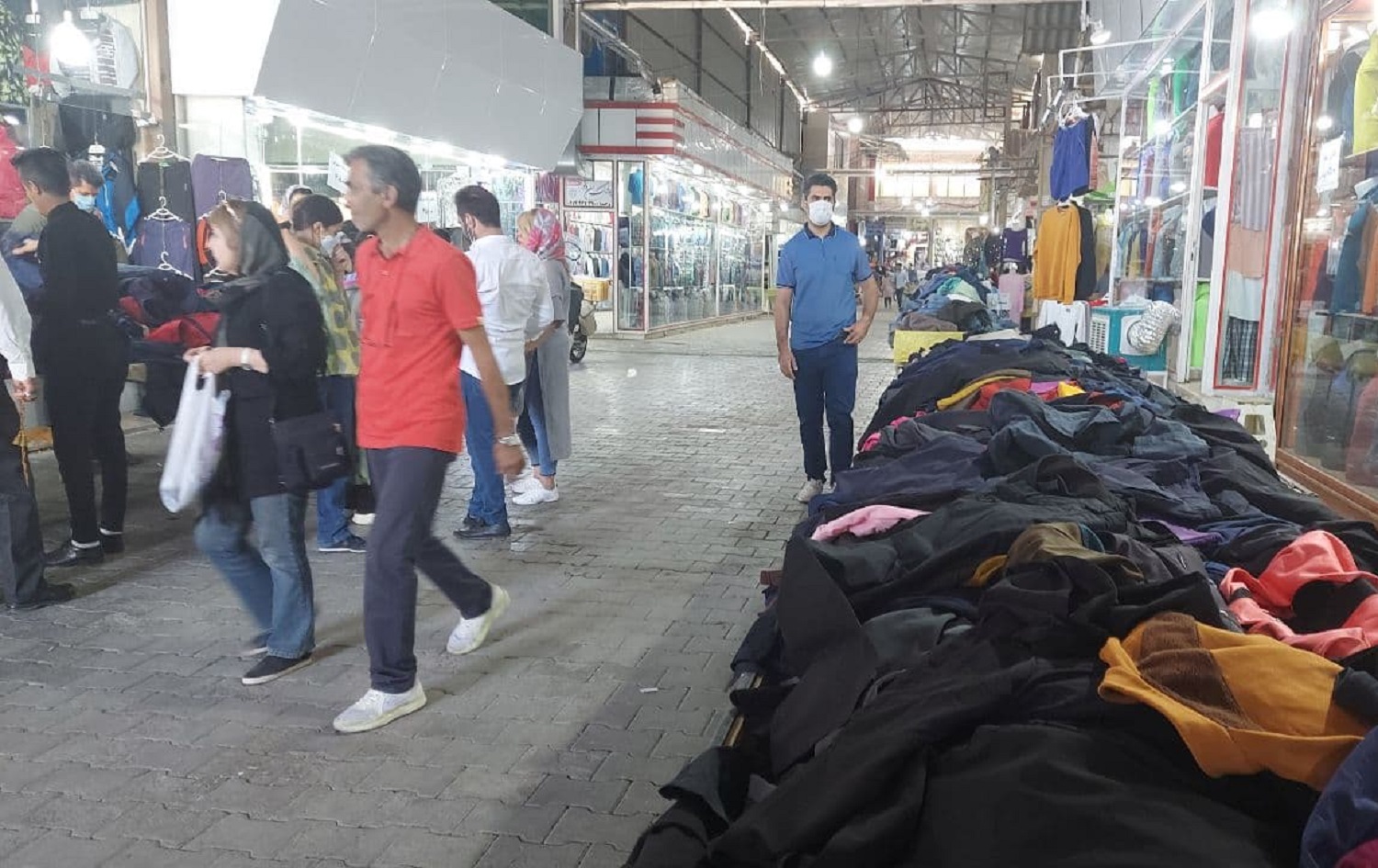
Customers shop for secondhand clothes in a Mahabad bazaar on October 6, 2021. Photo: Jabar Dastbaz/Rudaw
MAHABAD, Iran - Zainab Yousefi has four school-aged daughters but this year she cannot buy them new winter clothes because they are too expensive. She turned to secondhand shops, despite her daughters' complaints.
"My husband is working, but with this inflation his salary only covers household expenses. In previous years, I could buy my daughters' winter clothes with one million toman (about $40), but now new clothes are so expensive we couldn't buy them," she said in Mahabad's secondhand bazaar where she was choosing colourful winter jackets for her four daughters.
Mahabad's secondhand bazaar in southern West Azerbaijan province is considered the biggest in northwestern Iran. The place bustles with tourists, especially on holidays, visiting from other parts of the country to buy cheap clothes.
"My daughter doesn't like these jackets,” said Yousefi. “She says, 'my friends will make fun of me in school and say you bought your winter jacket at the second-hand bazaar and it's old.' But now a new winter jacket can't be bought for less than one million toman. That's why we decided to visit this secondhand bazaar on the recommendation of a relative, with my children and husband, to buy their winter clothes."
"Although there’s a lot of expensive stuff here, for us with not much income, we have to buy these clothes to protect ourselves from the cold at least," she said.
United States sanctions imposed after Washington withdrew from the nuclear deal with Iran and world powers in 2018 have strangled Iran’s economy. The coronavirus pandemic struck another blow. Iran is among the hardest hit nations in the world, reporting over 5.7 million cases and nearly 123,000 deaths.
According to one store owner in the bazaar, in the past three years most of his customers are buying cheap clothes because they are not able to afford new ones.
"My dad also had a store here and I have been doing this job for 15 years. Mahabad's secondhand bazaar is the biggest in northwest Iran and tourists constantly visit to buy what they need," Rebwar Ahmadi, 33, told Rudaw English.
"The previous years before the economic crisis, people were looking for unique and original brands from the West, like shoes, glasses, although it was much more expensive. But after the emergence of the crisis in Iran, customers were mostly those with low income who aren’t able to buy new clothes, that's why they come here to buy cheaper clothes,” he said.
“Most of the customers that visit are from West Azerbaijan and Kurdistan provinces. We can say the customers are two classes: the minority are rich and come here to buy unique and expensive goods, like glasses and shoes, but the majority are from the poor class and come here to buy cheap clothes. Store owners here suffered big losses during the pandemic, but the secondhand bazaar is coming back to life,” he added.
Customers in the bazaar negotiate prices and some complain about low quality clothes in Iran's shops, especially shoes, so they visit the secondhand bazaar looking for better quality.
"I have not bought new shoes in the bazaar for eight years now. My family and I buy shoes here in this secondhand bazaar every year because, even though it's not new, the quality is good. It's expensive, but it’s good stuff," said Asghar Karimi who is visiting from Tabriz.
The move to secondhand shops has worried some Iranian producers. A manufacturers’ syndicate discussed this problem in a meeting this summer under the title "Supporting local products and removing obstacles on production."
Speaking with the Iran Labour News Agency (ILNA), manufacturers explained their concerns, including the devaluation of the currency against the dollar, a shortage of raw material that is mostly imported, and sanctions that have created obstacles for them and reduced people's abilities to buy.
Most cities in Iran have secondhand markets. Mahabad is one of the beautiful cities in Kurdish areas of Iran, attracting tourists to its sites and its secondhand bazaar.
"I had heard of Mahabad's beauty, of its touristic sites a long time ago, that's why we decided to come to the secondhand market to buy some stuff with my family after visiting places such as the beautiful waterfalls and caves,” Mohammed Karimi, a tourist from Isfahan city, told Rudaw English.
The haggling between customers and merchants indicates that most shoppers are here to save money.
Jawad Nasiri, 42, is eating boiled potatoes and eggs for lunch beside his old fashioned car with his wife and their eight-year-old son. "I’m a labourer and don't make a lot of money. I’ve come here from Maragh city to this secondhand market to find cheap clothes.”
"As you can see, my wife boiled potatoes and eggs at home and we brought them with us so we don't have to go to a restaurant and spend more. It was good that I could buy some winter clothes and jackets for me and my wife, at a cheap price,” he said.


Comments
Rudaw moderates all comments submitted on our website. We welcome comments which are relevant to the article and encourage further discussion about the issues that matter to you. We also welcome constructive criticism about Rudaw.
To be approved for publication, however, your comments must meet our community guidelines.
We will not tolerate the following: profanity, threats, personal attacks, vulgarity, abuse (such as sexism, racism, homophobia or xenophobia), or commercial or personal promotion.
Comments that do not meet our guidelines will be rejected. Comments are not edited – they are either approved or rejected.
Post a comment