


Iran

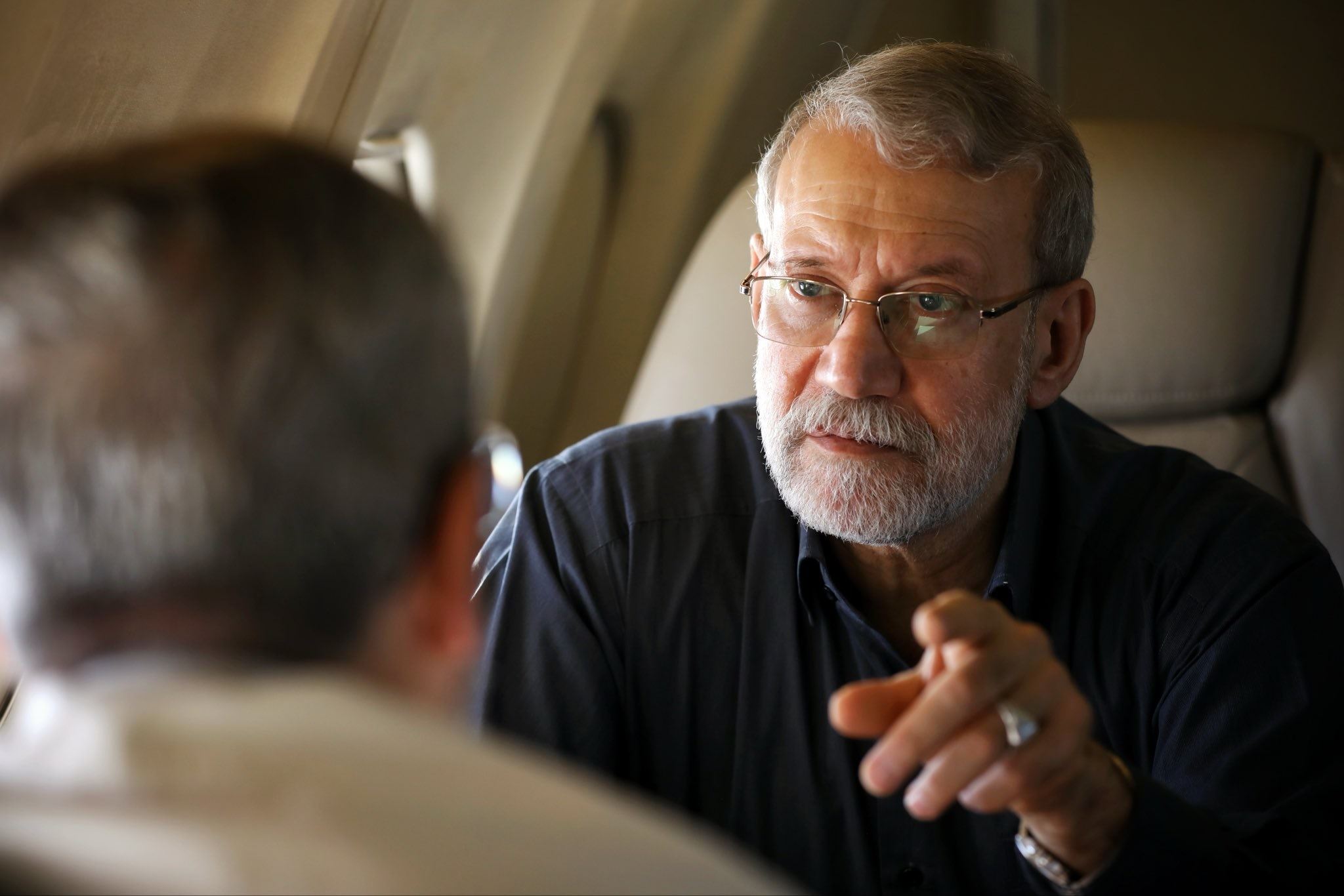
Ali Larijani, Secretary of the Supreme National Security Council (SNSC), pictured during his trip to Moscow, Russia on October 15, 2025. Photo: Alilarijani_ir/X
ERBIL, Kurdistan Region - Iran has dismissed calls from the United Nations nuclear agency chief for renewed negotiations over its nuclear program, following a joint letter by Tehran, Beijing, and Moscow to the UN Security Council that notes that UN sanctions on Iran have not been automatically reimposed and that the Security Council’s endorsement of the 2015 nuclear deal has now expired.
Ali Larijani, Secretary of the Supreme National Security Council (SNSC) - Iran's highest security authority - said on Monday that the statements by Rafael Grossi, head of the International Atomic Energy Agency (IAEA), carry no weight.
“Grossi has done his job and his reports are no longer effective,” Larijani was quoted as saying by the state-run Iranian news agency (IRNA). He added that if the IAEA “has a request” regarding the resumption of negotiations, “it should submit it to the Secretariat of the Supreme National Security Council so it can be reviewed.”
Larijani’s remarks followed Grossi’s interview with Swiss newspaper Neue Zurcher Zeitung, in which the UN official expressed hope for “a diplomatic solution” to “the disputes surrounding Iran’s nuclear program.”
Grossi pointed to US President Donald Trump’s comments during his visit to Israel last week, where Trump said, “It would be great if we made a peace deal with them [Tehran]. Wouldn’t it be nice? I think they want to.”
The IAEA chief remarked that “hearing such statements from President Trump is encouraging,” adding that they are indicative of the US President’s belief “in a diplomatic path.”
However, Iran’s Supreme Leader Ayatollah Ali Khamenei on Monday rebuffed Trump’s offer of renewed talks, while denying US claims of having destroyed Iran’s nuclear capabilities during the 12-day conflict in June, which saw Tel Aviv and Washington strike Tehran’s three key nuclear facilities: Fordow, Isfahan, and Natanz.
"The United States president proudly says they bombed and destroyed Iran's nuclear industry. Very well, keep dreaming!" Khamenei said, according to IRNA. He added that "Trump says he is a dealmaker, but if a deal is accompanied by coercion and its outcome is predetermined, it is not a deal but rather an imposition and bullying.”
Despite the US and Israeli strikes on key Iranian nuclear facilities, the IAEA estimates that about 400 kilograms of highly enriched uranium - enough for several nuclear weapons if further refined - remains unaccounted for. Iran has not allowed IAEA inspectors to return to the sites since the June conflict.
Iranian Foreign Minister Abbas Araghchi previously claimed the country’s enriched uranium stockpile was buried under rubble from the attacks. Grossi, however, stated that “most of Iran’s enriched material is stored at the known facilities,” though a small portion may have been moved elsewhere.
Dispute over snapback
In late August, Britain, France, and Germany - collectively known as the E3 - notified the UNSC that they will move to reimpose UN sanctions on Iran if the Council fails to adopt a resolution to extend the suspension of sanctions on Tehran.
"We recall that if the UNSC does not adopt within 30 days a resolution to continue the lifting of UNSC resolutions on Iran, six Security Council resolutions, including on sanctions, will be restored,” the E3 said.
The move was part of the snapback mechanism embedded in the 2015 nuclear deal between Iran and world powers - formally known as the Joint Comprehensive Plan of Action (JCPOA). The mechanism allows for the automatic reimposition of UN sanctions if Iran is found to be in violation of its nuclear obligations.
In late September Britain's UN envoy said the sanctions would come into effect, after a Russian and Chinese Security Council resolution to delay them failed the UN sanctions.
The UNSC “does not have the necessary assurance that there is a clear path to a swift diplomatic solution," Barbara Wood said after the vote, adding, "This council fulfilled the necessary steps of the snapback process set out in resolution 2231; therefore UN sanctions targeting Iranian proliferation will be reimposed this weekend.”
A push by Russia and China to delay the return of sanctions on Iran failed at the 15-member UNSC after only four countries supported their draft resolution.
However, in his Monday remarks, the Secretary of the SNSC, Larijani, reiterated Iranian Foreign Minister Araghchi’s remarks that in Tehran’s view, “if the snapback mechanism is activated, the negotiations [with the IAEA and European countries] will be considered null and void.”
Araghchi on Sunday stated that a joint letter by Tehran, Beijing, and Moscow addressed to UN Secretary-General Antonio Guterres and the head of the UNSC established that “China, Iran, and Russia emphasize that the attempt by the three European countries to trigger what is referred to as the ‘snapback mechanism’ is legally and procedurally invalid from the outset.”
Tehran’s foreign minister was further quoted by the Iranian Students News Agency (ISNA) as stating that Iran, Russia, and China have agreed that UN sanctions on Tehran have not been automatically reimposed and that the UNSC endorsement of the 2015 nuclear deal has expired on October 18.
“The view of the Islamic Republic of Iran and countries such as Russia and China, which are permanent members of the Security Council, is that contrary to the position of the United States and some European countries, the snapback mechanism has not been triggered and resolution 2231 has formally expired,” Araghchi said.
“With the resolution’s expiration, all restrictions imposed by the Security Council on the Islamic Republic of Iran have been completely lifted and the issue of Iran is no longer on the council’s agenda,” he claimed.
Araghchi further argued that the latter position had gained broad support as “more than 120 countries adopted this view in the final document of the Non-Aligned Movement foreign ministers’ meeting in Uganda,” on Wednesday.
Addressing Tehran’s latter reaction, Grossi said, “Iran’s response has not been entirely negative. It has not withdrawn from the Nuclear Non-Proliferation Treaty (NPT), and while cooperation with the Agency continues, it’s still not at the desired level.”


Comments
Rudaw moderates all comments submitted on our website. We welcome comments which are relevant to the article and encourage further discussion about the issues that matter to you. We also welcome constructive criticism about Rudaw.
To be approved for publication, however, your comments must meet our community guidelines.
We will not tolerate the following: profanity, threats, personal attacks, vulgarity, abuse (such as sexism, racism, homophobia or xenophobia), or commercial or personal promotion.
Comments that do not meet our guidelines will be rejected. Comments are not edited – they are either approved or rejected.
Post a comment