
ERBIL, Kurdistan Region - Kurdish opposition parties in Iran on Sunday announced a new political alliance to unify their efforts against the Islamic Republic and advance Kurdish self-determination, as Tehran faces mounting pressure from Washington and renewed threats of US military action over stalled nuclear talks.
Mohammad Nazif Qadri, a member of the executive committee of the Democratic Party of Iranian Kurdistan (PDKI), told Rudaw that the alliance was established under the name Alliance of Political Forces of Iranian Kurdistan.
The PDKI, a Kurdish opposition group, has fought an intermittent insurgency against Tehran since the 1979 Islamic Revolution. They supported the nationwide protests in January, which Trump on Friday said had left 32,000 people killed.
“After discussing the situation in Eastern Kurdistan [western Iran] and Iran with the political factions, with the participation of the first [top] official of all five sides, the decision was made to form the alliance,” he said.
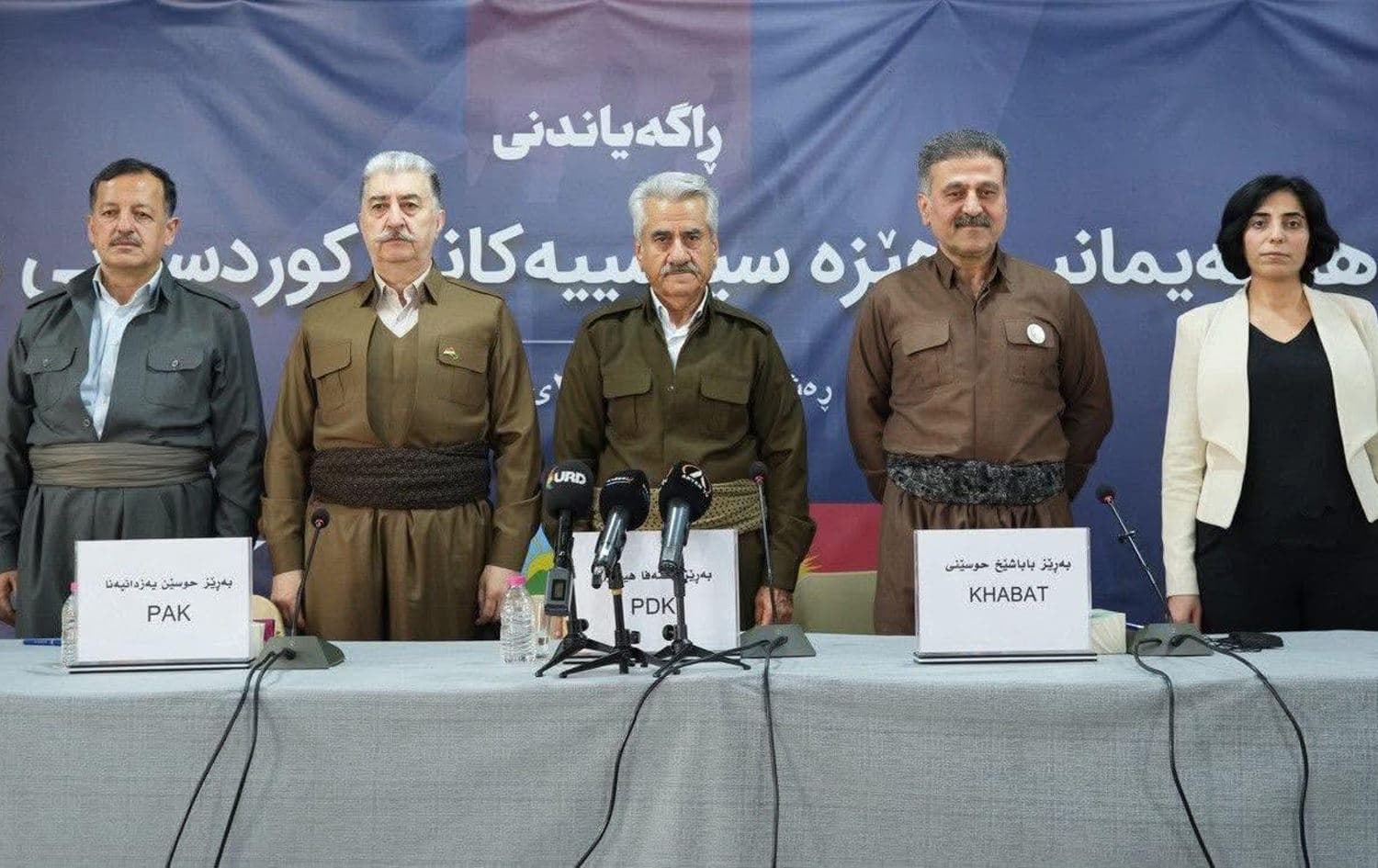
The alliance brings together five Kurdish parties: the PDKI, the Free Life Party of Kurdistan (PJAK), the Kurdistan Freedom Party (PAK), the Komala of the Toilers of Kurdistan, and the Organization of Iranian Kurdistan Struggle (Khabat).
The agreement was signed in the presence of senior party leaders, PDKI's Mustafa Hijri, PAK's Hossein Yazdanpanah, Khabat's Baba Sheikh Hosseini, Reza Kaabi of Komala, and PJAK’s Viyan Peyman
In a joint statement, the alliance said it was formed by “relying on the history of our struggle and activism, and considering the needs of responding and positioning ourselves in the current political situation of Iran,” arguing that “the Islamic Republic regime has no political legitimacy left but has remained standing due to the fragmentation of its opposing political forces.”
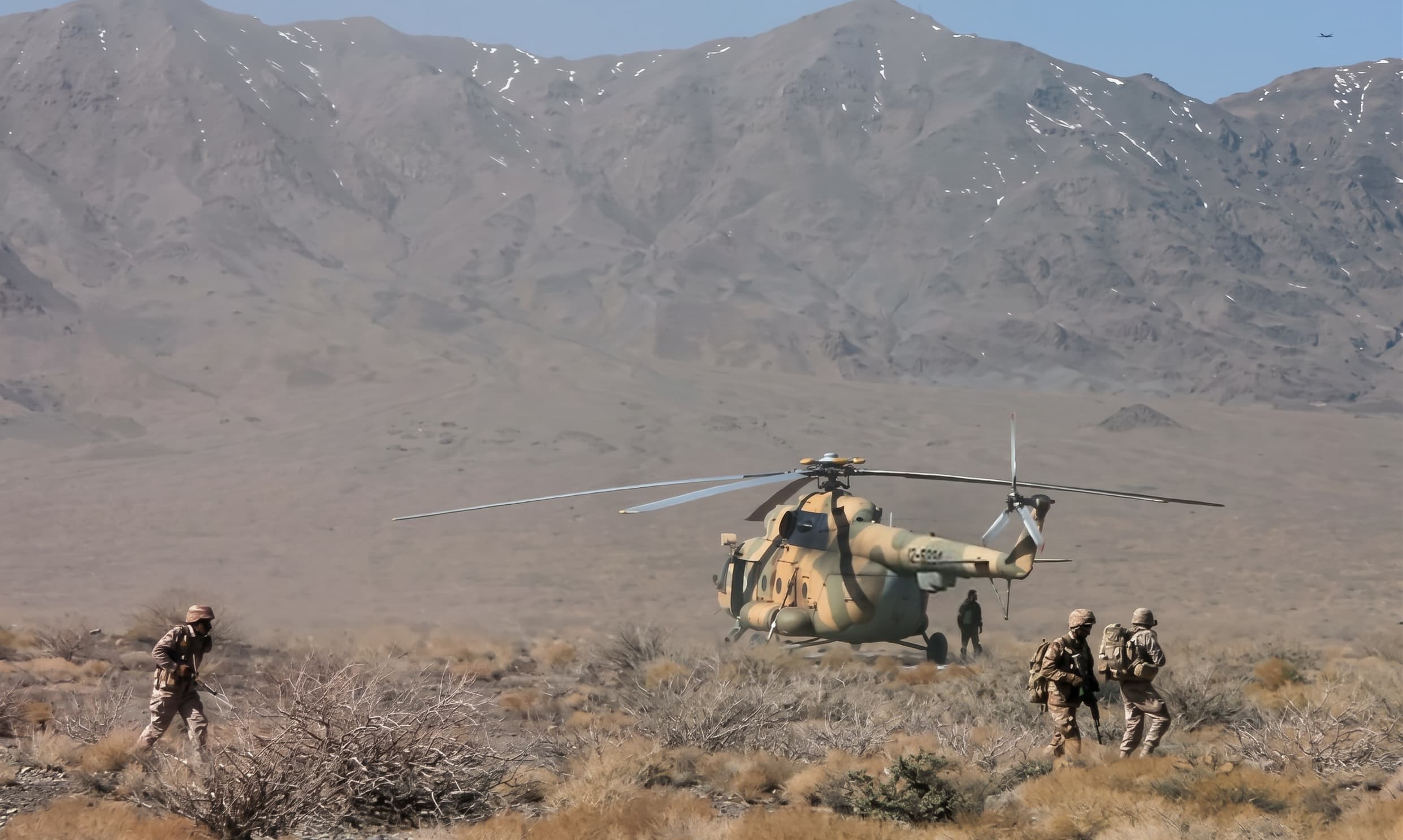
The announcement comes amid escalating tensions between Tehran and Washington following a second round of indirect nuclear talks mediated by Oman earlier this week. The United States has mobilized additional warships and fighter jets to the region, while Iran has conducted military drills and temporarily blocked parts of the Strait of Hormuz, a critical waterway through which roughly one-fifth of the world’s oil supply passes.
Earlier in February, US President Donald Trump threatened Iran with military action if a nuclear deal is not reached, warning of “very traumatic” consequences. On Thursday, he set a 10- to 15-day deadline for Iran, saying it is “enough time” to reach a deal. On Friday, he confirmed reports that he was considering limited strikes.
The alliance’s statement said that “the main purpose of this alliance… is greater unity and joint struggle to further advance the Kurdish political movement in Iran and to strengthen Kurdistan's role and position, and its political movement in the struggle against the Islamic Republic, to secure the rights and freedoms of the people of Kurdistan, and to determine how to rebuild Iran's future.”
“Our main and common goals in this alliance are to struggle for the toppling of the Islamic Republic of Iran, to realize the right of Kurdish self-determination, and to build a national and democratic institution based on the political will of the Kurdish nation in Eastern Kurdistan,” the statement added.
The alliance also voiced support for “the struggle and general discontent of the nations of Iran against the Islamic Republic,” while emphasizing “the necessity of coordination and joint political and field struggle” with political and civil forces across Iran.
It called for “establishing free elections, providing and securing the fundamental rights of all national and religious communities of Kurdistan, and establishing a democratic administrative system in Eastern Kurdistan,” adding that it considers it a duty to work toward “a democratic and secular political system in Iran that secures the rights of the diverse national and religious communities of that country.”
The Kurdistan Region’s Interior Ministry later in a statement said “we deem it necessary to reaffirm that the Kurdistan Region, as always, has been a factor of stability and peace in the region and has never been a source of threat or danger to the security of any neighboring country, nor does it allow any party to use the Kurdistan Region against any neighboring country.”
In October, Kurdish political theorist Abbas Vali told Rudaw that Kurdish opposition groups in Iran should remain armed amid what he described as “critical conditions” in the country, arguing they must be prepared “if the center in Iran collapses.”
Iran’s regional influence has weakened significantly in recent years. Israel’s military campaign following the 2023 war with Hamas degraded Hezbollah’s leadership in Lebanon, while the fall of Bashar al-Assad’s government in Syria disrupted Tehran’s supply routes. The 12-day conflict between Iran and Israel earlier this year further exposed Iran’s vulnerabilities, with Israeli airstrikes killing dozens of senior commanders and scientists.