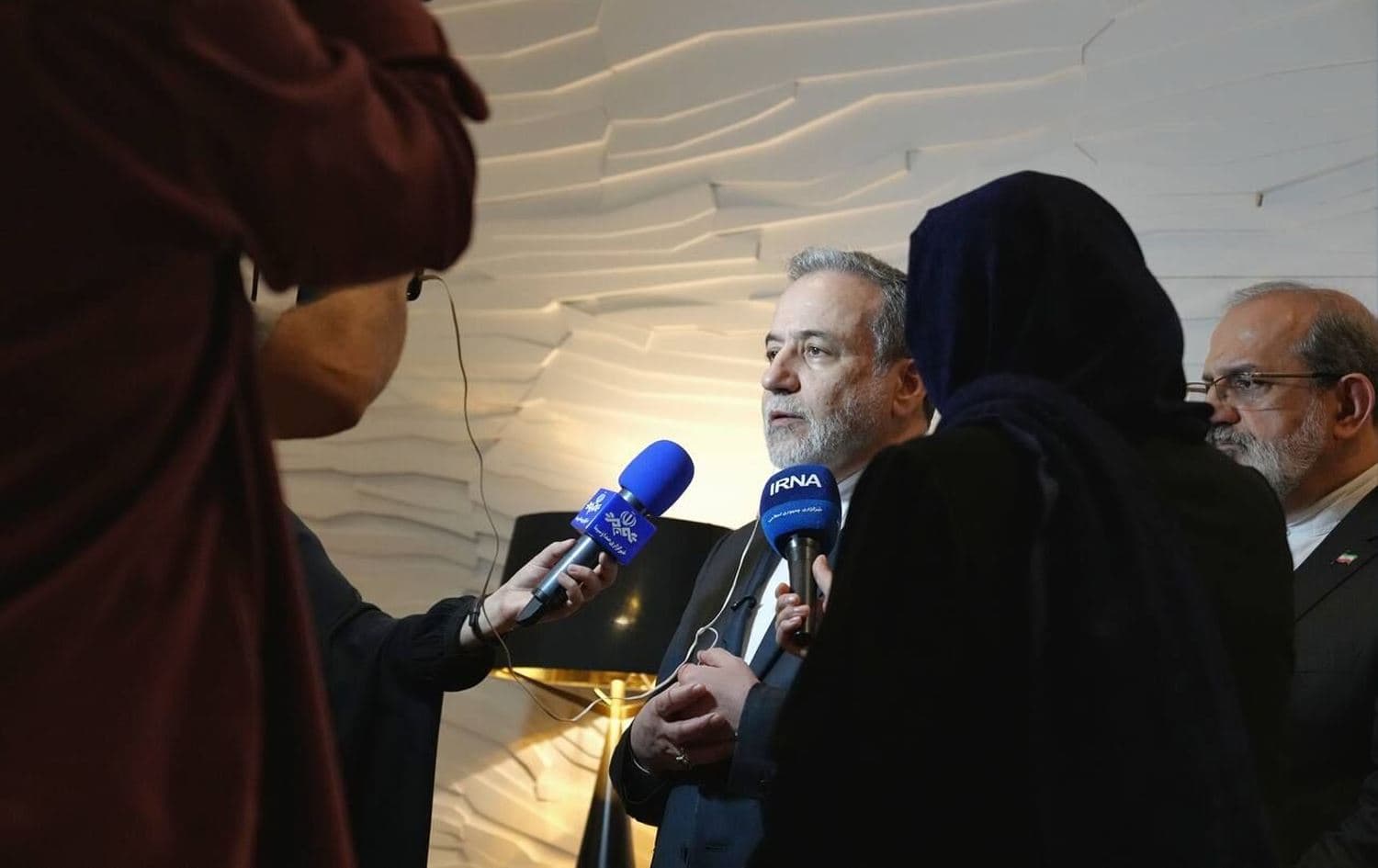
ERBIL, Kurdistan Region - Iranian Foreign Minister Abbas Araghchi on Friday said Iran plans to continue indirect talks with the United States in Oman, describing negotiations as constructive amid heightened regional tensions and long-running disputes over Tehran’s nuclear program.
“There was a good atmosphere… I can say it was a good start.” Araghchi told Iranian state media, adding that the talks “were conducted indirectly.”
“Our concerns were conveyed, and our interests, the rights that the Iranian people have, and all the matters that needed to be said, in my opinion, were conveyed in a very good atmosphere, and at the same time, the views of the other side were also heard,” he said
Negotiations for the next round are underway with Oman acting as mediator.
Araghchi arrived in Muscat early Friday to take part in a critical round of nuclear negotiations with the United States, with regional coordination growing. The talks were confirmed by the White House, which said President Donald Trump “wants to see” whether a deal with Iran can be reached, and other options remain on the table.
The US was represented by Trump’s son-in-law, Jared Kushner, and US special envoy Steve Witkoff.
“If this approach between both sides continues, we can find a clearer framework for the negotiations in future sessions,” Araghchi added.
Iranian Foreign Ministry spokesman Esmaeil Baghaei confirmed the talks concluded with an agreement to continue discussions.
“The parties, while explaining their perspectives and demands, reached an understanding to make decisions regarding the next round of talks in consultation with their capitals,” Baghaei said in a post on X.
Omani Foreign Minister Badr Albusaidi, who mediated the talks, also described the talks as constructive.
“Very serious talks mediating between Iran and the US in Muscat today. It was useful to clarify both Iranian and American thinking and identify areas for possible progress,” he said in a post on X following his meeting with Araghchi.
“We aim to reconvene in due course, with the results to be considered carefully in Tehran and Washington,” he said.
The diplomatic engagement comes amid heightened regional tensions, including a maritime incident earlier this week in which Iran-linked armed vessels attempted to intercept a US-flagged oil tanker in the Strait of Hormuz, and a separate incident in which a US warplane shot down an Iranian drone in the Arabian Sea.
Iran’s nuclear program has long been a central point of contention with Washington, which has repeatedly demanded that Tehran curb its uranium enrichment. Combined with Iran’s violent crackdown on nationwide protests despite US warnings of military intervention, these concerns have driven an increased US military presence in the Gulf, fueling fears of a potential military confrontation.
Iran’s state media, IRNA, reported that Tehran’s “most important demand in negotiations with the United States is the effective and verifiable lifting of economic and financial sanctions.” It added that “Iran insists on its legal right to enrich uranium on its soil and considers this a red line in the negotiations.”
IRNA also said Tehran wants the talks “limited to the nuclear issue,” stressing that “raising missile or regional issues has no place in these talks.”
While Iran remains under heavy international sanctions and pressure over its nuclear program, it has repeatedly said that its ballistic missile program is “not subject to negotiation,” insisting on its right to defend the country and to pursue the peaceful use of nuclear energy.
Earlier this week, Iranian President Masoud Pezeshkian said Tehran is prepared to pursue negotiations with Washington if an appropriate diplomatic environment is established, signaling conditional openness to dialogue while emphasizing Iran’s national interests.
Talks between Washington and Tehran are expected to resume despite logistical challenges, following a months-long hiatus triggered by the 12-day conflict between Tel Aviv and Tehran in June.
Updated at 7:09 pm.