


Iran


Sisters Bayan and Sahar Moradi were killed in Sanandaj on July 25, 2021. Photo: courtesy of the Moradi family
SANANDAJ, Iran — Bayan Moradi suffered years of abuse at the hands of her husband, according to her family. He even threatened to kill her and she rarely ventured out of her house. But one warm summer evening, she wanted to visit a small park near her house with her sister. Little did they know that would be the last time they took a walk together. Both their lives were ended with a few bullets.
In the past two months, there have been a series of incidents of violence against women in Kurdish areas of Iran (known to Kurds as Rojhelat). Experts believe growing financial hardships and lack of legal protections for women are factors behind the violence.
One of the most recent tragedies took place on Sunday evening in a park in Hajiawa neighborhood of Sanandaj, Kurdistan province. Bayan Moradi, 40, and her sister Sahar Moradi, 31, were killed. The family blame Bayan’s husband, Ismael.
The funeral was held the next day at the humble home of their father, Fayaq Moradi. Many people including activists and journalists attended and offered their condolences to the family. The men gathered outside and the women were in a small area inside the house. Bayan’s and Sahar’s mother and sisters could not hold back their tears, beating themselves and wailing as they mourned their loved ones.
“Bayan got married 22 years ago, but her husband was not a good person. He would always beat her up and hurt her. Bayan had a son and two daughters, and would always say ‘I am tolerating the pain for my kids’,” her mother Sughra Bartani told Rudaw English. “He was very bad with the kids too and would beat them.”
“It got to a point that six months ago she could no longer stand it, so she left him. We rented a house for her and her kids near our own. However Ismael would keep on threatening her and did not accept divorce,” Bartani said. “He once pointed a gun at her head in the city, but people rushed to the rescue. We filed a complaint with the police saying that Bayan is being threatened, but they did nothing for us.”
Bartani wiped her tears and continued.
“A few days before the incident, Ismael came to our house and said ‘if Bayan does not come back I will kill your whole family.’ I went to the police again and said that our son-in-law is threatening us. But again, they did not do anything,” she said.
“That day I was with Bayan. She did not dare to come often for she was afraid that he would kill her. My other daughter Sahar came and said ‘let’s go to the park for a walk.’ So I came home,” Bartani said of the day her daughters died. “Less than five minutes later, Ismael called me saying ‘I killed your daughter’.”
“I ran outside screaming and I saw Bayan soaked in blood on the ground. I hugged her body and I could not see anything else,” she said. “I asked where Sahar was, to tell her brothers, and someone showed me her body nearby and said she had been killed too. That’s when I fainted.”
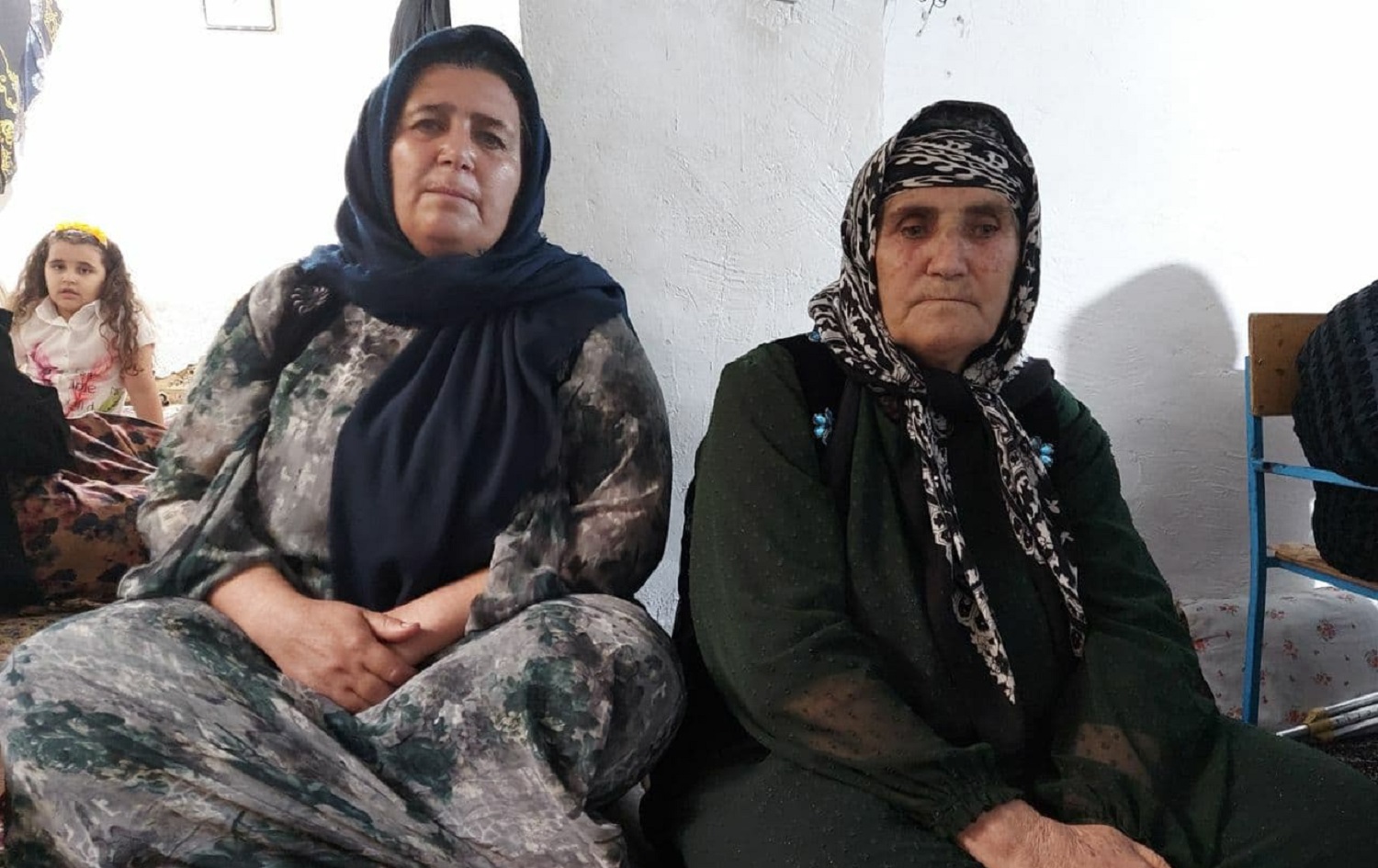
Close by was another sister, Soyba Moradi, who like her mother could not stop crying.
“We only found out that Sahar was pregnant when they told us at the hospital. That man killed three people and he roams freely. We know he is in the city,” she said. “We are afraid he’ll come back and cause another disaster. We ask that he gets arrested as soon as possible.”
A day after the sisters’ murders shocked Sanandaj, 35-year-old Homa Hajipur was killed, allegedly by her husband, in Sardasht, Western Azerbaijan province. The city of Saqqez is still suffering from the news of the killing and burning of Gulala Sheikhi by her fiancé two months ago.
A women’s rights activist from Saqqez thinks growing awareness is part of the reason for the violence. “Problems often occur as today women no longer accept imposed roles by men like they used to before,” Laila Inayatzadeh told Rudaw English.
“Another issue is that the economic crisis in Iran and Rojhelat has brought violence into the households, and women are the main victims of this. We have seen several heart-shattering cases recently,” she added.
She wants to see legal reforms to strengthen protections for women and close gaps that allow perpetrators of violence to escape punishment.
Soyba said her sister sought police protection, but did not receive it. “Bayan would rant to me and tell me of her situation many times, saying she was being threatened, and that she went to the police and court multiple times. They told her to not be afraid, he won’t do anything,” she said through her tears.
Iran’s cabinet in January passed a long-awaited bill that criminalizes violence against women. The legislation is now before the parliament. It has, however, been criticized for falling short.
It “fails to provide effective protection and to ensure access to remedies. It does not criminalize child marriage or marital rape, nor does it repeal discriminatory provisions against women in the Civil Code and the Islamic Penal Code, including the narrow definition of sexual violence and assault,” the UN human rights chief said in her most recent report.
She added that victims are reluctant to file complaints against their abuser, partly because of the evidence required and the risk they may face prosecution for extramarital sex.
A psychiatrist and social activist from Sanandaj said the lack of legal protection puts women at risk on a daily basis.
“The lack of a law to prevent violence against women and against honor killing is a cause of cases of violence against women on a daily basis,” Hadi Naqdi told Rudaw English.
He believes social media is an important way for women to learn about their rights in the traditional society.
“The classic conservative society on one side and the economic crisis on the other have only increased the problems,” he said. “Men in this community, due to the economic crisis have no time to read and educate themselves, and this results in violence against women and children.”
“Women’s awareness of their rights due to exposure to social media is among the most effective forms of resistance against the patriarchy,” he said.


Comments
Rudaw moderates all comments submitted on our website. We welcome comments which are relevant to the article and encourage further discussion about the issues that matter to you. We also welcome constructive criticism about Rudaw.
To be approved for publication, however, your comments must meet our community guidelines.
We will not tolerate the following: profanity, threats, personal attacks, vulgarity, abuse (such as sexism, racism, homophobia or xenophobia), or commercial or personal promotion.
Comments that do not meet our guidelines will be rejected. Comments are not edited – they are either approved or rejected.
Post a comment