


Error occured during this request! Please try again later.
Iran

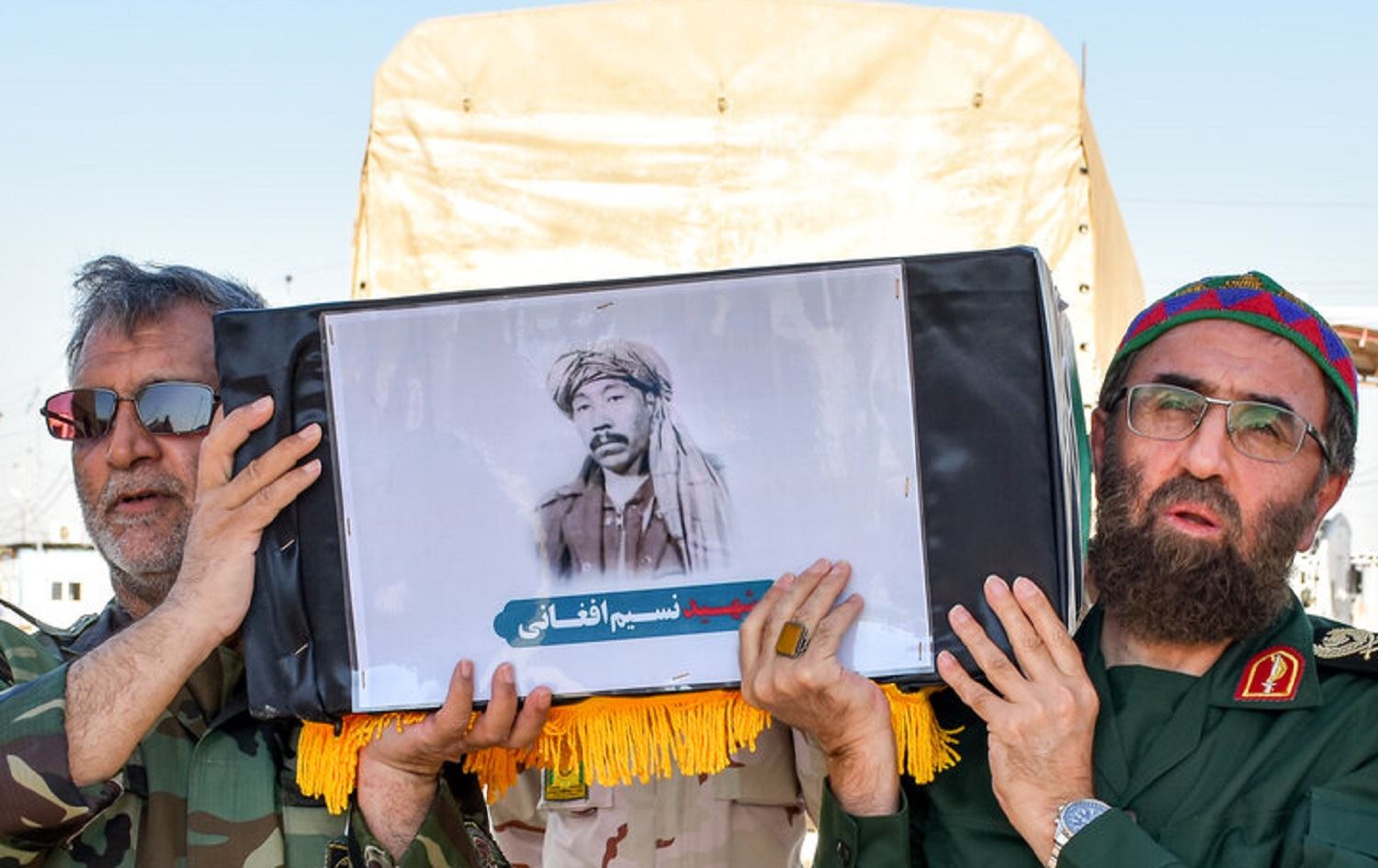
The coffin of IRGC fighter Nasim Afghani is carried through Shalamcheh, Khuzestan Province on June 22, 2020. Photo: Aghil Naeimnezhad /ISNA
ERBIL, Kurdistan Region — Iran was under pressure to move against the fast advancing Iraqis, who in the early days of their marathon war, seized large swathes of territory. It decided to launch a large-scale, ten-day operation named Waljafr-1 in April 1982. Tens of thousands of soldiers, including children, were brought to the frontline by the Islamic Revolutionary Guard Corps (IRGC) and Iran’s army.
Nasim Afghani, a refugee from Afghanistan,was the head of a unit in the 5th Nasr Khorasan Division, then located in the southwestern Iranian province of Khuzestan. The division was headed up by a young Guard commander called Mohammad Bagher Qalibaf, current speaker of Iran’s parliament.
Afghani, 31, was one of thousands of Afghan refugees recruited by the IRGC to help push back not just Saddam Hussein’s invading forces, but the Kurdish Peshmerga forces in the west of Iran too. He was seen as a brave and selfless fighter, by his direct superior Mohammad Akhondi and his fellow fighters alike.
Fighting intensified as Walfajir-1 continued. Akhondi asked his trusted Afghan fighter to accompany him to an Iraqi outpost raining down fire on his troops, without word to his comrades. The two men left Afghani’s unit for their destination, never to be heard from again.
Fast forward almost four decades, to June 15 of this year. An Iranian search team in Khuzestan’s former battlefields finds a dog tag, inlaid with ID number CG519_396.
The remains of more than 40,000 Iranian soldiers have been found by national search teams. But this dog tag was traced back to an Afghan fighter, to Nasim Afghani, at a particularly sensitive time for the Iranian establishment regarding its relationship with Afghans.
Iranian border guards were accused in May of trying to drown 34 Afghan migrants who tried to cross the border into Iran. Though a faltering Iranian economy has in recent years sent tens of thousands of Afghans back to their home country, many still attempt to cross the border, either to work in Iran or to seek refuge in Europe.
An Iranian child soldier recalled meeting Nasim Afghani before he died. “In 1982, I was a 15-yea- old fighter alongside Nasim Afghani who was 31 years of age, he was the RPG operator and I was a sniper,” Hashem Attari, a child soldier at the time, recalled in an interview on June 22. “He was funny, boisterous and brave.”
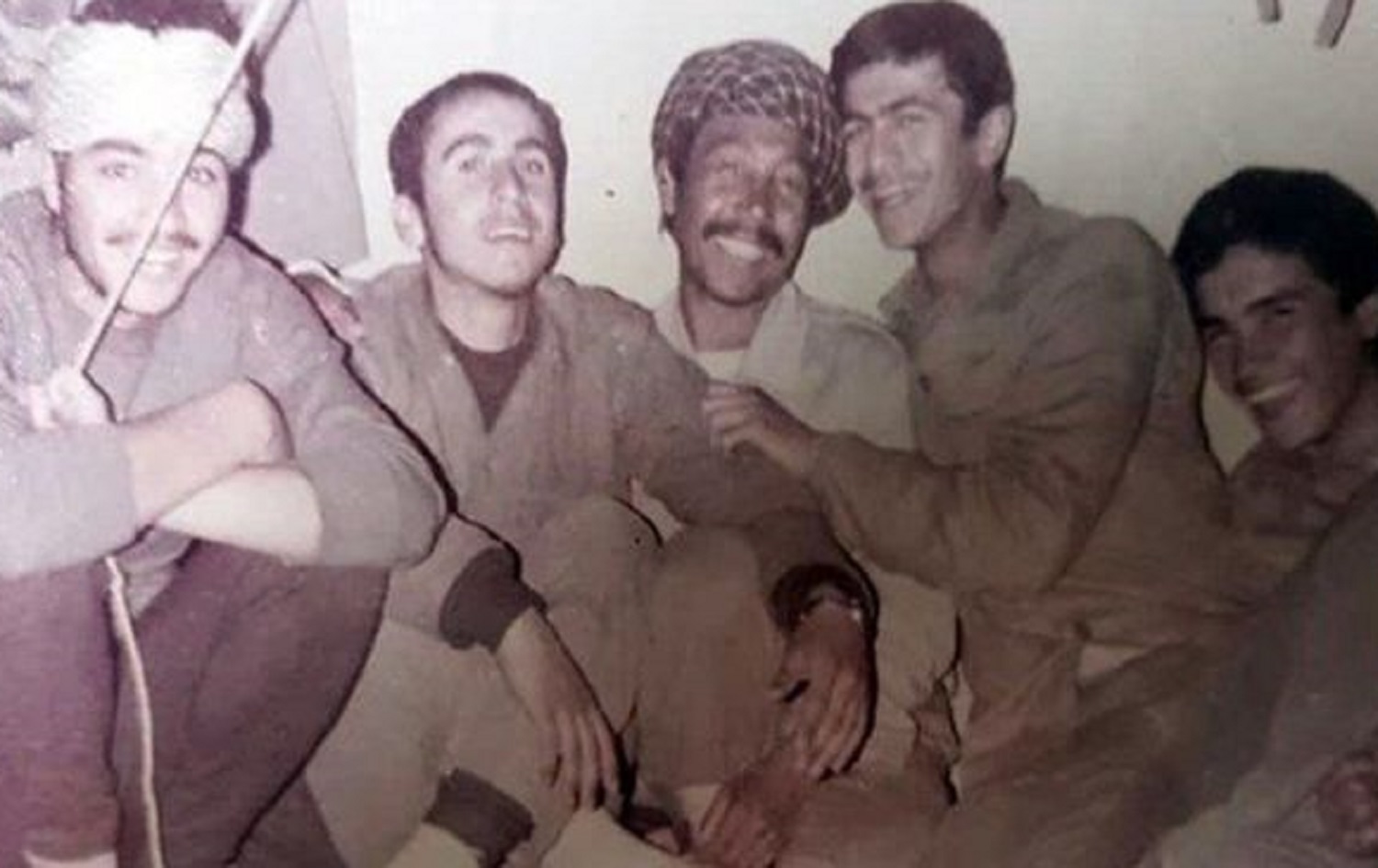
Afghans have also long been essential military manpower for the IRGC’s foreign wars, including in Syria, where hundreds of them have lost their lives. State and IRGC affiliated media have sought to canonise Nasim Afghani, to turn his story into one that epitomises the sacrifice that Afghan fighters have made for Iran. Supreme Leader Ali Khamenei said that the remains of Nasim Afghani should be buried with special honours at the Imam Reza Shrine in Mashhad, a holy Shiite site in northeastern Iran, close to the Afghan border.
In the 1980s, a generation of Afghan refugees were recruited by the IRGC to perform its bidding on the battlefields of Iraq, Lebanon and Palestine, but were left to abandon after the war ended. Many died stateless and in abject poverty. Some still collect scrap metal to make a living.
The IRGC commander in charge of the IRGC’s Afghan Abuzar Brigade was Mohammad Reza Hakim Javadi, who, in an October 2015 interview, expressed regret for the way Afghan fighters were treated.
“The time has come to recognize the sacrifices of the martyrs and the wounded members of the Abuzar Brigade. They were genuinely downtrodden. They did not receive a salary, and their years on the frontline did not count for anything,” said Javadi, who trained the Afghan fighters in the early 1980s. “And when the issue of Syria came up, they headed to Syria to defend the shrine of Zeinab [granddaughter of Prophet Mohammad] like a man, and without any expectations.”
Today, a new generation of fighting Afghan refugees are scattered across the front lines of northwest Syria, fighting jihadists rebel groups on behalf of President Bashar al-Assad.
By sending thousands of Shiite fighters, including Afghans, to shore up Syrian regime defenses, the IRGC and Iran are returning the favour paid in the 1980s by Hafez al-Assad, then president of Syria and father of current leader Bashar. Assad the elder was a vital supporter of Iran against a Saddam Hussein’s regime backed by almost the entire Arab world.
The story of some of these Afghan fighters dispatched for distant battle was collected over 14 years by Afghan researcher Mohammad Suroor Rajaei, in a book published in Iran last year.
“The Memoirs of Fighters from Afghanistan's Sacred Defence” unearthed the long critical contribution of Afghan sacrifices for the IRGC. Over two thousand Afghans died aiding Iran’s war efforts during the eight year war with Iraq, a war known domestically as the “Sacred Defense”.
The IRGC deployed 300 trained Afghan fighters as part of the Abuzar Brigade to the Hawraman region, straddling Iraqi and Iranian Kurdistan. The fighters were under the command of the external arm of the IRGC, the Ramadan Headquarters, a wing that dealt with irregular warfare. Other groups under its command were Iraqi Shiite fighters, and the Guards’ special forces.
Images of these fighters in the highlands of Hawraman show teenagers and young men barely in their twenties wielding mortars, and manning anti-aircraft heavy guns, PKC machine guns and artillery units.
The Soviet invasion of Afghanistan prompted the newly established IRGC to send a number of Iranian volunteers across its eastern border, to train Afghan fighters. Some lost their lives while training. But as the war intensified, the flood of Afghan refugees into Iran took pace; four million Afghans would eventually resettle in Iran.
Shiite and Sunni Afghan parties had offices in Iran, where they actively recruited fighters from the huge pool of refugees. An IRGC office in charge of overseas Liberation Movements started training both Shiite and Sunni in two camps – Khatam al-Anbia near Qom, and Imam Hussein near Tehran – after Iraq invaded Iran in September 1980. The two camps were under the supervision of the IRGC intelligence. Iraqi Kurdish parties including Marxist-Leninist groups also began receiving assistance from the IRGC.
The first place Afghans were deployed en masse as part of Abuzar was in a part of the Hawraman that fell under Kermanshah province. There, the Afghans faced both Kurdish fighters and the Iraqi Army. Other groups of Afghans were subsequently deployed to Mahabad and other Kurdish areas, as part of IRGC Hamza Command.
“The lands of Kurdistan and the west [of Iran] are very similar to Afghanistan. The idea was that these fighters would gain experience and then be re-deployed to Afghanistan,” Javadi said in the 2015 interview.
The Afghans were familiar with guerrilla tactics thanks to their fighting history, and the IRGC commanders, under pressure from the Iraqis, thought they would make a good match for the agile peshmerga fighters that tormented the Guard in the highlands of Kurdistan.
One Afghan fighter who ended up in Hawraman was 15-year-old Amanollah Amini, whose story is detailed in Rajaei’s book. He had first tried to join the Afghan fighting force at the tender age of ten, inspired by the fighters being trained by the IRGC in his home province of Oruzgan, central Afghanistan; deemed too young to fight, he was refused membership.
His family arrived in the central Iranian province of Qom as refugees five years later. There, he joined the Guard, and trained at Khatam al-Anbia under the command of Hakimi Javadi.
Years after his deployment to Hawraman, Amanollah recounted a constant fear of the local Kurdish population.
“The residents of Dezli village which was the nearest to us were all Kurds … Dezli was small and very dangerous. You could not distinguish foe from friend. Even though we were all armed , we were still terrified of their men and women. The women and the men would wear baggy trousers and even if they hid two or three guns In their clothes, we would not know,” a wheelchair-bound Amanollah told a journalist.
“Be careful in your dealings with the people of these villages, be wary of their women too, they are shrewd fighters, we were in a situation where on top of the Iraqis, the KDPI [an armed Iranian Kurdish party] and Komala [an armed Iranian Kurdish leftist party] were also active.”
Amanollah spent some time on the frontline with the Abuzar Brigade under the supervision of the IRGC, and sometimes pierced into Iraqi territory.
“Abuzar Brigade was independent. The control of the entire region and even the responsibility of the units was with Afghan fighters who were operating under the command of Ramadan headquarters, our top commander was one of the brothers from IRGC,” Amanollah said.
In the spring of 1986, Amanollah was secretly deployed some 40 kilometers into the Kurdistan Region of Iraq’s Erbil province.
As Amanollah’s unit prepared one evening for an operation to hit an Iraqi outpost, a mortar fell amongst them, wounding Amanollah severely and paralysing him from neck down. “When it exploded, I was dizzy or maybe I was unconscious … afterwards in the hospital the friends said that the first mortar fell in the middle of us and dropped twenty of the brothers. Four of my fellow fighters were martyred,in this explosion, two of us paralyzed from the neck down, others were either wounded or were shell shocked.”
Of 300 Afghans who were deployed by the IRGC to the Hawraman region, around 80 percent were either killed or wounded, according to Amanollah, including 15 of his friends. At least three were taken prisoner by the Iraqis.
Amanollah was transferred from deep inside Iraqi territory to Tabriz, northwestern Iran, and from there to Tehran. He has not had movement in his legs ever since.
For the Afghans who fought in the Iran-Iraq war, post-conflict life has proven tough, thanks to inherent social and bureaucratic xenophobia and towards Afghans in Iran.
Amanollah has spent three decades of life in a wheelchair thanks to his war injuries. Despite his huge sacrifices, he says he is treated like any other immigrant to Iran.
“In the first four years of my injury, I had many problems paying for my living costs, because I had no file in the Foundation of Martyrs and Veteran Affairs…even the costs of my treatment is still free, but my nationality means that there is discrimination that deprives me of many benefits [compared to Iranian war veterans] … though I have no ability to work, my passport is stamped with “no right to work”.
Mohammad Aziz Jafari, another Afghan fighter, still lived in rented accommodation in Tehran’s Shahr Rey neighbourhood at the time of publication of Rajaei’s book. He decided in 1987 to visit Mehdi Karubi, the head of the foundation, to ask for some assistance.
“Where are you from?” asked Karubi. “Afghanistan,” Jafari replied. “We can’t help the foreigners right now, the government does not have funds. Let’s say several thousand Afghans have gone to the front line, we can’t help every one of them.”
Afghan fighters who have returned home also face ill-treatment, stigmatised as “Iran’s mercenaries,” the commander of Afghan Abuzar Brigade Javadi said.
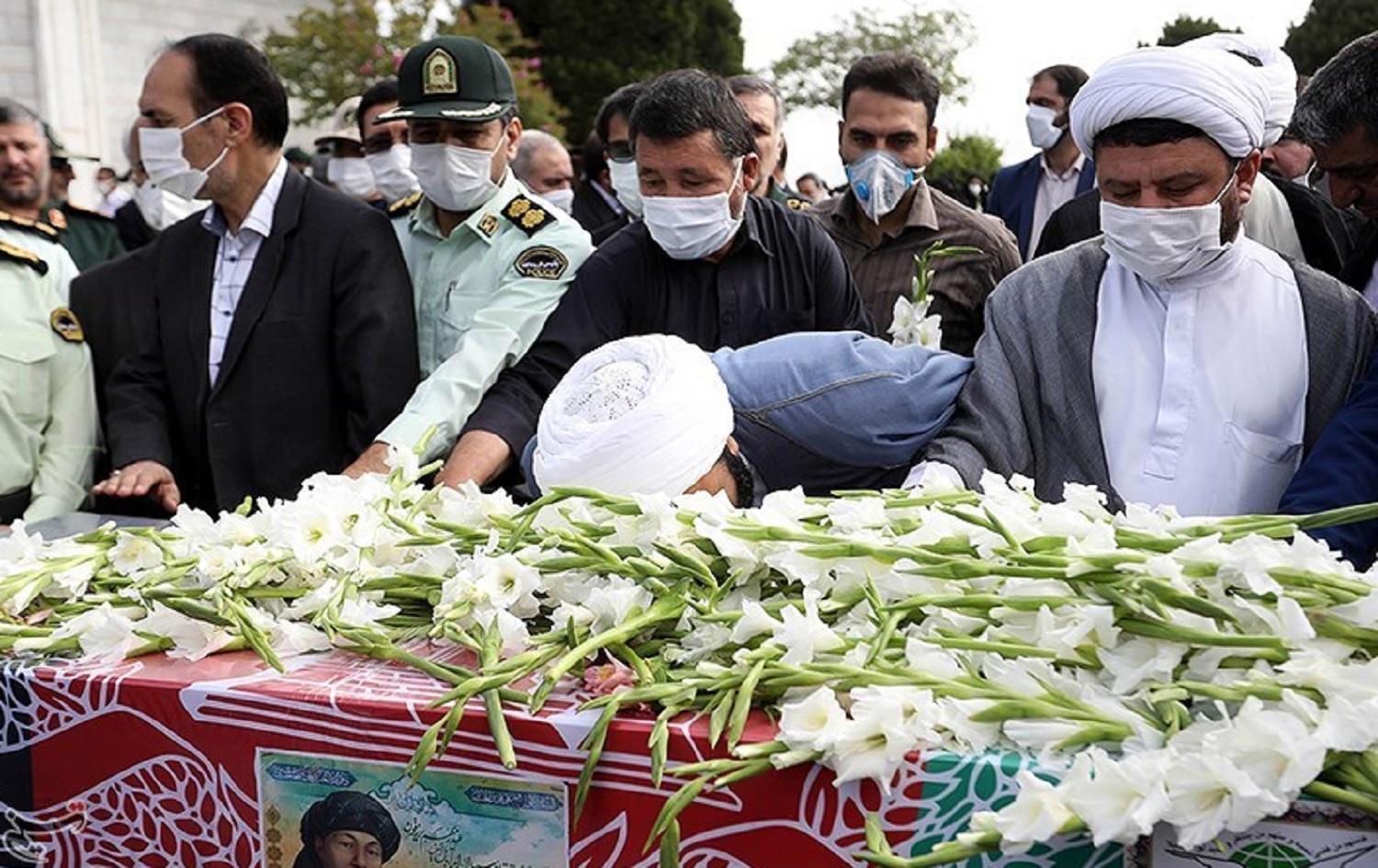
Nasim Afghani was buried in Mashhad on Tuesday to national media attention, but the lives and deaths of generations of Iran’s Afghan fighters like him remain anonymised and devalued.
Editing by Shahla Omar
Nasim Afghani, a refugee from Afghanistan,was the head of a unit in the 5th Nasr Khorasan Division, then located in the southwestern Iranian province of Khuzestan. The division was headed up by a young Guard commander called Mohammad Bagher Qalibaf, current speaker of Iran’s parliament.
Afghani, 31, was one of thousands of Afghan refugees recruited by the IRGC to help push back not just Saddam Hussein’s invading forces, but the Kurdish Peshmerga forces in the west of Iran too. He was seen as a brave and selfless fighter, by his direct superior Mohammad Akhondi and his fellow fighters alike.
Fighting intensified as Walfajir-1 continued. Akhondi asked his trusted Afghan fighter to accompany him to an Iraqi outpost raining down fire on his troops, without word to his comrades. The two men left Afghani’s unit for their destination, never to be heard from again.
Fast forward almost four decades, to June 15 of this year. An Iranian search team in Khuzestan’s former battlefields finds a dog tag, inlaid with ID number CG519_396.
The remains of more than 40,000 Iranian soldiers have been found by national search teams. But this dog tag was traced back to an Afghan fighter, to Nasim Afghani, at a particularly sensitive time for the Iranian establishment regarding its relationship with Afghans.
Iranian border guards were accused in May of trying to drown 34 Afghan migrants who tried to cross the border into Iran. Though a faltering Iranian economy has in recent years sent tens of thousands of Afghans back to their home country, many still attempt to cross the border, either to work in Iran or to seek refuge in Europe.
An Iranian child soldier recalled meeting Nasim Afghani before he died. “In 1982, I was a 15-yea- old fighter alongside Nasim Afghani who was 31 years of age, he was the RPG operator and I was a sniper,” Hashem Attari, a child soldier at the time, recalled in an interview on June 22. “He was funny, boisterous and brave.”
Afghans have also long been essential military manpower for the IRGC’s foreign wars, including in Syria, where hundreds of them have lost their lives. State and IRGC affiliated media have sought to canonise Nasim Afghani, to turn his story into one that epitomises the sacrifice that Afghan fighters have made for Iran. Supreme Leader Ali Khamenei said that the remains of Nasim Afghani should be buried with special honours at the Imam Reza Shrine in Mashhad, a holy Shiite site in northeastern Iran, close to the Afghan border.
In the 1980s, a generation of Afghan refugees were recruited by the IRGC to perform its bidding on the battlefields of Iraq, Lebanon and Palestine, but were left to abandon after the war ended. Many died stateless and in abject poverty. Some still collect scrap metal to make a living.
The IRGC commander in charge of the IRGC’s Afghan Abuzar Brigade was Mohammad Reza Hakim Javadi, who, in an October 2015 interview, expressed regret for the way Afghan fighters were treated.
“The time has come to recognize the sacrifices of the martyrs and the wounded members of the Abuzar Brigade. They were genuinely downtrodden. They did not receive a salary, and their years on the frontline did not count for anything,” said Javadi, who trained the Afghan fighters in the early 1980s. “And when the issue of Syria came up, they headed to Syria to defend the shrine of Zeinab [granddaughter of Prophet Mohammad] like a man, and without any expectations.”
Today, a new generation of fighting Afghan refugees are scattered across the front lines of northwest Syria, fighting jihadists rebel groups on behalf of President Bashar al-Assad.
By sending thousands of Shiite fighters, including Afghans, to shore up Syrian regime defenses, the IRGC and Iran are returning the favour paid in the 1980s by Hafez al-Assad, then president of Syria and father of current leader Bashar. Assad the elder was a vital supporter of Iran against a Saddam Hussein’s regime backed by almost the entire Arab world.
The story of some of these Afghan fighters dispatched for distant battle was collected over 14 years by Afghan researcher Mohammad Suroor Rajaei, in a book published in Iran last year.
“The Memoirs of Fighters from Afghanistan's Sacred Defence” unearthed the long critical contribution of Afghan sacrifices for the IRGC. Over two thousand Afghans died aiding Iran’s war efforts during the eight year war with Iraq, a war known domestically as the “Sacred Defense”.
The IRGC deployed 300 trained Afghan fighters as part of the Abuzar Brigade to the Hawraman region, straddling Iraqi and Iranian Kurdistan. The fighters were under the command of the external arm of the IRGC, the Ramadan Headquarters, a wing that dealt with irregular warfare. Other groups under its command were Iraqi Shiite fighters, and the Guards’ special forces.
Images of these fighters in the highlands of Hawraman show teenagers and young men barely in their twenties wielding mortars, and manning anti-aircraft heavy guns, PKC machine guns and artillery units.
The Soviet invasion of Afghanistan prompted the newly established IRGC to send a number of Iranian volunteers across its eastern border, to train Afghan fighters. Some lost their lives while training. But as the war intensified, the flood of Afghan refugees into Iran took pace; four million Afghans would eventually resettle in Iran.
Shiite and Sunni Afghan parties had offices in Iran, where they actively recruited fighters from the huge pool of refugees. An IRGC office in charge of overseas Liberation Movements started training both Shiite and Sunni in two camps – Khatam al-Anbia near Qom, and Imam Hussein near Tehran – after Iraq invaded Iran in September 1980. The two camps were under the supervision of the IRGC intelligence. Iraqi Kurdish parties including Marxist-Leninist groups also began receiving assistance from the IRGC.
The first place Afghans were deployed en masse as part of Abuzar was in a part of the Hawraman that fell under Kermanshah province. There, the Afghans faced both Kurdish fighters and the Iraqi Army. Other groups of Afghans were subsequently deployed to Mahabad and other Kurdish areas, as part of IRGC Hamza Command.
“The lands of Kurdistan and the west [of Iran] are very similar to Afghanistan. The idea was that these fighters would gain experience and then be re-deployed to Afghanistan,” Javadi said in the 2015 interview.
The Afghans were familiar with guerrilla tactics thanks to their fighting history, and the IRGC commanders, under pressure from the Iraqis, thought they would make a good match for the agile peshmerga fighters that tormented the Guard in the highlands of Kurdistan.
One Afghan fighter who ended up in Hawraman was 15-year-old Amanollah Amini, whose story is detailed in Rajaei’s book. He had first tried to join the Afghan fighting force at the tender age of ten, inspired by the fighters being trained by the IRGC in his home province of Oruzgan, central Afghanistan; deemed too young to fight, he was refused membership.
His family arrived in the central Iranian province of Qom as refugees five years later. There, he joined the Guard, and trained at Khatam al-Anbia under the command of Hakimi Javadi.
Years after his deployment to Hawraman, Amanollah recounted a constant fear of the local Kurdish population.
“The residents of Dezli village which was the nearest to us were all Kurds … Dezli was small and very dangerous. You could not distinguish foe from friend. Even though we were all armed , we were still terrified of their men and women. The women and the men would wear baggy trousers and even if they hid two or three guns In their clothes, we would not know,” a wheelchair-bound Amanollah told a journalist.
“Be careful in your dealings with the people of these villages, be wary of their women too, they are shrewd fighters, we were in a situation where on top of the Iraqis, the KDPI [an armed Iranian Kurdish party] and Komala [an armed Iranian Kurdish leftist party] were also active.”
Amanollah spent some time on the frontline with the Abuzar Brigade under the supervision of the IRGC, and sometimes pierced into Iraqi territory.
“Abuzar Brigade was independent. The control of the entire region and even the responsibility of the units was with Afghan fighters who were operating under the command of Ramadan headquarters, our top commander was one of the brothers from IRGC,” Amanollah said.
In the spring of 1986, Amanollah was secretly deployed some 40 kilometers into the Kurdistan Region of Iraq’s Erbil province.
As Amanollah’s unit prepared one evening for an operation to hit an Iraqi outpost, a mortar fell amongst them, wounding Amanollah severely and paralysing him from neck down. “When it exploded, I was dizzy or maybe I was unconscious … afterwards in the hospital the friends said that the first mortar fell in the middle of us and dropped twenty of the brothers. Four of my fellow fighters were martyred,in this explosion, two of us paralyzed from the neck down, others were either wounded or were shell shocked.”
Of 300 Afghans who were deployed by the IRGC to the Hawraman region, around 80 percent were either killed or wounded, according to Amanollah, including 15 of his friends. At least three were taken prisoner by the Iraqis.
Amanollah was transferred from deep inside Iraqi territory to Tabriz, northwestern Iran, and from there to Tehran. He has not had movement in his legs ever since.
For the Afghans who fought in the Iran-Iraq war, post-conflict life has proven tough, thanks to inherent social and bureaucratic xenophobia and towards Afghans in Iran.
Amanollah has spent three decades of life in a wheelchair thanks to his war injuries. Despite his huge sacrifices, he says he is treated like any other immigrant to Iran.
“In the first four years of my injury, I had many problems paying for my living costs, because I had no file in the Foundation of Martyrs and Veteran Affairs…even the costs of my treatment is still free, but my nationality means that there is discrimination that deprives me of many benefits [compared to Iranian war veterans] … though I have no ability to work, my passport is stamped with “no right to work”.
Mohammad Aziz Jafari, another Afghan fighter, still lived in rented accommodation in Tehran’s Shahr Rey neighbourhood at the time of publication of Rajaei’s book. He decided in 1987 to visit Mehdi Karubi, the head of the foundation, to ask for some assistance.
“Where are you from?” asked Karubi. “Afghanistan,” Jafari replied. “We can’t help the foreigners right now, the government does not have funds. Let’s say several thousand Afghans have gone to the front line, we can’t help every one of them.”
Afghan fighters who have returned home also face ill-treatment, stigmatised as “Iran’s mercenaries,” the commander of Afghan Abuzar Brigade Javadi said.
Nasim Afghani was buried in Mashhad on Tuesday to national media attention, but the lives and deaths of generations of Iran’s Afghan fighters like him remain anonymised and devalued.
Editing by Shahla Omar


Comments
Rudaw moderates all comments submitted on our website. We welcome comments which are relevant to the article and encourage further discussion about the issues that matter to you. We also welcome constructive criticism about Rudaw.
To be approved for publication, however, your comments must meet our community guidelines.
We will not tolerate the following: profanity, threats, personal attacks, vulgarity, abuse (such as sexism, racism, homophobia or xenophobia), or commercial or personal promotion.
Comments that do not meet our guidelines will be rejected. Comments are not edited – they are either approved or rejected.
Post a comment