


Iran

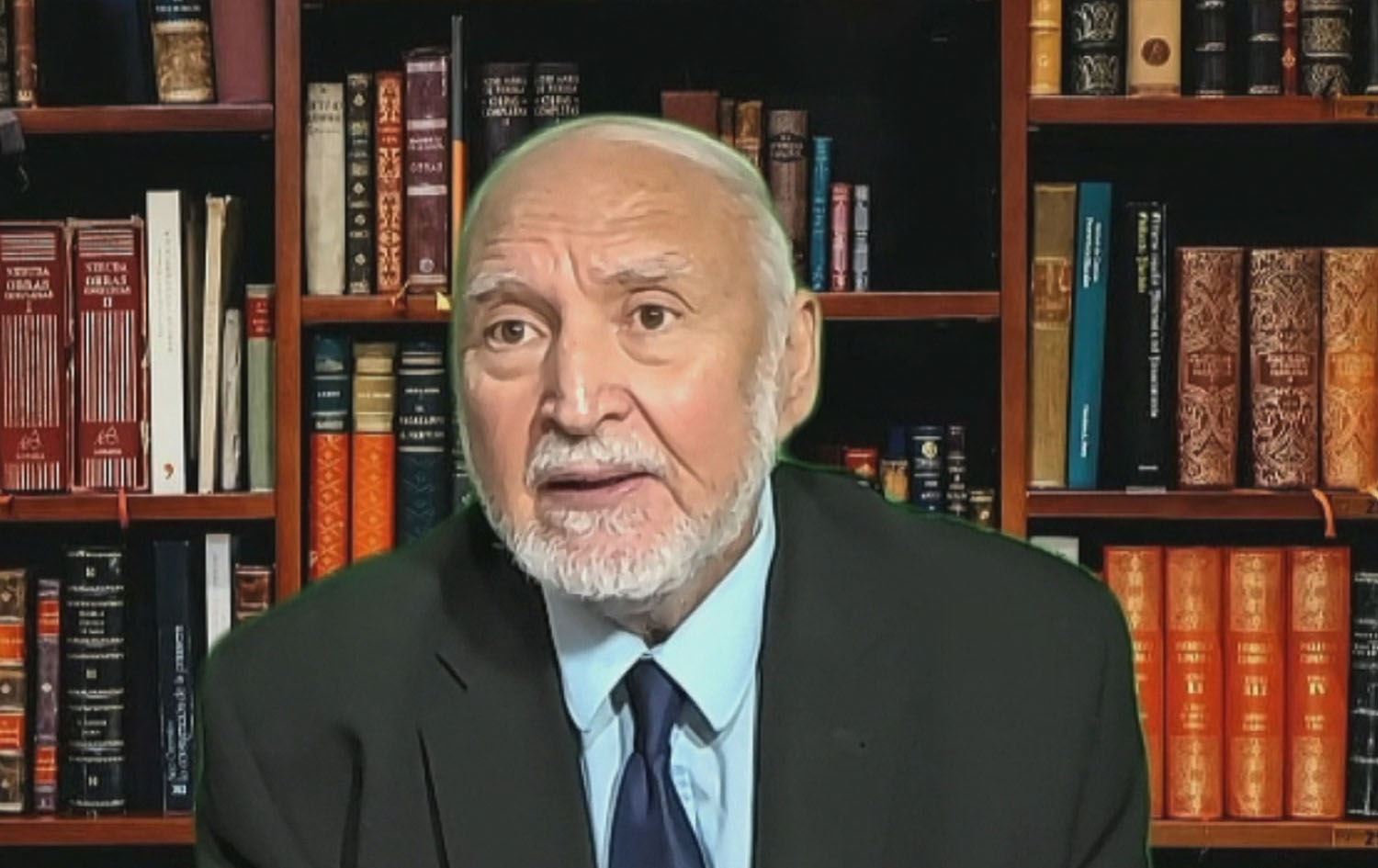
Yousry Abu Shady, a former senior inspector with the United Nations nuclear watchdog, the International Atomic Energy Agency (IAEA) speaks to Rudaw on June 30, 2025. Photo: Screengrab/Rudaw
ERBIL, Kurdistan Region - US and Israeli strikes on Iranian nuclear facilities have significantly set back Tehran’s nuclear program but have not “obliterated it,” said Yousry Abu Shady, a former senior inspector with the United Nations nuclear watchdog, the International Atomic Energy Agency (IAEA), in an interview with Rudaw.
Tensions between Iran and Israel flared on June 13, after Israeli airstrikes inside Iran killed senior military commanders and nuclear scientists. In response, Iran launched missile and drone attacks on Israel.
The conflict escalated further on June 20, when the US carried out strikes on three key Iranian nuclear facilities: Fordow, Isfahan, and Natanz. Iran retaliated the next day by firing ballistic missiles at al-Udeid Air Base in Qatar, the largest US military installation in the region.
US President Donald Trump brokered a ceasefire between the two sides on Tuesday, while insisting that Iran’s nuclear program had been “obliterated.”
Abu Shady, however, challenged that assessment. He said the Isfahan facility was likely destroyed due to its above-ground equipment, but expressed doubt that the deeply buried Natanz site, located 80 meters underground, “was completely hit “- though its surface structures were damaged. He added that the Fordow facility may also have been destroyed by the US strikes, but confirmation is still lacking.
Despite the strikes, Abu Shady emphasized that while Iran’s nuclear program has been damaged, “it was not obliterated,” pointing to a large number of surviving centrifuges and relocated stockpiles of highly enriched uranium. He further predicted that Tehran could resume enrichment in "unknown and secret locations,” allowing it to “return to its previous state” within months.
Below is the full transcript of the interview.
Rudaw: As an expert and former nuclear energy inspector, to what extent do you
think the American and Israeli attacks have harmed the Iranian nuclear program?
Yousry Abu Shady: In reality, the attacks halted the current program for a period, because they directly targeted the declared facilities that the IAEA was inspecting in Iran, namely the Natanz, Fordow, and Isfahan facilities. So, there is no doubt that the program faced an obstacle, but it was not obliterated. This is because Iran manufactured more than 23,000 centrifuges. In Fordow alone, there are 3,000 devices, and if we assume these 3,000 were destroyed, it still has about 15,000 to 16,000 other devices. These have not been destroyed yet, and I don't believe they were completely destroyed, because the Natanz facility is located 80 meters underground. Although the media and Americans did not pay much attention to it, Iran took a severe hit in Isfahan, which is the main source for developing the enrichment process. There, gaseous uranium is produced and then sent to Natanz and Fordow for enrichment. This source suffered significant damage. As for your question of whether Iran is still capable, the answer is yes; it has the capability, because it previously possessed about 500 kilograms of 60 percent enriched uranium. It also has 10 tons of uranium enriched to between 2 percent and 20 percent, which can be used immediately.
How much time does Iran need to repair its nuclear facilities?
I doubt that Iran will rebuild the bombed facilities, because Iran, since the beginning of the conflict, ended its relationship with the IAEA and its inspectors. In recent days, they decided not to cooperate with the agency and to ban its director from entering Iranian territory. This means that the known nuclear facilities, the agency knows very well where they are located, and therefore Israel and America know too. Rebuilding them, I doubt that. Iran has many underground sites that no one knows about. If it starts anew, it has dozens of factories that can produce new enrichment units. That is, it will move to those bases unknown to everyone. The agency will not be able to inspect them, and in this way, Iran, in a short period, perhaps no more than a few months, can return to its previous state. But Iran can benefit from the materials it has and was able to save from the strikes. As they announced, they were moved to safe places, especially the 500 kilograms of 60 percent enriched uranium, which are ready and can be worked with directly.
US President Donald Trump said we obliterated the Iranian nuclear program, do you think this is true?
Of course, it is an empty report full of immense American arrogance. Quite clearly, Iran is not expected to be so oblivious and observe how the scenario of events unfolds; from the Director General of the Agency's report on May 31, which was full of politicized, strange, and clear accusations, to the Board of Governors' decision condemning Iran on simple and baseless issues, leading to the start of the Israeli attack. All of this happened within 12 hours between the agency's decision and the Israeli attack. Is it logical for Iran to sit idly by and watch this scenario until it is attacked, especially regarding 500 kilograms of highly enriched uranium? This amount can be easily moved.
Was the agency's report before the attack based on information from the agency's inspectors, or does information from countries like Israel and America influence the agency's report on Iran?
It is certainly a politicized report, because anyone who reads it with technical understanding will laugh at it. It relies on things dating back to 2003. All the evidence with which Iran is accused relates to old facilities that American intelligence suspected in 2003 were used for a military program. In December 2015, the agency issued its report and said that all old and new problems with Iran had ended and that Iran was innocent of any military program. This was a prerequisite for the 2015 agreement with the P5+1 group. Suddenly, after all these years and after all this great cooperation from Iran, which, according to statistics, became the most inspected country, even more than Japan, Germany, and Canada, this report appears. This means that the report was completely politicized.
Iran announced that the International Atomic Energy Agency is not neutral and has stopped cooperating with it, what is the impact of that?
No, things are developing faster than that, because they are not waiting. The story today is that Iran, by banning inspectors and the agency's director, and banning oversight of its nuclear facilities, is committing a clear violation of the Nuclear Non-Proliferation Treaty. Therefore, Iran's file must be referred to the Security Council for sanctions. Will Iran wait all this while knowing the scenario? There is a decision by the Iranian parliament to withdraw from the treaty when the Supreme National Security Council deems it appropriate. My expectation is that if the situation continues like this, today or tomorrow, the Board of Governors and the agency will issue a condemnation resolution and refer the file to the Security Council. In this case, there will not be many objections, because they are indeed violating. But more importantly, Iran may withdraw from the treaty and not declare any information about its nuclear activities and facilities, and no one will know anything about them; like the scenario that previously happened in North Korea and like the current situation of Israel, which no one inspects.
Do you expect and believe that Israel also possesses nuclear weapons?
Certainly, Israel has had a military nuclear program since the 1950s; ever since they built the Dimona facility in 1958 with the help of France. It began operation in 1964 and made its first bomb in 1967. In 1973, after its defeat began against Egypt and Syria, it prepared 11 Phantom jets loaded with nuclear bombs. So, Israel possesses dozens, if not hundreds, of nuclear bombs, either mainly from the Dimona facility, or from enrichment plants and other facilities that no one knows about and no one inspects. Certainly, Israel is the only country in the Middle East that possesses these weapons.
Why doesn't Israel declare that and subject itself to inspection?
Well, this was an agreement between Israel and US President Johnson, after the assassination of President Kennedy, which is surrounded by many questions. Because President Kennedy completely suspected that the Dimona facility was being used to make nuclear bombs and did not accept this method. In any case, after Kennedy's death, Johnson came, and the American-Israeli agreement was not to disclose this matter. But today, there is no country or person in the world who does not believe that Israel possesses nuclear weapons. It certainly does, and it has many of them. Recently in Gaza, one minister said: "We wish we had used a nuclear bomb and cleansed all of Gaza, instead of this great effort and losses we are incurring." So, the use of nuclear weapons is a possibility; weren't they used before in Hiroshima and Nagasaki?
As a former inspector, did you visit the Natanz, Isfahan, and Fordow facilities?
Yes, I went to Iran and followed closely, at that time I was responsible for evaluating the results of inspections. The damages might be significant.
In your opinion, what is the extent of the damage that might have been inflicted on those facilities?
In my estimation, Isfahan and most of its plants and facilities were destroyed, because most of them were above ground. Perhaps the Fordow facility was destroyed by an American attack, but there is no confirmation of that. Fordow contains 3,000 enrichment devices out of 23,000 devices. The Natanz facility that is above ground was destroyed, but the underground part, which contains most of the devices, perhaps 16-17 thousand devices, I doubt that it was completely hit. But more important than all this are the nuclear materials. As I said, those 500 kilograms. There is almost certainty that they were moved. As for the other 10 tons of enriched uranium, I doubt that Iran moved all of it, but it certainly moved a part of it. This is roughly the extent of the damages.
As an expert, do you believe that Iran, if it wished, could reach 90 percent enriched uranium in a short time?
Yes, it can, because it certainly has other enrichment units, and perhaps it has manufactured more of them, because the state is not obligated to announce the manufacture of these units if they do not contain nuclear materials. More importantly, it can use the same 60 percent enriched uranium to make bombs, but their size will be slightly larger, their weight heavier, and their destructive power weaker. But if it has no other option, it can do that, it's not difficult.
Can Iran, if it wishes, build a nuclear bomb on its own without Russia's help?
Well, saying that building a nuclear bomb is difficult. North Korea made several bombs, South Africa made them, and Israel made hundreds. So, the technology is not difficult, the technology exists and its design is not impossible. If Saddam Hussein had not rushed, Iraq would have been very close to making one. The design of the bomb is not impossible, the truly difficult part is the material from which it is made, i.e., highly enriched uranium or plutonium. That is what is required.


Comments
Rudaw moderates all comments submitted on our website. We welcome comments which are relevant to the article and encourage further discussion about the issues that matter to you. We also welcome constructive criticism about Rudaw.
To be approved for publication, however, your comments must meet our community guidelines.
We will not tolerate the following: profanity, threats, personal attacks, vulgarity, abuse (such as sexism, racism, homophobia or xenophobia), or commercial or personal promotion.
Comments that do not meet our guidelines will be rejected. Comments are not edited – they are either approved or rejected.
Post a comment