


Iraq

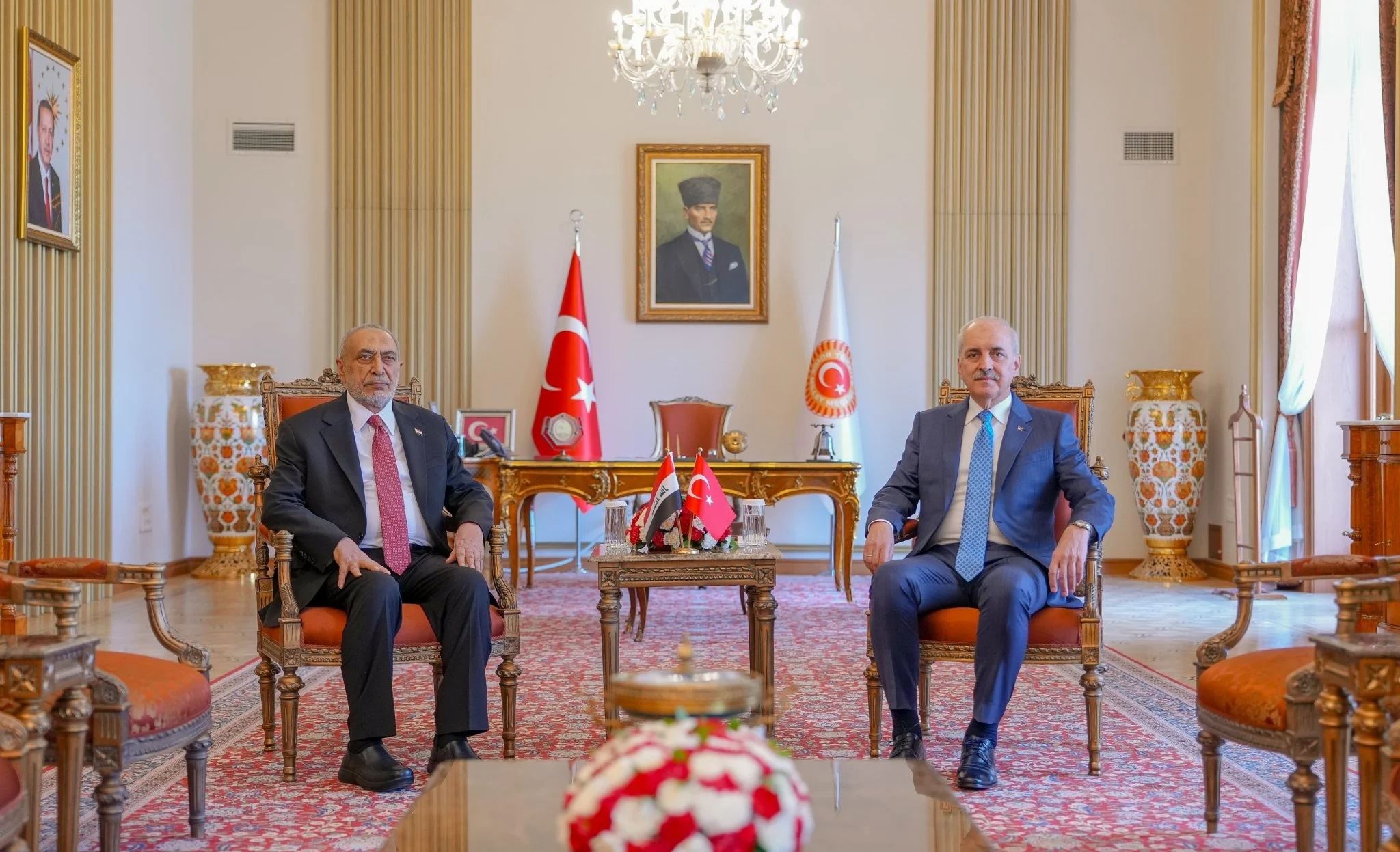
Iraqi Parliament Speaker Mahmoud al-Mashhadani (left) meets his Turkish counterpart Numan Kurtulmus (right) in Ankara on July 1, 2025. Photo: Iraqi parliament
ERBIL, Kurdistan Region - Iraqi Parliament Speaker Mahmoud al-Mashhadani met with his Turkish counterpart Numan Kurtulmus in Ankara on Tuesday, urging increased water releases into the Tigris and Euphrates rivers as Iraq grapples with a worsening water crisis, largely caused by upstream dam projects in Turkey.
In a statement, the Iraqi legislature said Mashhadani stressed the urgent need to boost water flows, "especially at this time of year, and in a way that ensures water reaches all Iraqi provinces, particularly the southern ones."
Iraq is heavily reliant on the Tigris and Euphrates for its water supply, with both rivers originating in Turkey. However, Ankara’s large-scale dam developments, including the Southeast Anatolia Project (GAP), have significantly reduced downstream flow into Iraq.
The reduced water supply has contributed to widespread drought and desertification, with reports indicating that Iraq is receiving less than 40 percent of its historical water share.
Addressing broader regional concerns, Mashhadani told his Turkish counterpart that his visit “comes at a difficult and existential security juncture and challenge in the Middle East,” stressing that Iraq aims to avoid being drawn into regional conflicts.
The meeting follows a major regional escalation that began on June 13, when Israeli airstrikes inside Iran killed several senior military commanders and nuclear scientists. In retaliation, Iran launched missile and drone attacks on Israel.
Tensions escalated further on June 20 when the United States struck three of Iran’s key nuclear facilities - Fordow, Isfahan, and Natanz. Iran responded the next day by launching ballistic missiles at al-Udeid Air Base in Qatar, the largest US military base in the region.
US President Donald Trump brokered a ceasefire between Israel and Iran last week, which so far appears to be holding.
Throughout the conflict, Iraq consistently called for de-escalation and condemned what it described as “Israeli aggression” against Iran. Baghdad also rejected the use of Iraqi airspace for launching attacks on Iran and filed a complaint against Israel with the United Nations Security Council (UNSC).
For his part, the Turkish Parliament Speaker Kurtulmus was quoted by the Iraqi parliament’s Tuesday statement as hoping that Mashhadani’s visit “could be a good omen for strengthening and developing economic and political relations between the two countries.” He emphasized the shared history and geography between Turkey and Iraq, stating, “Our future is one, and we hope Iraq becomes one of the region’s strongest countries.”
Both sides agreed on enhancing economic cooperation, encouraging Turkish investment in Iraq, and improving bilateral communication, the statement concluded.
Iraq and Turkey are currently engaged in agreements and negotiations regarding water sharing.
In April 2024, Iraqi Prime Minister Mohammed Shia' al-Sudani and Turkish President Recep Tayyip Erdogan signed a multi-billion-dollar strategic water agreement in Baghdad. The 10-year pact includes joint projects for improved water management on the Tigris and Euphrates rivers and permits Turkish investment in coordination with Iraqi authorities.
Despite this milestone agreement, Iraq continues to face a severe water crisis. In late May, a senior official from the Iraqi water resources ministry told Rudaw that the country’s water reserves had dropped to their lowest levels in 80 years.
Khaled Shamal, spokesperson for the ministry and director of the General Authority for Irrigation and Reclamation Projects, warned that the situation would force Iraq to significantly reduce its summer agricultural plans.
“At the start of the summer season, we should have at least 18 billion cubic meters of water. Today, we only have about 10 billion,” Shamal said, adding, “We have not seen reserves this low in 80 years.”
Given the ongoing crisis, Iraqi politicians have consistently called for a binding, comprehensive international agreement with Turkey to secure Iraq’s fair share of water and ensure long-term sustainability.


Comments
Rudaw moderates all comments submitted on our website. We welcome comments which are relevant to the article and encourage further discussion about the issues that matter to you. We also welcome constructive criticism about Rudaw.
To be approved for publication, however, your comments must meet our community guidelines.
We will not tolerate the following: profanity, threats, personal attacks, vulgarity, abuse (such as sexism, racism, homophobia or xenophobia), or commercial or personal promotion.
Comments that do not meet our guidelines will be rejected. Comments are not edited – they are either approved or rejected.
Post a comment