
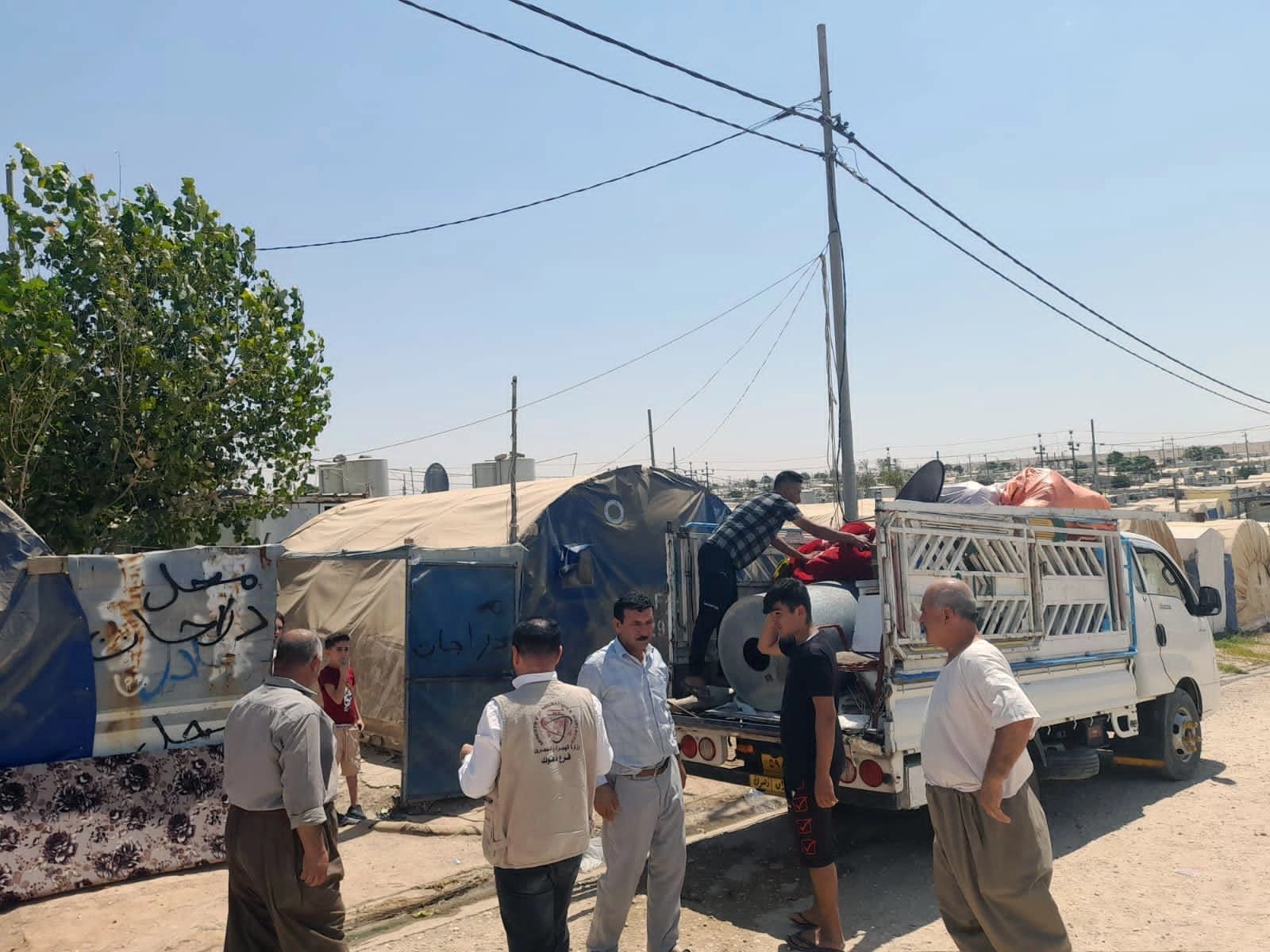

ERBIL, Kurdistan Region - Iraq’s ministry of migration and displaced on Friday announced that a new group of Yazidis, numbering 179 people, have voluntarily returned to their homes in Shingal (Sinjar) after years living in camps in Duhok province.
Security forces coordinated with the local governments in Nineveh and Duhok to ensure their safe return to the Yazidi homeland, according to a statement from the ministry.
Yazidis in Shingal were subjected to countless heinous atrocities, including forced marriages, sexual violence, and massacres when the Islamic State (ISIS) captured the city in 2014, committing genocide and bringing destruction to many villages and towns populated by the minority group. The Yazidis were forced to flee to camps across Iraq and the Kurdistan Region. The town was liberated from the group in late 2015, but lack of reconstruction, political disputes, and ongoing insecurity have prevented most families from returning to their homes.
Minister of Migration and Displaced Evan Faeq Jabro emphasized the need to combine all efforts to facilitate the return of all Iraq’s Internally Displaced Persons (IDPs), said the statement from her ministry.
Naif Saido, mayor of Shingal, told Rudaw on Wednesday that 60 percent of Shingal residents still live in IDP camps and houses in the Kurdistan Region, mainly in Duhok province. He blamed political and financial factors as well as the Iraqi government’s failure to rebuild the houses that were destroyed during the war with ISIS.
Baghdad and Erbil signed an agreement in 2020 to normalize the situation in Shingal, but the deal has yet to be implemented.
The United States has repeatedly called on the Iraqi and Kurdish governments to “immediately break the political deadlock” in the city.
A Human Rights Watch report in June slammed Iraqi authorities for failing to adequately compensate thousands of Yazidi families who bore the brunt of ISIS atrocities.
.png&w=3840&q=75)