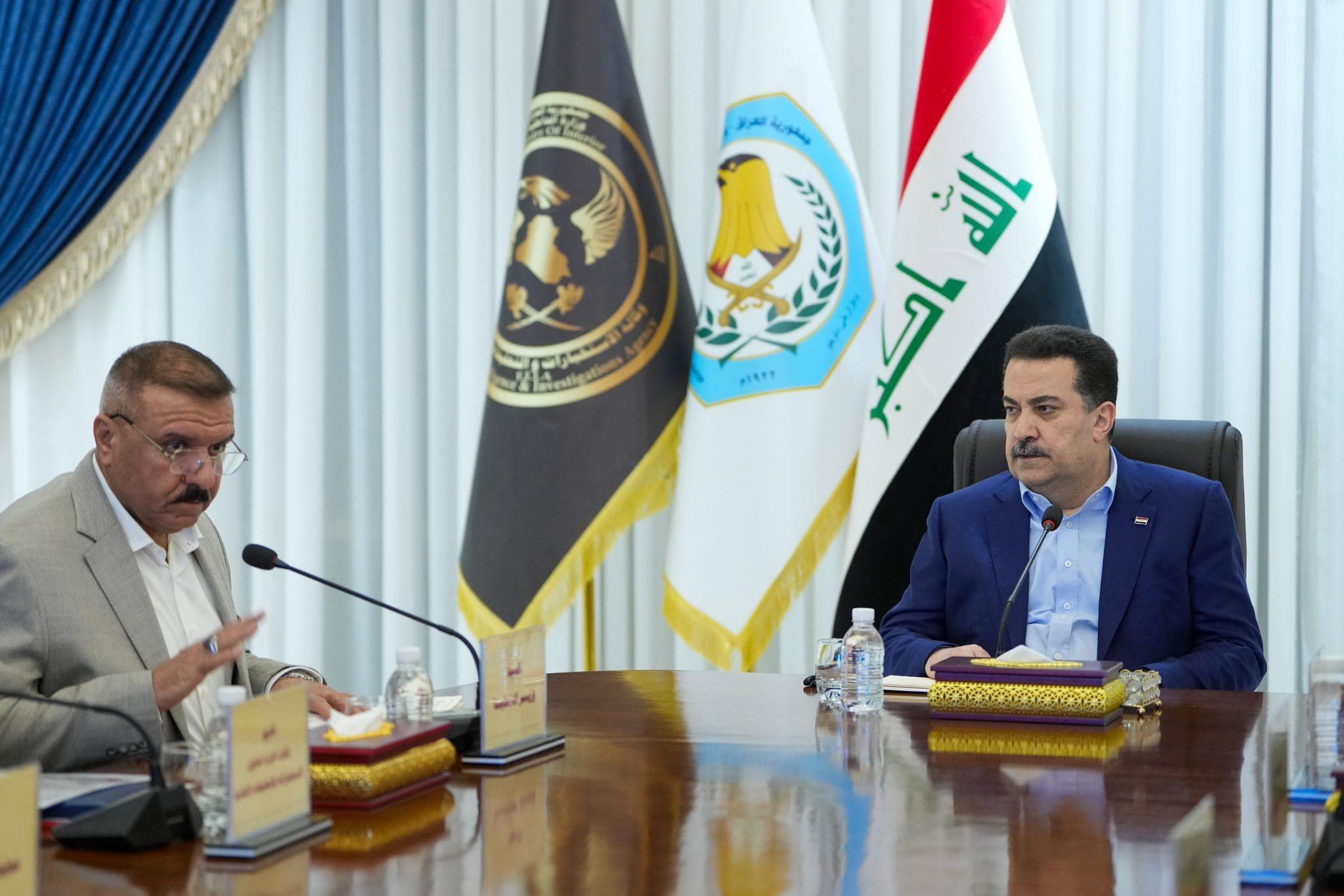
ERBIL, Kurdistan Region - There will be no red lines in enforcing the Iraqi law, which must be upheld by all actors, Iraqi Prime Minister Mohammed Shia' al-Sudani said during a high-level security meeting early Friday addressing the targeting of vital institutions, diplomatic missions, and “cases of kidnapping foreign nationals,” according to his office.
The meeting came a day after the United States Embassy in Baghdad urged its citizens to leave Iraq immediately, criticizing the Iraqi government for failing to prevent “terrorist attacks” by Iran-aligned armed groups operating “in or from” Iraq. The warning followed the kidnapping of an American journalist in Baghdad earlier this week.
In a statement posted on X, the Sudani’s office reported that the premier chaired the meeting with Interior Minister Abdul Amir al-Shammari, Deputy Interior Minister for Intelligence and Federal Investigations Affairs Maher al-Zubaidi, Head of Iraq's National Intelligence Service (INIS) Hamid al-Shatri, and other officials.
Sudani received “a comprehensive briefing” on measures taken to “address current challenges related to the targeting of vital institutions, diplomatic missions, and cases of kidnapping involving foreign nationals.”
He stressed “the need to take maximum measures to pursue those involved in these hostile acts, which harm the country’s reputation and affect citizens’ interests,” while underscoring “the importance of making every effort to preserve internal security.”
“There will be no red lines in enforcing the law, regardless of the parties involved, and there will be no leniency in its implementation,” Sudani warned. He also called for “full preparedness, continuous follow-up, and sustained intelligence efforts to safeguard stability and counter all threats, regardless of their source - especially amid the ongoing regional war and escalating tensions.”
The remarks came after the American embassy in Baghdad on Thursday warned that “Iran-aligned Iraqi terrorist militia groups may intend to conduct attacks in central Baghdad within the next 24 to 48 hours,” adding that Tehran and these groups “have carried out widespread attacks against U.S. citizens and [US-]linked targets” across Iraq and the Kurdistan Region.
The embassy added that these armed groups may target American “citizens, businesses, universities, diplomatic facilities, energy infrastructure, hotels, airports, and other locations” perceived to be US-linked, as well as “Iraqi institutions and civilian targets.” It added that such “militias” have “targeted Americans for kidnapping” and urged US citizens to “leave Iraq now.”
Earlier this week an American freelance journalist, Shelly Kittleson, was abducted in broad daylight on Tuesday on Saadoun Street in central Baghdad.
Kittleson’s abduction quickly prompted international reactions, with the US State Department announcing it is working with the Federal Bureau of Investigation (FBI) to locate and rescue her.
Dylan Johnson, the US Assistant Secretary of State for Global Public Affairs, confirmed the abduction on social media, stating that “an individual with ties to the Iranian-aligned militia group Kata’ib Hezbollah believed to be involved in the kidnapping has been taken into custody by Iraqi authorities.”
The US embassy in Baghdad on Thursday stated that the Iraqi government has “not prevented terrorist attacks in or from Iraqi territory,” warning that Iran-aligned armed groups “may claim to be associated with the Iraqi government” and could “carry identification indicating they are Iraqi government employees” while carrying out attacks.
The Iraqi foreign ministry responded to the embassy warning later on Thursday affirming Baghdad’s commitment to “sidelining Iraq” from the ongoing war in the region, despite the “unilateral actions” of some actors who may “carry out acts that do not represent official policy.”
The ministry stressed that “such individual actions or those carried out by limited groups are considered unlawful and in no way reflect the role of the Iraqi government or its institutions.”