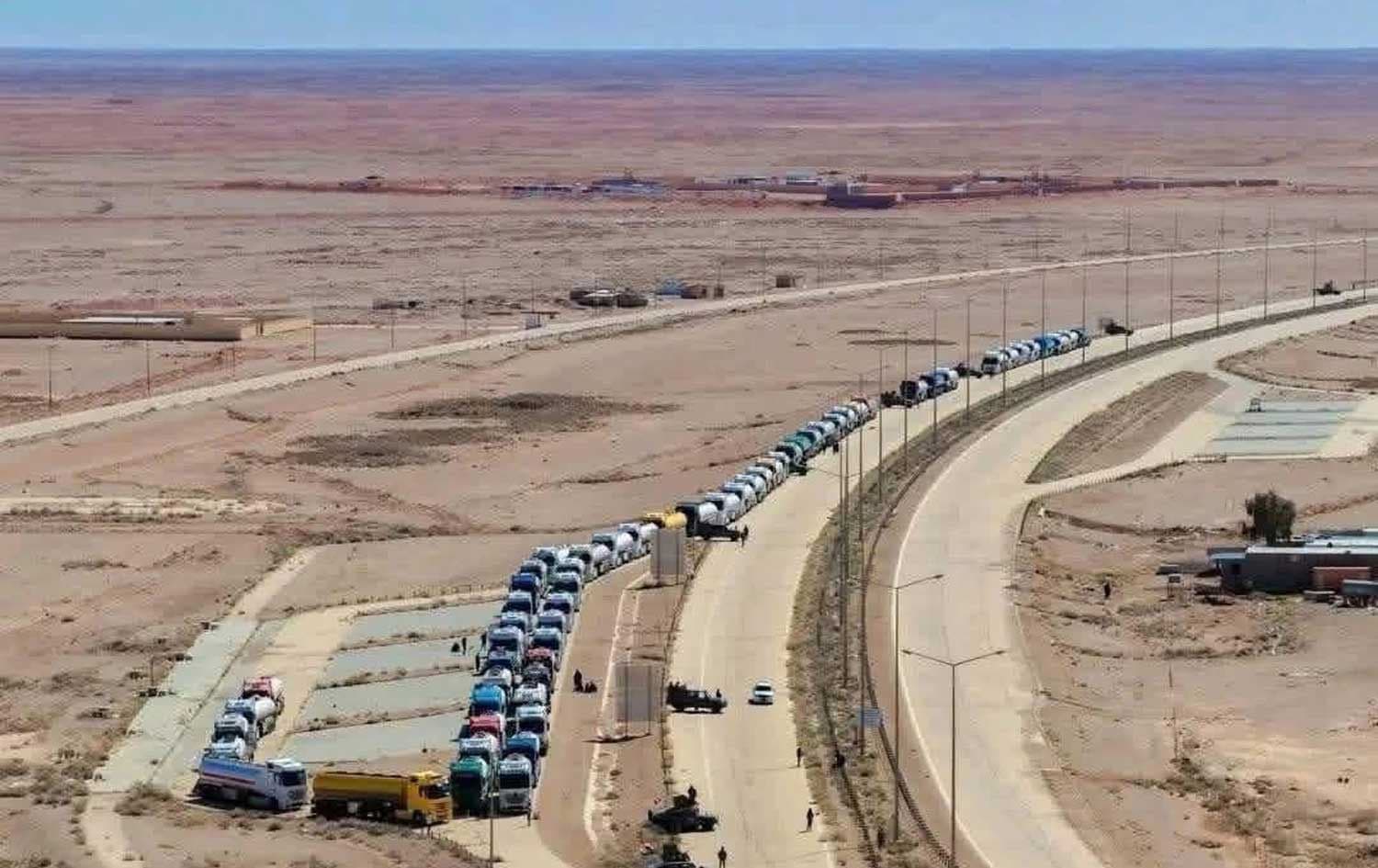

ERBIL, Kurdistan Region - Iraq has officially begun exporting oil via Syria by tanker, as the first convoy departed Tuesday through the newly inaugurated al-Waleed border crossing, officials told Rudaw.
Imad al-Dulaimi, mayor of Rutba district in western Anbar province, where the al-Waleed border crossing is located, told Rudaw, "the process of exporting Iraqi oil by tanker to Syria via the al-Waleed crossing has started, and from there, Iraqi oil will be exported to global markets."
The newly opened route for Iraqi oil exports comes as the Al-Waleed border crossing reopens after 11 years and amid major disruptions to the country’s export infrastructure.
Shipments through Basra ports were halted on February 28 following the large-scale US and Israeli military campaign against Iran and the closure of the Strait of Hormuz.
Since then, the federal government has been scrambling to find alternative routes to export its crude, which accounts for roughly 90 percent of Iraq’s revenue.
"For the first time today, more than 100 oil tankers crossed the al-Waleed gate into Syrian territory, and from there, they will be exported to [global] markets via the Mediterranean Sea," Dulaimi added.
The Iraqi General Authority of Customs said in a statement on Tuesday the crossing was officially opened by order of Prime Minister Mohammed Shia' al-Sudani, and the first convoy of oil trucks immediately departed toward Syria.
Al-Waleed, located close to where the borders of Iraq, Syria, and Jordan meet, links Anbar province with Syria’s al-Tanf in Homs province and is one of four official border points between the two countries. It was closed in 2014.
The Authority noted that this move is part of the government’s efforts to revitalize trade activities and strengthen regional economic relations. It emphasized that the resumption of commercial movement through al-Waleed is expected to increase public revenue and boost trade exchanges between Iraq and Syria.
According to the statement, the opening of the border is part of a comprehensive government plan to develop border crossings and enhance their capacities by modernizing and simplifying customs procedures according to international standards, in order to provide maximum facilitation for the movement of goods and travelers.
On Wednesday, authorities said that Iraq’s northern oil exports were set to increase further as they ramp up shipments through the Kurdistan Region pipeline to Turkey following a recent agreement between Erbil and Baghdad.
Amer Khalil, director general of Iraq's state-run North Oil Company, told Rudaw that export volumes of Kirkuk crude have already climbed after a week of resumed flows via the Kurdistan Region’s pipeline to Turkey’s Ceyhan port.
The increase follows an initial restart that saw exports rise from 170,000 barrels per day to around 200,000 barrels. Officials say the crude being shipped is a blend of oil from Kirkuk fields and production from the Kurdistan Region, with the Region contributing about 40,000 barrels per day.
Prior to the conflict, Iraq exported around 3.4 million barrels of oil per day. With southern routes offline, the country is relying only on the northern corridor through Turkey, and now Syria, to sustain its oil exports.