


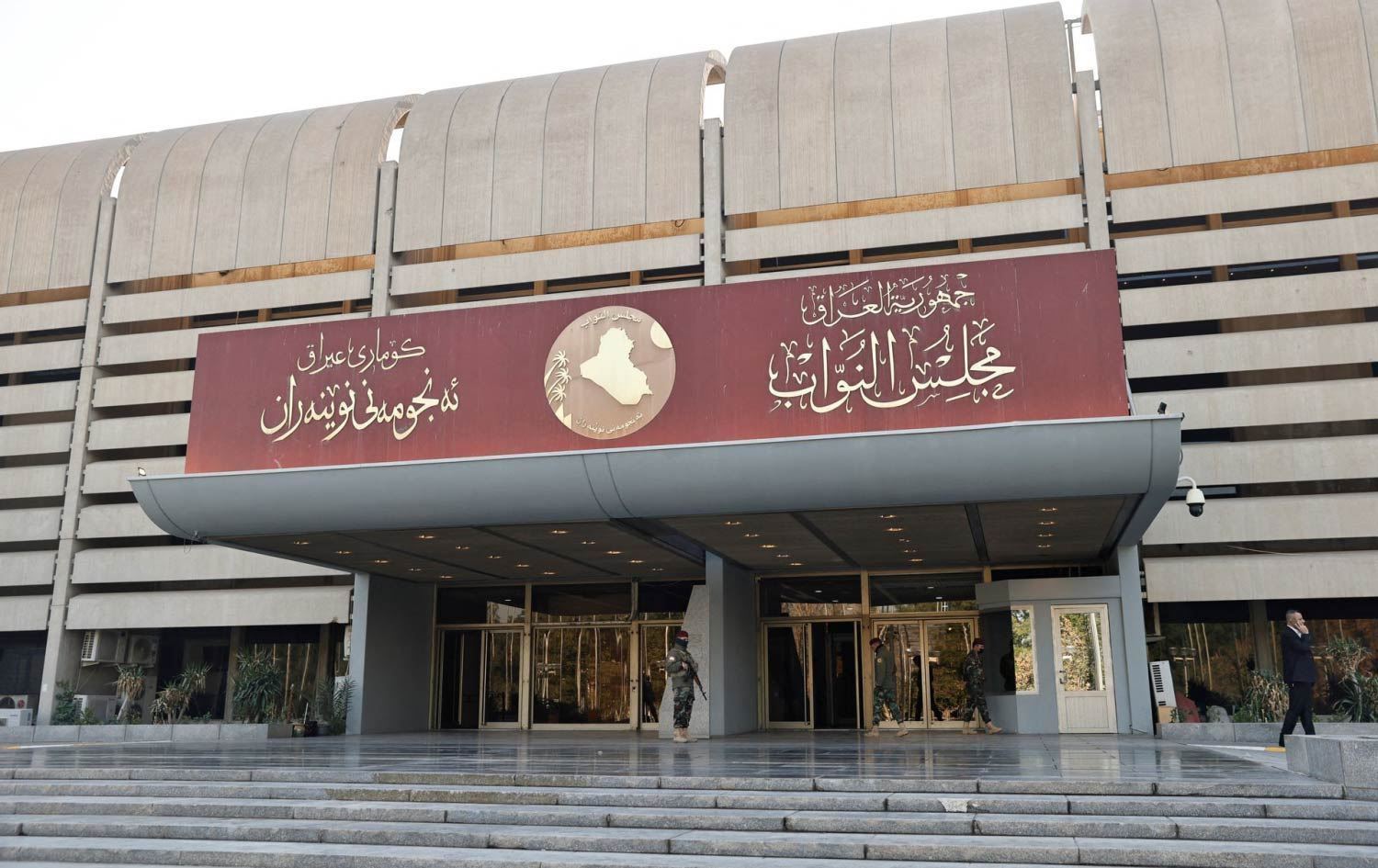
ERBIL, Kurdistan Region - Nominations for Iraq’s presidency opened on Sunday and will close on Monday, with at least 42 candidates submitting forms so far, as uncertainty persists over whether the Kurdistan Region’s parties will put forward a unified Kurdish nominee.
Rudaw has learned that 42 people have filled out candidacy forms for the Iraqi presidency, as the registration window opened on Sunday and is set to close on Monday.
A Kurdish member of the Iraqi parliament from the Kurdistan Islamic Union (KIU), Muthana Amin, said he has decided to nominate himself on Monday as there is still time to do so “once things clear up” regarding the position of the ruling Kurdistan Democratic Party (KDP) and Patriotic Union of Kurdistan (PUK).
Last week, the Iraqi parliament elected its speaker and two deputies, triggering a three-day window for political blocs to submit nominees for the largely ceremonial presidency. Since the 2003 US-led invasion of Iraq, the post has traditionally gone to the PUK, though the KDP is also seeking the position.
Amin said he has held talks with other opposition parties - the National Stance Movement (Halwest), the New Generation Movement (NGM), and the Kurdistan Justice Group (Komal), and that as of Saturday, they “have said we won’t have [our own] candidates, and we will support you.”
In the November 11 elections, the KDP won 27 seats, the PUK 18, Halwest five, the KIU four, the NGM three, and Komal one.
However, the NGM said in a statement that it has not held any meetings with “any political party, especially the Kurdistan Islamic Union,” regarding the presidency.
Meanwhile, on Sunday, two sources from the KDP Central Committee and Political Bureau told Rudaw that one option under discussion is for the KDP not to nominate a candidate, instead asking the PUK to put forward several names, from which the KDP would consent to one. At the same time, the KDP is requesting that steps to form the 10th Kurdistan Regional Government (KRG) cabinet be expedited.
The Kurdistan Region held long-delayed parliamentary elections in October 2024, with the KDP winning 39 of the 100 seats and the PUK securing 23. With no party holding a majority, government formation talks have continued for months but later stalled over disagreements on governance mechanisms and key posts.
A member of the KDP Central Committee confirmed Rudaw’s information, saying, “We can say we are requesting, not conditioning.”
“The KDP Political Bureau is meeting to discuss the election of the President of Iraq,” the other source said.
A senior PUK official told Rudaw on Sunday that the party has not yet taken a position "regarding any request from the Kurdistan Democratic Party. Whatever exists will be decided in our Political Bureau meeting.”
“When our Political Bureau meets, it will become clear to us who will be our party's candidate,” the official added.
Also on Sunday, Ahmad Kani, a member of the KDP Central Committee, told Rudaw that “the KDP Political Bureau is meeting and after that meeting a decision will be made [whether the KDP will nominate a candidate or not], which I am confident will be in the interest of all the people of Kurdistan and the political process in Iraq and the Kurdistan Region.”
Salam al-Zubadi, spokesperson for the Nasr (Victory) Alliance, part of the ruling Shiite Coordination Framework, told Rudaw on Thursday that the PUK has proposed former Iraqi Environment Minister Nizar Amedi as a potential presidential candidate during talks with the Coordination Framework.
Former Baghdad lawmaker Shwan Dawoodi told Rudaw that he has entered the race “as an independent candidate,” explaining that he has “had no connection with the PUK for nearly four and a half years.“
Under Iraq’s constitution, the president must be elected within 30 days of the first parliamentary session, which convened on December 29.
Hastyar Qadir, Nahro Mohammed and Soran Hussien from Erbil and Ziyad Ismeail from Baghdad contributed to this report.


Comments
Rudaw moderates all comments submitted on our website. We welcome comments which are relevant to the article and encourage further discussion about the issues that matter to you. We also welcome constructive criticism about Rudaw.
To be approved for publication, however, your comments must meet our community guidelines.
We will not tolerate the following: profanity, threats, personal attacks, vulgarity, abuse (such as sexism, racism, homophobia or xenophobia), or commercial or personal promotion.
Comments that do not meet our guidelines will be rejected. Comments are not edited – they are either approved or rejected.
Post a comment