


Iraq

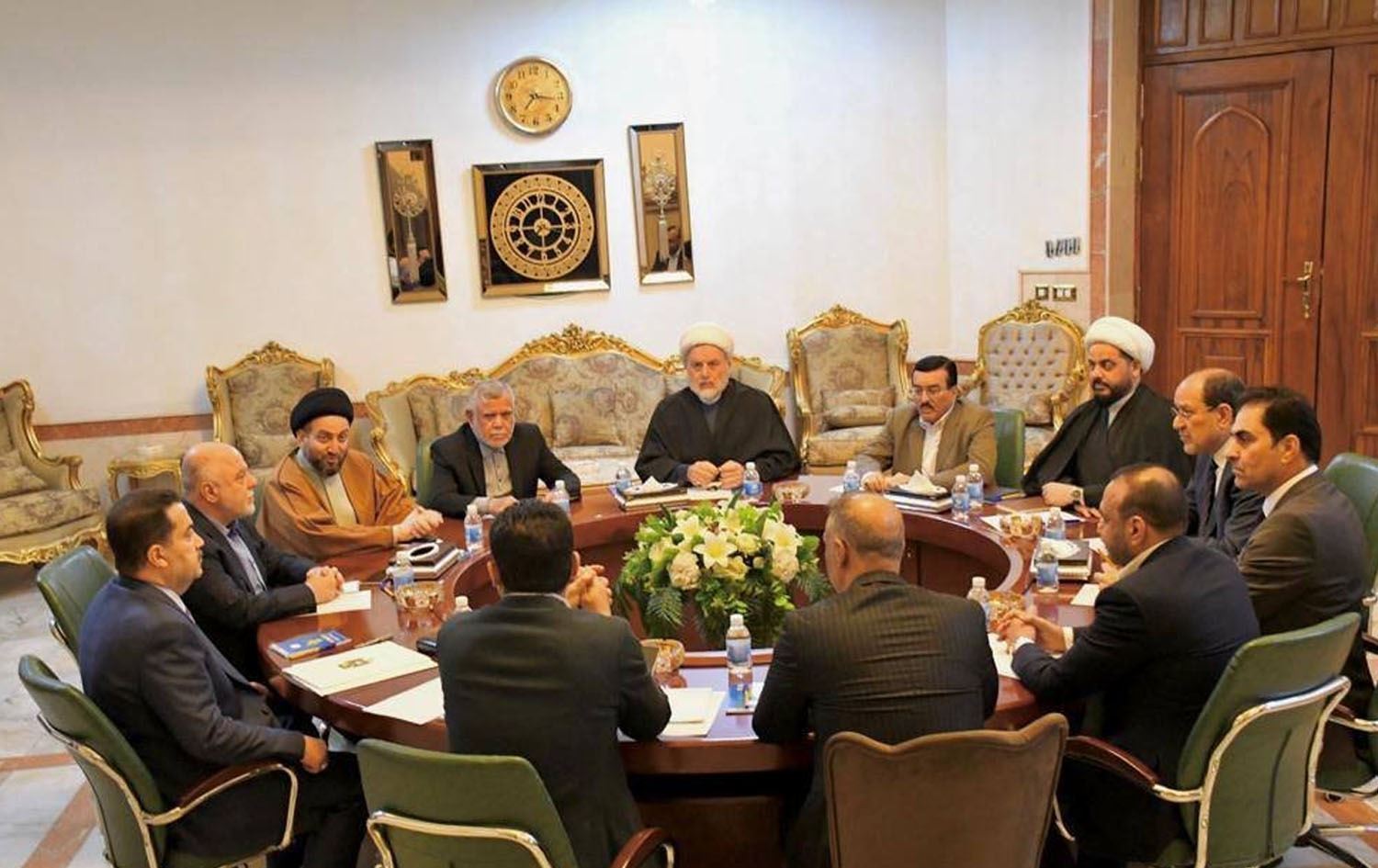
Leaders of Iraq's ruling Shiite Coordination Framework pictured during a meeting. File photo: Iraqi News Agency
ERBIL, Kurdistan Region - Iraq’s ruling Shiite Coordination Framework on Monday emphasized the importance of selecting the country’s next prime minister and addressing pending “electoral entitlements” in accordance with constitutional procedures.
In a statement, the Coordination Framework’s media office said leaders of its constituent political parties held their regular meeting at the office of former prime minister Haider al-Abadi (2014-2018), where they stressed “the importance of fulfilling the national entitlement of naming the next prime minister,” as well as resolving “the remaining electoral entitlements in line with constitutional frameworks and the requirements of the upcoming phase.”
The Coordination Framework also praised the recent election of the speaker of parliament and his deputies and discussed “the latest developments on the domestic and international fronts,” the statement added.
Iraq’s parliamentary elections were held on November 11, with final results announced in mid-November and ratified by the Federal Supreme Court in mid-December.
Under Iraq’s informal power-sharing system established after 2003, the position of parliament speaker is reserved for Sunni Arabs, the premiership for Shiites, and the presidency for Kurds.
Last week, the incoming parliament convened its first session and elected Haibat al-Halbousi, a member of the Sunni Takaddum party, as speaker.
Lawmakers also elected Adnan Faihan of the Sadiqoon Bloc - an affiliate of the Asa’ib Ahl al-Haq armed group - as first deputy speaker, and Farhad Atrushi of the Kurdistan Democratic Party (KDP) as second deputy speaker.
For its part, the Coordination Framework had in mid-November announced that it had formed parliament’s largest bloc - a decisive step toward selecting the next premier - after its parties secured a combined 179 seats in the 329-member parliament in the legislative elections.
Since then, the constellation has been holding talks over who will become the country’s next premier.
Baha al-Araji, a lawmaker from the Reconstruction and Development Coalition (RDC) - led by Iraqi Prime Minister Mohammed Shia’ al-Sudani - told Rudaw on Wednesday that the incumbent premier and former prime minister Nouri al-Maliki (2006–2014) are the two main candidates for the top position.
However, Salam al-Zubaidi, spokesperson for the Abadi-led Nasr Coalition, told Rudaw that the dilemma is that “Maliki is not willing to compromise and accept that Sudani becomes prime minister” for another term, nor is Sudani “satisfied with the middle solution proposed by the Coordination Framework” that suggested Abadi take on the post.
Neither Maliki nor Sudani is also willing to withdraw their nominations for the premiership, Zubaidi added.
The other remaining constitutional position to be filled is the presidency of the republic, traditionally reserved for the Kurds.
The KDP on Monday nominated Iraqi Foreign Minister Fuad Hussein for the post, while the rival Patriotic Union of Kurdistan (PUK) put forward former environment minister Nizar Amedi.
The announcements came after both major Kurdish parties met in Baghdad earlier in the day to discuss Kurdish unity in the federal parliament. However, KDP lawmaker Sherwan Dubardani told Rudaw that the presidency was not discussed during the meeting.
The registration window for candidates opened last week and closed on Monday, with around 81 people officially submitting their files, Rudaw has learned.
Under Iraq’s constitution, the president must be elected within 30 days of the first parliamentary session, which convened on December 29.


Comments
Rudaw moderates all comments submitted on our website. We welcome comments which are relevant to the article and encourage further discussion about the issues that matter to you. We also welcome constructive criticism about Rudaw.
To be approved for publication, however, your comments must meet our community guidelines.
We will not tolerate the following: profanity, threats, personal attacks, vulgarity, abuse (such as sexism, racism, homophobia or xenophobia), or commercial or personal promotion.
Comments that do not meet our guidelines will be rejected. Comments are not edited – they are either approved or rejected.
Post a comment