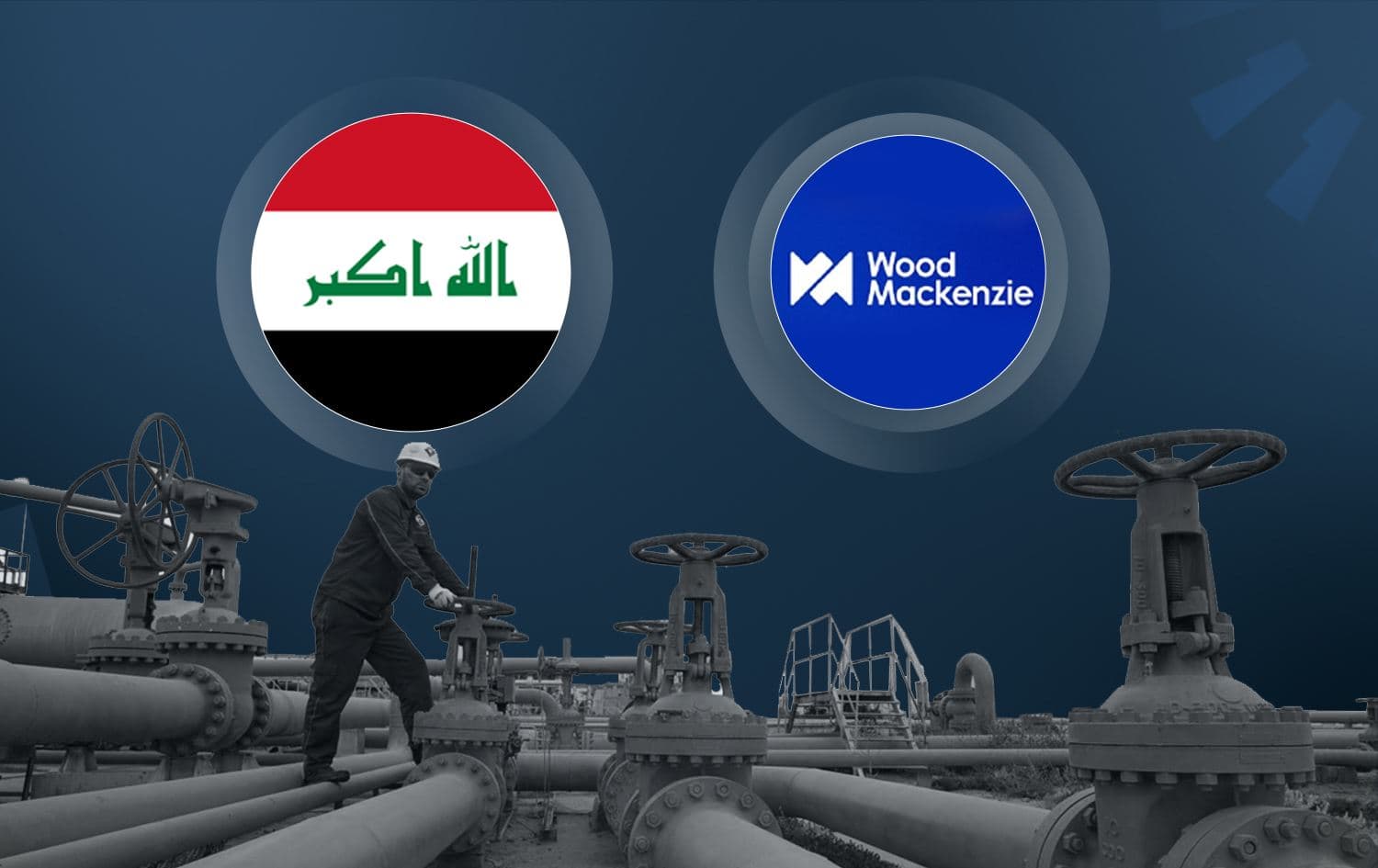

ERBIL, Kurdistan Region - Iraq’s oil ministry has signed a key contract with a British consultancy to determine the production cost of Kurdish oil, a senior director from Baghdad’s national oil marketer told Rudaw on Wednesday, adding that the move is crucial to ensuring the uninterrupted continuation of Kurdish oil exports.
Ali Nizar, Director-General of the Iraqi Oil Marketing Company (SOMO), said the federal oil ministry “has signed a contract with the British consulting firm Wood Mackenzie, which will begin work in the near future to calculate the actual production costs at oil fields in the Kurdistan Region.”
In late September, Erbil, Baghdad, and international oil companies (IOCs) operating in the Region reached a tripartite agreement that paved the way for the resumption of oil exports through the Iraq-Turkey pipeline. Exports had been halted since March 2023, when a Paris-based arbitration court ruled in favor of Baghdad, concluding that Ankara violated a 1973 pipeline agreement by allowing Erbil to export oil independently beginning in 2014.
Under the September deal, an initial advance of $16 per barrel was set to cover extraction and transportation costs payable to the IOCs. The amount is temporary and will remain in place until an independent expert firm provides a more accurate cost assessment, with the agreement specifying that payments are to be made in the form of crude oil at prevailing market prices rather than in cash.
In late December, Nizar told Rudaw that the September agreement had been extended by an additional three months, pushing its expiry to the end of March 2026 from its original end-2025 deadline.
The senior SOMO official reiterated to Rudaw on Wednesday that “the tripartite agreement to resume guarantees continuity of the Kurdistan Region’s oil production and ensures that exports will not be halted again.”
Regarding efforts to expand the buyer base, Nizar noted the “strong demand” for Iraqi and Kurdish oil in Europe, adding that “all our efforts are focused on attracting buyers who offer the highest prices and face no legal obstacles.”
He noted nonetheless that Asian markets remain the largest buyers of Iraqi and Kurdish crude, stating that “78 percent of exports go to Asian markets, 12 percent to Europe, and the remaining volumes to US markets.”
Iraq currently produces about 4.2 million barrels per day, of which between 3.3 and 3.4 million barrels per day are exported, he added.
Malik Abbasi contributed to this report from Erbil, Kurdistan Region.