
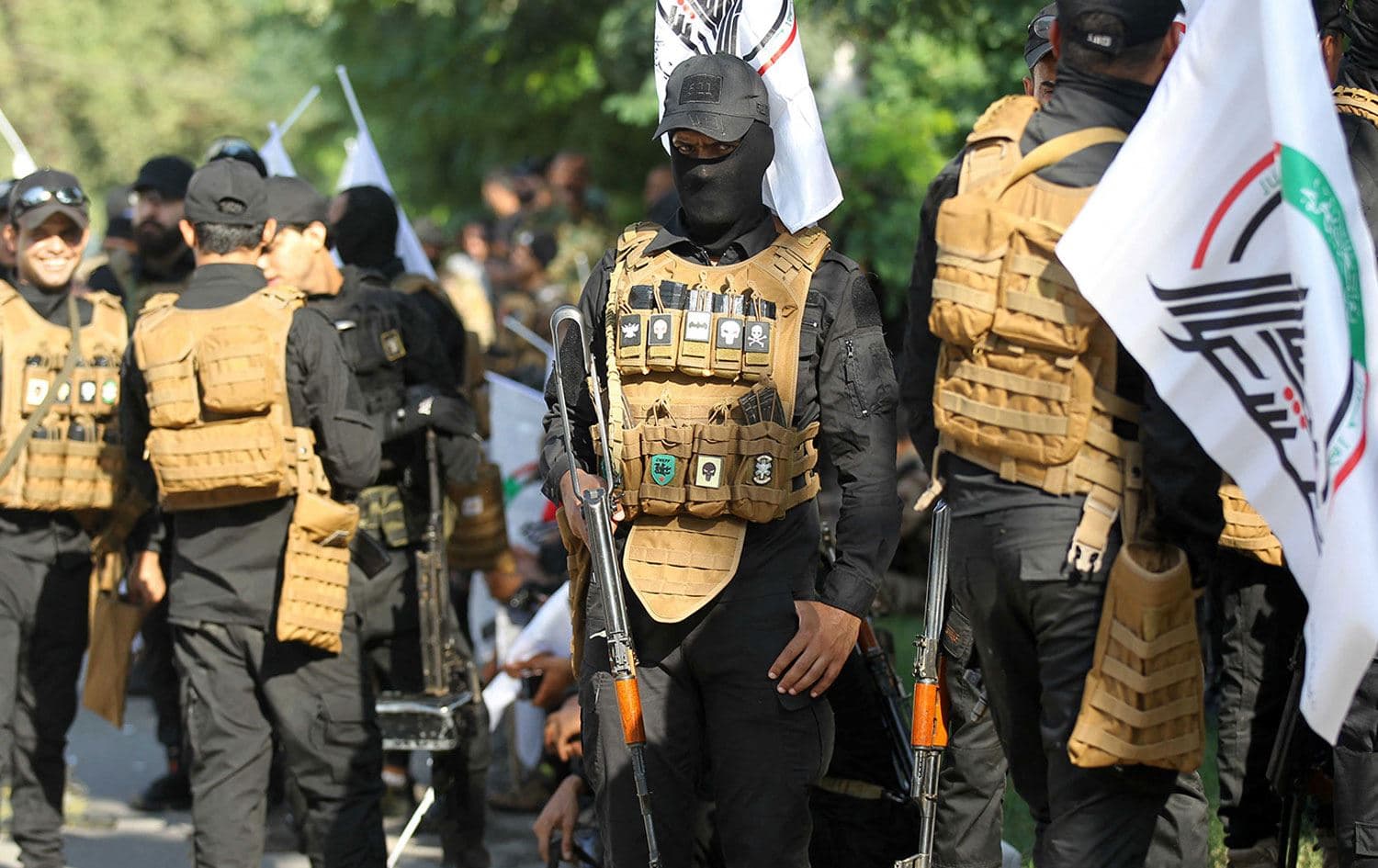

ERBIL, Kurdistan Region - The latest draft of the US National Defense Authorization Act (NDAA) stipulates that Washington’s financial aid to Iraq will continue on the condition that Baghdad reduces the capability of Iran-aligned militias.
“Not more than 75 percent of the funds authorized to be appropriated by this Act or otherwise made available for fiscal year 2026 for the Iraqi security forces… may be obligated or expended until the date on which the Secretary of Defense submits to the congressional defense committees a certification that the Government of Iraq has taken credible steps… to reduce the operational capacity of Iran- aligned militia groups not integrated into the Iraqi security forces through a publicly verifiable disarmament, demobilization, and reintegration process,” reads the draft.
It also states that the steps should also include the strengthening of the operational authority of the Iraqi prime minister as the commander-in-chief of armed forces and investigating and holding accountable “members of Iran-aligned militia groups or members of the Iraqi security forces operating outside the formal chain of command of the Iraqi security forces who engage in attacks on United States or Iraqi personnel or otherwise act in an illegal or destabilizing manner.”
The bill also completely bans any aid to the pro-Iran Badr Organization, which is led by Hadi al-Ameri and won 18 seats in the latest parliamentary elections.
The latest amendment of the NDAA allows the Secretary of Defense to waive the limitation on funds to Iraq for up to 180 days if doing so is “in the national security interest of the United States.”
It also adds that funding designated for the Kurdistan Region's Peshmerga forces is not affected by the restrictions.
After the 2003 US-led invasion of Iraq and the fall of Saddam Hussein, the US played a major role in rebuilding Iraq’s military. This included training, equipping, and advising the Iraqi armed forces to help stabilize the country and combat insurgencies.
US forces have also supported Iraq in counterterrorism operations against the Islamic State (ISIS) after it seized swathes of territory in 2014.
Last month, the Department of State approved a possible foreign military sale to Iraq of a nationwide communications and repeater system valued at an estimated $100 million.
The US had around 2,500 soldiers in Iraq last year, but it is not clear how many remain in the country. Washington has agreed to withdraw its forces by 2026, as demanded by Baghdad under pressure from pro-Iran militia groups. US troops based in the Kurdistan Region to remain until the end of next year.
“The global coalition has completed its mission in federal areas," Lieutenant General Qais al-Muhammadawi, Deputy Commander of Iraq’s Joint Operations Command (JOC), told Rudaw late last month, adding that “only four to five personnel remain to handle logistical and diplomatic affairs.”
“All global coalition forces are now in the Kurdistan Region,” Muhammadawi confirmed.
Iran is believed to have many proxy groups in Iraq, which it has used in the past to target US interests in the region. Washington has taken several measures to ensure that Baghdad is free of Tehran’s influence, including the rescinding of a waiver which had allowed Iraq to buy Iranian electricity for years.
In September, the US designated four Iran-backed Iraqi militia groups as foreign terrorist organizations, saying the decision came as part of President Donald Trump’s order to impose “maximum pressure” on Iran.
The designations came three weeks after the Iraqi government revoked a controversial bill to restructure the Popular Mobilization Forces (PMF, or Hashd al-Shaabi), following intense pressure from the US. Although the PMF is part of Iraq’s official security apparatus, many of its factions still operate independently, with impunity, and reportedly maintain strong ties to Iran.
Reports emerged on Thursday that Iraq’s Committee for Freezing Terrorist Assets had ordered a freeze on movable and immovable property linked to Hezbollah and Yemen’s Ansarullah, widely known as the Houthis. Both groups are believed to be Iran’s proxies. Prime Minister Mohammed Shia’ al-Sudani quickly described the listing as an “error” and ordered an investigation. The Iraqi presidency also distanced itself from the move, saying it played no role in the decision.
A US State Department spokesperson told Rudaw on Friday it was “disappointed” by Iraq’s reversal of the decision.
A drone attack on Kurdistan Region’s key Khor Mor gas field last month caused a partial blackout in the Region. The assault, which Kurdish officials have blamed on Iran-aligned militia groups, has been condemned by the international community. The US has invested millions of dollars in the field and has strongly condemned it.
When opening America’s largest consulate in the world in Erbil last week, Michael Rigas, US Deputy Secretary of State for Management and Resources, urged Baghdad and Erbil to “meet this moment to disempower and dismantle Iran-aligned militias that continue to engage in violent and destabilizing activities and only serve to harm Iraqi sovereignty,” adding that the Khor Mor attack was an example of the threat these militia groups pose.
Trump told Rudaw last Tuesday that Iran is bullying Iraq.
“Iran has gone down many, many steps in terms of its fear factor. They were the bully of the Middle East, and they're really not the bully of the Middle East anymore. And Iraq was being bullied by Iran,” he said after leading a cabinet meeting.
“Iraq has been a much friendlier place. They talk to us. The prime minister actually nominated me… Iraq nominated us for the Nobel Prize, and that was a great honor. We didn't expect that from Iraq. Iraq has been a much different place since the taking out of Iran of the nuclear capability.”
.jpg&w=3840&q=75)