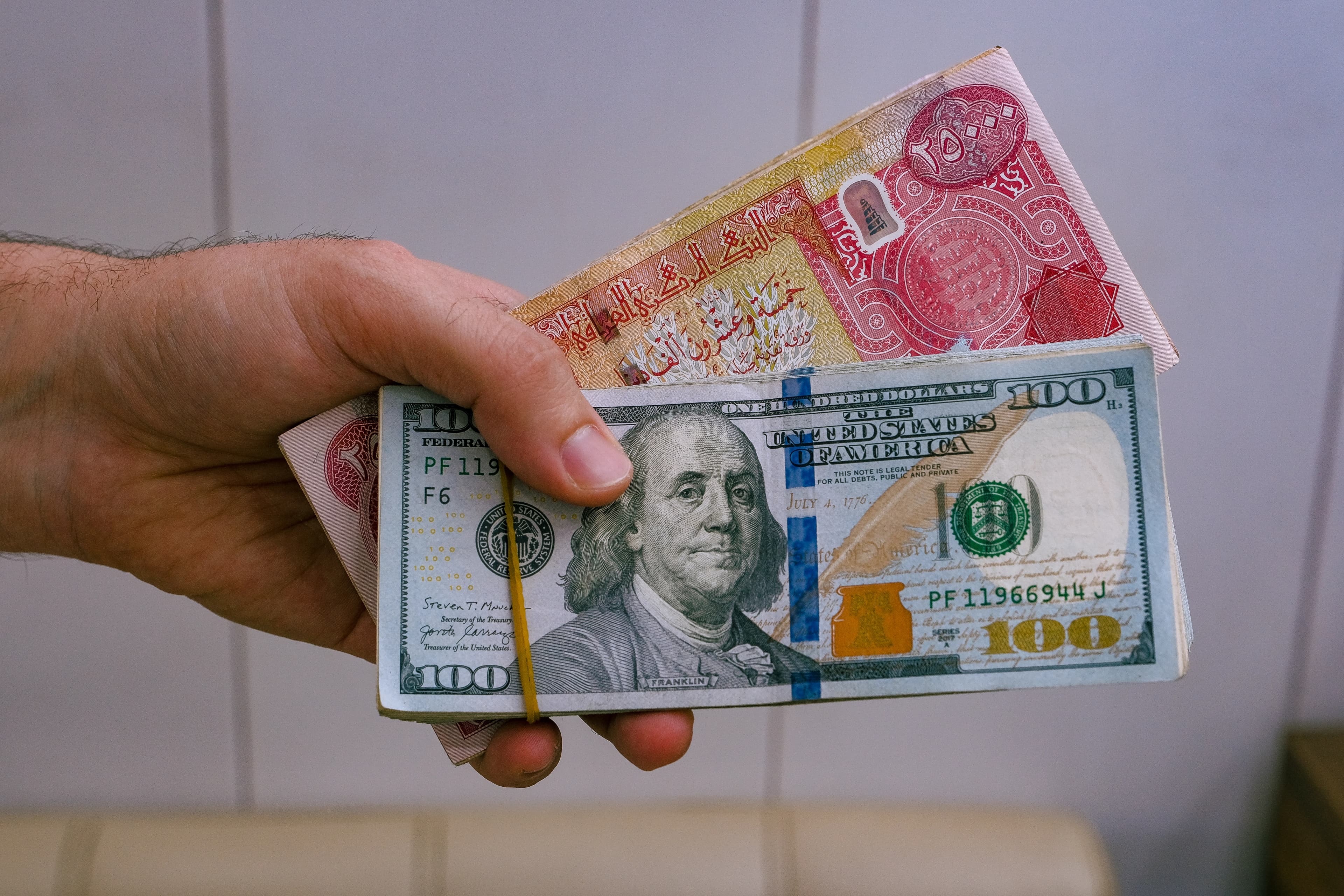
ERBIL, Kurdistan Region - Iraq has decided to allow the import of food and medicine through the Kurdistan Region’s Ibrahim Khalil border crossing with Turkey for three months as the ongoing war involving Iran disrupts maritime shipping routes and threatens supply chains.
Samer Qasim Dawood, head of Iraq’s General Customs Authority, said imports of food and pharmaceuticals entering through Ibrahim Khalil will temporarily follow the advance customs clearance system.
“This decision will be implemented for three months, until May 31, and the same procedures used at other Iraqi border crossings will apply,” Dawood told Rudaw.
Under the measure, traders must deposit customs duties and tax guarantees before transferring dollars for imports, with payments placed into bank accounts belonging to Iraq’s General Customs Authority and the General Commission for Taxes.
Baghdad first introduced the advance customs system in November 2025, requiring traders to pay customs duties ahead of time and obtain a code through the ASYCUDA digital customs platform before goods can pass through border crossings.
The latest decision comes as the US-Israel war with Iran - which began on February 28 when Washington and Tel Aviv carried out joint airstrikes against Tehran - has effectively halted shipping through the Strait of Hormuz, a critical global maritime chokepoint through which roughly 20 percent of the world’s oil and gas trade passes.
Iran has warned that ships attempting to pass through the strait could be attacked, causing shipping companies and insurers to suspend operations in the area and severely disrupting regional trade routes.
The crisis has already hit Iraq’s economy. The disruption in shipping has forced the country to slash oil output and exports as tankers are unable to leave southern ports, highlighting Baghdad’s heavy reliance on maritime routes through the Gulf.
According to Hami Harki, head of the Arc Star international transport company, the new measure is aimed at ensuring essential goods continue to reach the country despite the maritime disruption.
“This step is meant to prevent the negative impact of the closure of the Strait of Hormuz on the import of food and medicine through Iraqi ports,” he told Rudaw, noting that these goods were previously brought into Iraq mainly through southern seaports.
However, Harki said the decision could create challenges for traders because imports entering through the Kurdistan Region may face double customs payments—one to the Kurdistan Regional Government and another to Baghdad.
Samer Qasim Dawood, head of Iraq’s General Customs Authority, said imports of food and pharmaceuticals entering through Ibrahim Khalil will temporarily follow the advance customs clearance system.
“This decision will be implemented for three months, until May 31, and the same procedures used at other Iraqi border crossings will apply,” Dawood told Rudaw.
Under the measure, traders must deposit customs duties and tax guarantees before transferring dollars for imports, with payments placed into bank accounts belonging to Iraq’s General Customs Authority and the General Commission for Taxes.
Baghdad first introduced the advance customs system in November 2025, requiring traders to pay customs duties ahead of time and obtain a code through the ASYCUDA digital customs platform before goods can pass through border crossings.
The latest decision comes as the US-Israel war with Iran - which began on February 28 when Washington and Tel Aviv carried out joint airstrikes against Tehran - has effectively halted shipping through the Strait of Hormuz, a critical global maritime chokepoint through which roughly 20 percent of the world’s oil and gas trade passes.
Iran has warned that ships attempting to pass through the strait could be attacked, causing shipping companies and insurers to suspend operations in the area and severely disrupting regional trade routes.
The crisis has already hit Iraq’s economy. The disruption in shipping has forced the country to slash oil output and exports as tankers are unable to leave southern ports, highlighting Baghdad’s heavy reliance on maritime routes through the Gulf.
According to Hami Harki, head of the Arc Star international transport company, the new measure is aimed at ensuring essential goods continue to reach the country despite the maritime disruption.
“This step is meant to prevent the negative impact of the closure of the Strait of Hormuz on the import of food and medicine through Iraqi ports,” he told Rudaw, noting that these goods were previously brought into Iraq mainly through southern seaports.
However, Harki said the decision could create challenges for traders because imports entering through the Kurdistan Region may face double customs payments—one to the Kurdistan Regional Government and another to Baghdad.
Hastiyar Qadir contributed to this article from Erbil, Kurdistan Region.
Comments
Rudaw moderates all comments submitted on our website. We welcome comments which are relevant to the article and encourage further discussion about the issues that matter to you. We also welcome constructive criticism about Rudaw.
To be approved for publication, however, your comments must meet our community guidelines.
We will not tolerate the following: profanity, threats, personal attacks, vulgarity, abuse (such as sexism, racism, homophobia or xenophobia), or commercial or personal promotion.
Comments that do not meet our guidelines will be rejected. Comments are not edited – they are either approved or rejected.
Post a comment