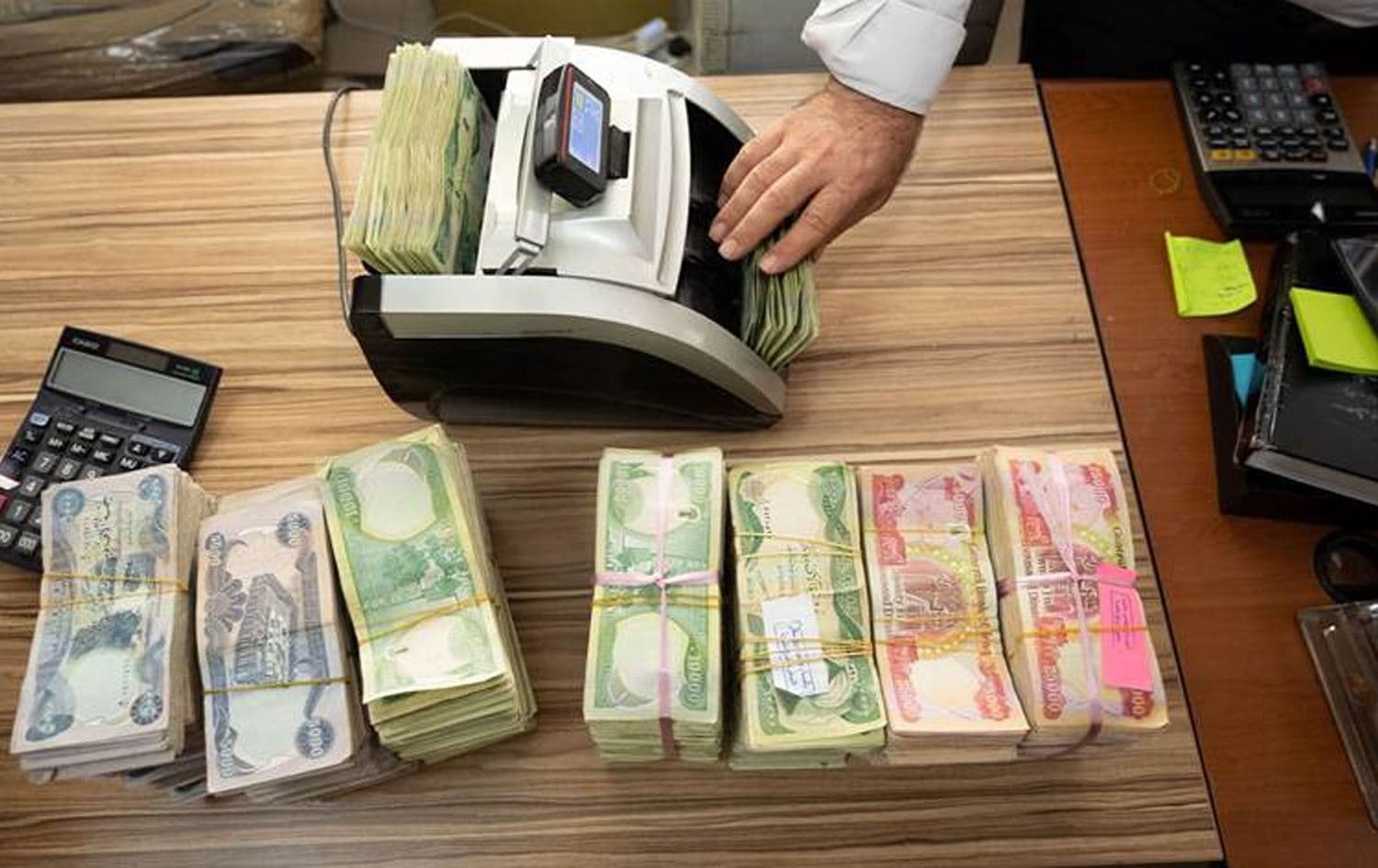

“Starting in July 2025, all government payments will be made electronically, and cash will be prohibited in government institutions,” Saleh Salman, advisor to Prime Minister Mohammed Shia’ al-Sudani, told state media.
The ban is part of a broader push by Baghdad to digitalize services and “encourage the public to adopt electronic payment systems to move away from the traditional cash-based culture,” according to Salman.
He noted that the number of bank accounts in Iraq has increased to between 22 and 23 million, with Baghdad contracting global auditing giant Ernst and Young to restructure six to seven state-owned banks “to meet international standards.”
In May, Mazhar Mohammed Salih, financial advisor to Prime Minister Sudani, told Rudaw that nearly 90 percent of Iraq’s money supply is held outside the formal banking sector, calling it a serious challenge to the country’s long-term financial stability and economic growth.
However, the Iraqi government is attempting to encourage people to deposit their savings in banks, rather than keep them at home.
At its core, Iraq’s banking sector suffers from a lack of modernization and persistent structural weaknesses. Most Iraqi banks rely heavily on the Central Bank of Iraq’s foreign currency auctions to generate profit, rather than engaging in productive investments that stimulate economic activity. This is further exacerbated by corruption, with repeated allegations that banks are complicit in smuggling money out of the country.
Customers often face rigid withdrawal limits - sometimes only allowed in installments - and risk theft not just from criminal actors but potentially from within the banks themselves.
Compounding the problem is a weak legal framework. Laws to protect deposits are either lacking or outdated, and restrictive regulations discourage long-term investment and reinforce a dependence on government-linked financial operations.
As a result, Iraqi banks offer limited services by international standards and remain largely tied to state-driven “rentier” activities such as currency exchange, letters of credit, and the distribution of public sector salaries.
Although there is a growing interest in digital banking and the Central Bank has launched initiatives to support digital enrollment, progress remains slow due to the absence of essential regulatory frameworks.
The infrastructure for electronic payments is still underdeveloped, and most Iraqis continue to convert their digitally paid salaries into physical cash - reinforcing the long-standing “cash-is-king” mindset that continues to stall the country’s financial modernization.