


Iraq

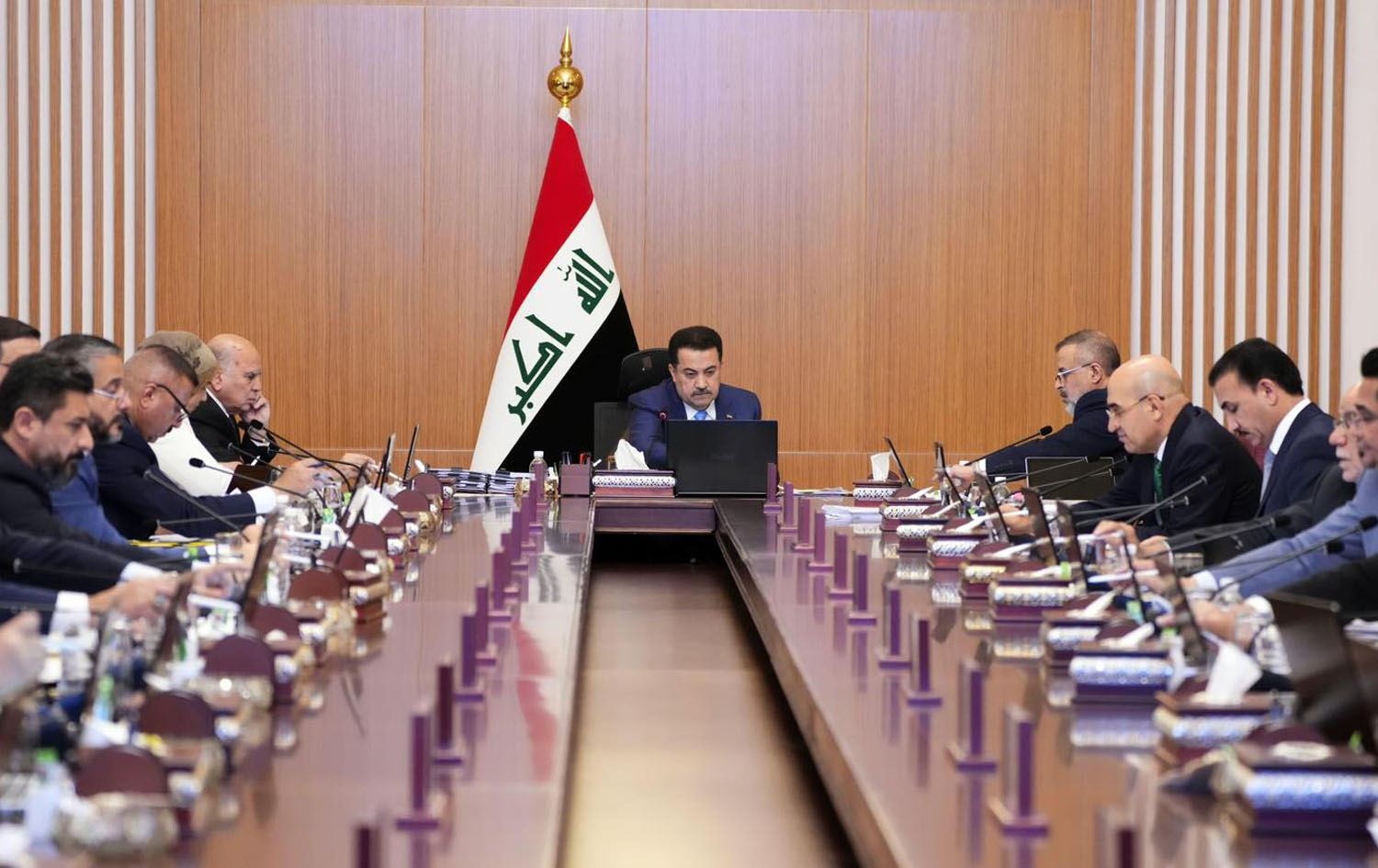
Iraqi Prime Minister Mohammed Shia’ al-Sudani (center) chairing a meeting of the Council of Ministers on September 9, 2025. Photo: Sudani’s office
ERBIL, Kurdistan Region - Iraq’s Council of Ministers on Tuesday reviewed two reports detailing ongoing disputes with the Kurdistan Regional Government (KRG), one over non-oil revenue sharing and the other outlining obstacles to the handover of oil from oil firms operating in the Kurdistan Region.
The reports were prepared by Prime Minister Mohammed Shia’ al-Sudani’s legal advisory team and submitted to a ministerial committee headed by Planning Minister Mohammed Ali Tamim, according to information obtained by Rudaw..
One report summarized the positions of the KRG and federal finance ministries regarding non-oil revenues, while the second focused on obstacles preventing the handover of oil from international oil companies (IOCs) operating in the Region.
Justice Minister Khalid Shwani told Rudaw that Sudani added the revenue-sharing issue to Tuesday’s discussions, though a statement from the prime minister’s office did not mention the addition.
According to the report seen by Rudaw, disagreements remain over how non-oil revenues - such as fees, service taxes, and tariffs - should be divided. The KRG argues that it is responsible for handing over 50 percent of tax, customs, and border gate income, while retaining all domestic fees. Baghdad, however, insists that 100 percent of revenues be delivered to the federal treasury, after which 50 percent would be returned to the Region.
Oil handover also remains a major sticking point. A senior source in Baghdad told Rudaw that nearly $1 billion in accumulated debts owed by the KRG to IOCs has complicated the transfer of oil to the State Oil Marketing Organization (SOMO). The federal oil ministry has refused to assume responsibility for the arrears, saying there is no legal basis to do so.
An amendment to the Iraqi budget law set a temporary entitlement of $16 per barrel for production and transportation costs, to be paid to the companies until an international consultant determines the real value. However, the amendment made no provision for repayment of past debts.
On Monday, Myles Caggins, spokesperson for the Association of the Petroleum Industry of Kurdistan (APIKUR), told Rudaw that exports would not resume without a written agreement from Baghdad defining responsibilities and payment mechanisms for use of the Iraq-Turkey pipeline.
Oil exports from the Kurdistan Region through the Iraq-Turkey pipeline have been suspended since March 2023, when a Paris-based arbitration court ruled in favor of Baghdad against Ankara, saying the latter had violated a 1973 pipeline agreement by allowing Erbil to begin exporting oil independently in 2014.
The suspension has cost all sides about $30 billion in lost revenue, according to APIKUR. SOMO’s director said this week they are working to implement the agreed terms and expect exports to restart “soon.”
Hastyar Qadir and Nahro Mohammed contributed to this report.


Comments
Rudaw moderates all comments submitted on our website. We welcome comments which are relevant to the article and encourage further discussion about the issues that matter to you. We also welcome constructive criticism about Rudaw.
To be approved for publication, however, your comments must meet our community guidelines.
We will not tolerate the following: profanity, threats, personal attacks, vulgarity, abuse (such as sexism, racism, homophobia or xenophobia), or commercial or personal promotion.
Comments that do not meet our guidelines will be rejected. Comments are not edited – they are either approved or rejected.
Post a comment