


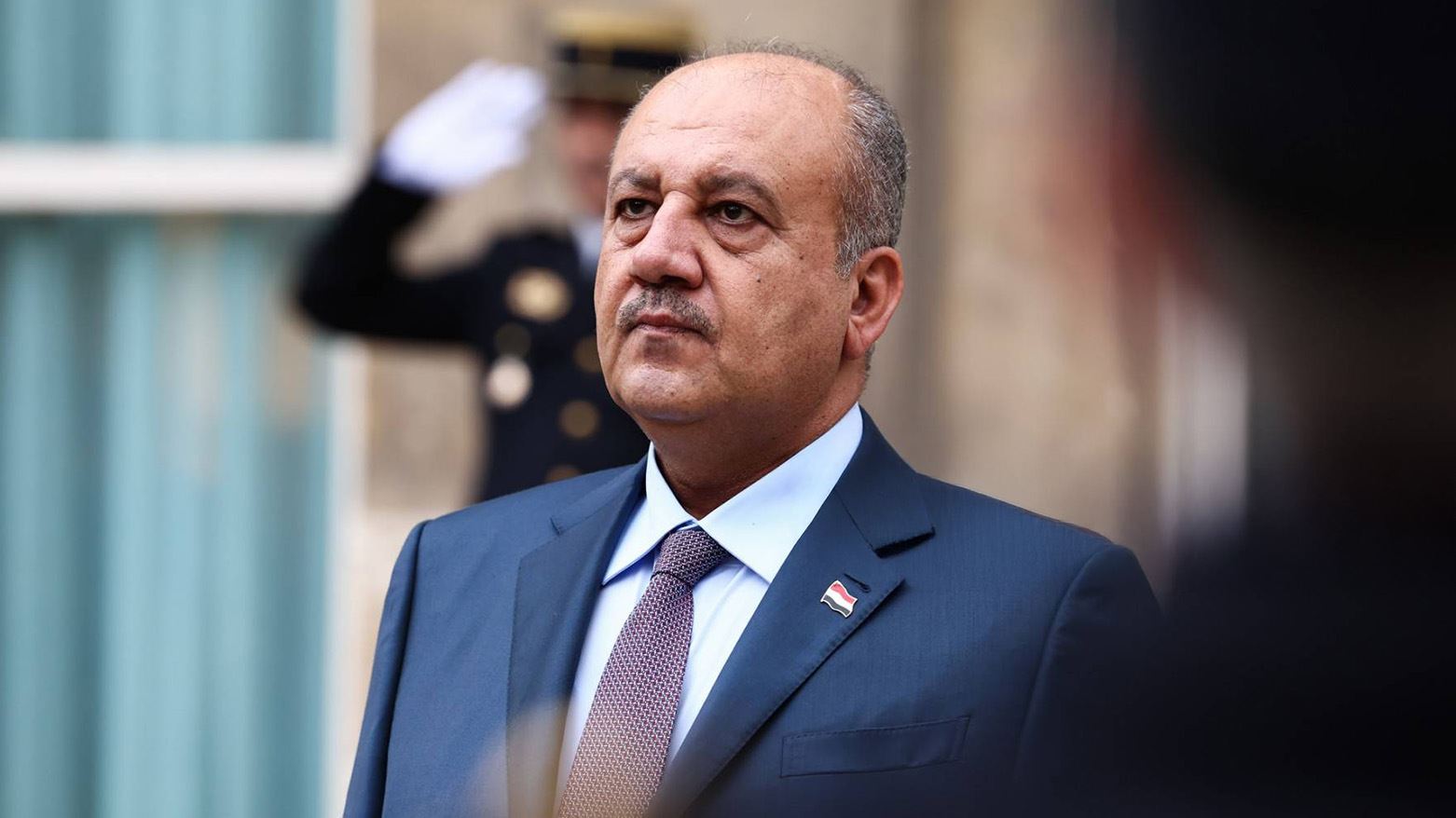
ERBIL, Kurdistan Region - Iraq is set to receive the first delivery of advanced defense systems early next year from South Korea, as part of Baghdad's efforts to strengthen the country's air defense capabilities amid heightened regional tensions, the minister of defense told Rudaw on Thursday.
"Eight new defense systems will arrive in Iraq from South Korea at the beginning of the next year," said Iraq's Defense Minister Thabit Al-Abbasi.
In May, Iraq’s defense ministry announced it had signed agreements with South Korea in September 2024 to procure air defense systems.
Abbasi detailed that they have "signed an agreement with Korean LIG [Next 1] company. We will receive the first batch, consisting of eight defense systems, at the beginning of the next year."
LIG Nex1 is affiliated with the Ministry of Defense of the Republic of Korea.
The defense systems include tactical helicopters, missile systems, and radars.
Abbasi had previously described the deals with South Korea as “a qualitative and unprecedented step in the history of the defense ministry” to “equip Iraq with an advanced and modern air defense system, capable of confronting air threats.”
Baghdad faces growing pressure over allegations that Israel used Iraqi airspace to conduct strikes on Iran during the 12-day air war between the two arch foes in mid-June. Ever since then several of Iraq’s Iran-aligned politicians and factions called on the government to strengthen its air defenses and prevent foreign use of its skies.
Iraq separately struck a deal with Airbus in September 2024, under which the French company would provide Iraq with a total of 14 helicopters, including 12 Airbus H225M helicopters, also known as Caracal.
The defense ministry announced in late April that two Caracal military helicopters arrived in Baghdad.
In September 2019, the Iraqi parliament passed a bill to establish the Defense Industries Commission (DIC) with the aim of expanding military production. Last September, the interior minister showcased the first batch of domestically produced armored vehicles manufactured by the commission.
In late March, the DIC announced it had saved $700 million over the past two years by manufacturing weapons and ammunition locally, reducing reliance on imports.


Comments
Rudaw moderates all comments submitted on our website. We welcome comments which are relevant to the article and encourage further discussion about the issues that matter to you. We also welcome constructive criticism about Rudaw.
To be approved for publication, however, your comments must meet our community guidelines.
We will not tolerate the following: profanity, threats, personal attacks, vulgarity, abuse (such as sexism, racism, homophobia or xenophobia), or commercial or personal promotion.
Comments that do not meet our guidelines will be rejected. Comments are not edited – they are either approved or rejected.
Post a comment