
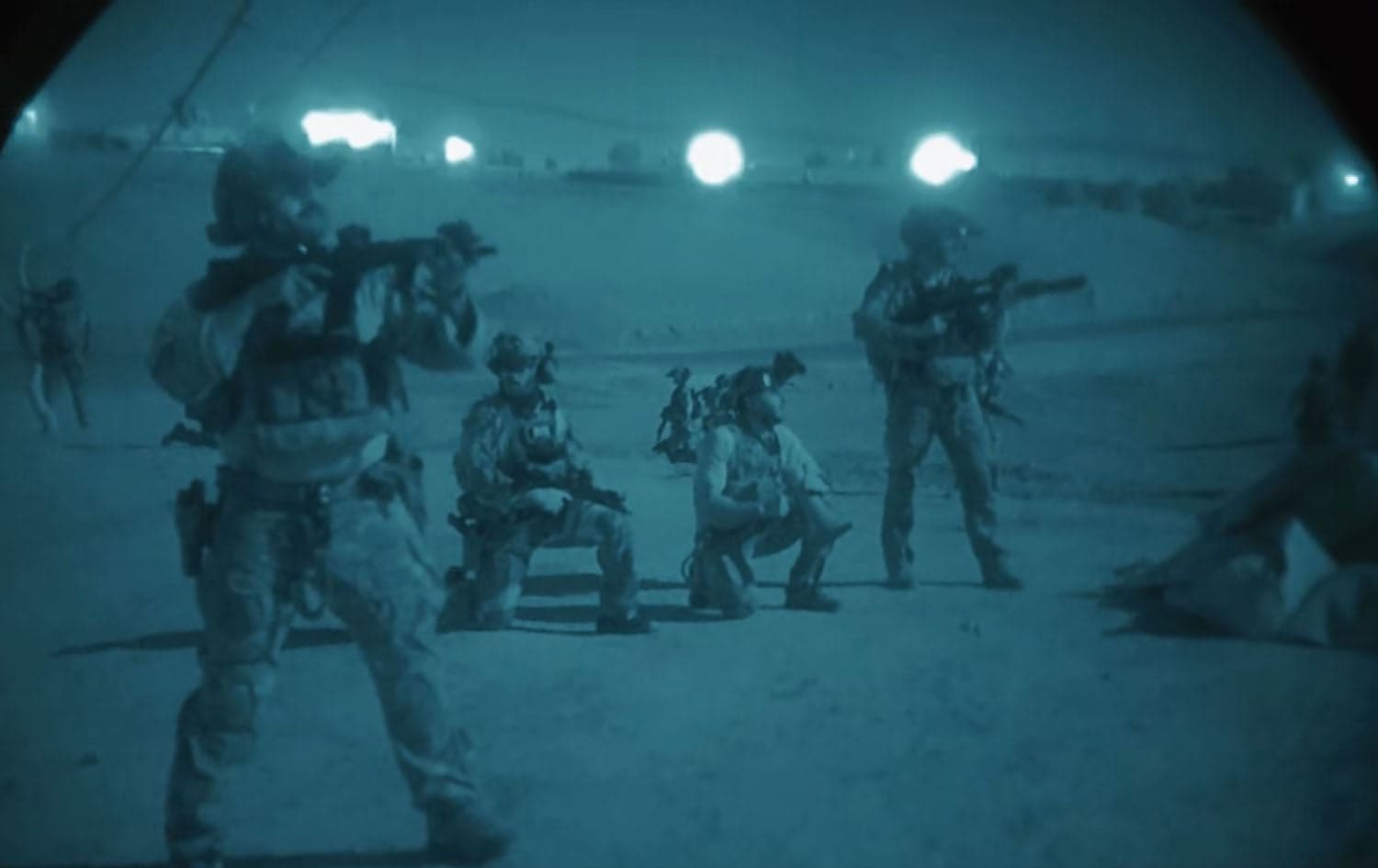

ERBIL, Kurdistan Region - The Sulaimani-based Counter-Terrorism Group (CTG) on Thursday announced the arrest of a “terrorist” in Kirkuk’s Hawija district, along with several “associates,” in a joint operation with Iraqi forces.
The CTG said in a statement that the raid was conducted in the Zab subdistrict with Iraq’s Counter-Terrorism Service (ICTS), “based on thorough investigation and precise intelligence.”
The main suspect, identified only as (M.A.M.), born in 1988, “was successfully arrested,” according to the statement. Several family members and “associates” were also detained under Article Four of Iraq’s 2005 Counter-Terrorism Law, which punishes those convicted of terror offenses with death penalty and sentences individuals aiding them to life imprisonment.
According to the CTG, the suspect had carried out “logistical, military, and medical duties” for the Islamic State (ISIS) and maintained ties with several cells across Qarachogh Mountain, Zab subdistrict, Sargaran, Dibis and Hawija districts, and the Hamrin Mountain range.
“He participated in attacks against Iraqi police and army forces as well as civilians in these areas, and planted mines and improvised explosive devices on public roads,” the CTG statement said, adding that “he has been operating as a sleeper cell in the Zab border area and has carried out several activities.”
On Wednesday, a joint force of the Iraqi army and Popular Mobilization Forces (PMF, or Hashd al-Shaabi) launched a similar operation targeting an ISIS suspect in western Kirkuk near the Zab river. Authorities did not confirm whether any arrests were made. The operation came three days after Iraq’s Federal Intelligence and Investigation Agency announced the arrest of three other suspected ISIS members in Kirkuk.
ISIS rose to power and seized swathes of Iraqi and Syrian land in a brazen offensive in 2014, declaring a so-called “caliphate.”
While the group was declared territorially defeated in Iraq and Syria in 2017 and 2019 respectively, it still continues to pose serious security risks through hit-and-run attacks, bombings, and abductions, especially across the vast expanses of the Syrian desert and several Iraqi provinces situated in a security vacuum between the federal government and the Kurdistan Region.
Kirkuk province in particular has been a hotspot for ISIS activity, lying in a security vacuum exploited by militants to launch attacks on both civilians and members of the security forces.
Despite the threats, Iraqi authorities stress that attacks by ISIS have largely simmered down.
.png&w=3840&q=75)