


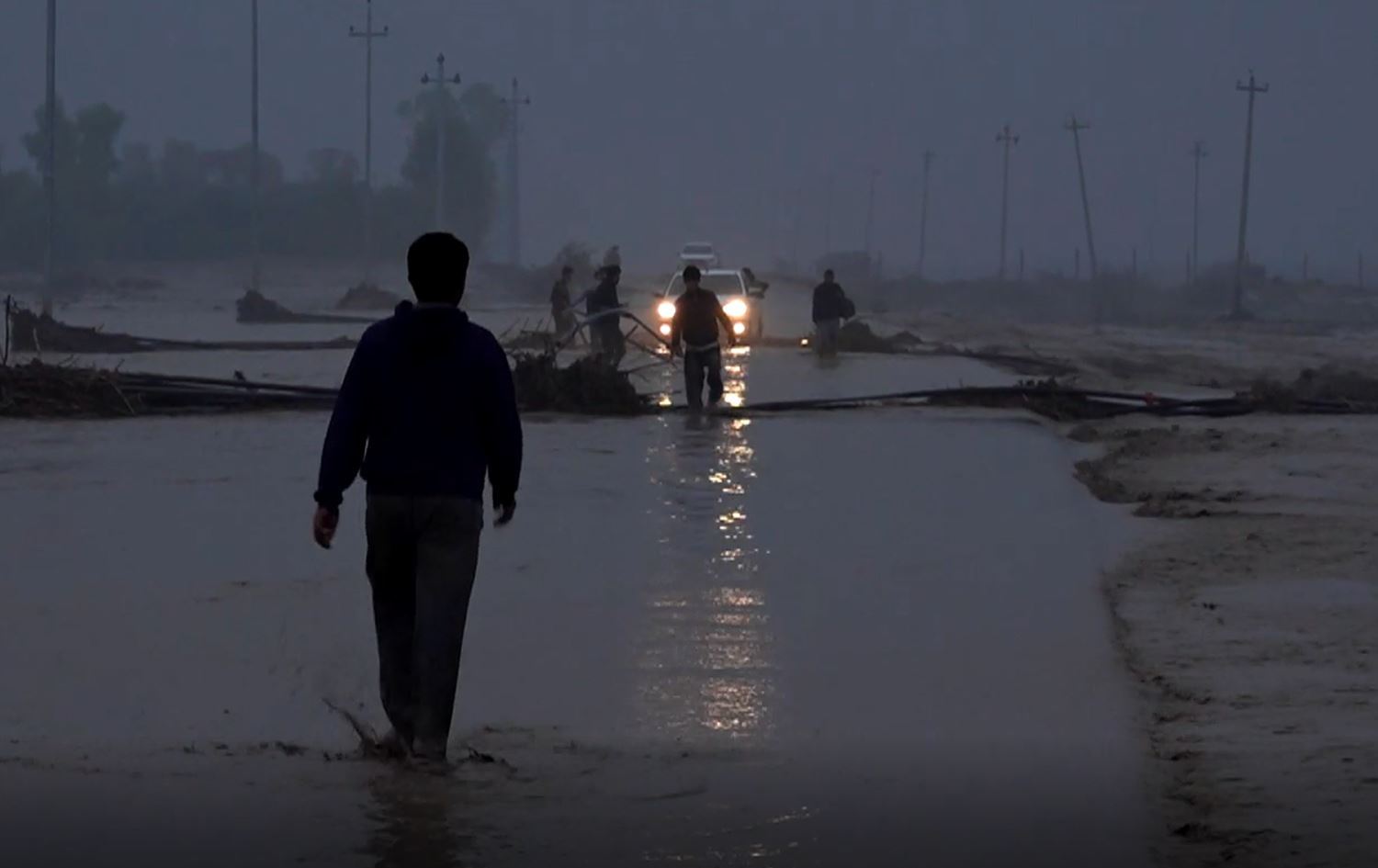
ERBIL, Kurdistan Region - Torrential downpours and flash floods have claimed the lives of nine people across Iraq, including the Kurdistan Region, while one person remains missing in Sulaimani province.
Iraq’s Health Ministry reported six deaths, numbers that excluded Kurdistan Region between December 9-11: two in Kirkuk, two in Dhi Qar, one in Wasit, and one in Diwaniyah.
In the Kurdistan Region, Sulaimani province recorded three fatalities - two in Chamchamal and one in Kalar districts.
The victims died in various ways: three were electrocuted, while others were killed by collapsing walls or swept away by floodwaters. More than a dozen people have also been injured.
The Kurdistan Region and other parts of Iraq experienced three consecutive days of heavy rainfall starting Monday, triggering severe flash floods.
Sulaimani’s Kalar and Chamchamal districts were among the hardest hit.
Missing engineer
Among those affected is Ahmed Hameed, an engineer from Baghdad, who went missing after being swept away by floodwaters on Tuesday in Takiya, south of Sulaimani province.
His wife, Aya Munzir, told Rudaw that Hameed, who worked in Sulaimani city, disappeared in the rushing waters.
“For the past three days, we have not heard anything about him,” Munzir said.
According to reports, Hameed was resting inside a caravan when the floods struck. His father recounted that at 12:50 pm on Tuesday, Ahmed called to show him the rising floodwaters via video call. “After 2 pm, I received a call asking to reach out to Ahmed,” the father said.
Weather forecast and response
The Kurdistan Region’s Meteorology Department announced on Thursday that additional rainfall is expected on Friday and Saturday, though less intense than earlier this week. “Sporadic rainfalls are forecast in western areas of the Kurdistan Region on Friday,” the department said.
Meanwhile, the Kurdistan Regional Government’s (KRG) Ministry of Water Resources reported that dams across the Region have begun storing significant water reserves following the heavy rains.


Comments
Rudaw moderates all comments submitted on our website. We welcome comments which are relevant to the article and encourage further discussion about the issues that matter to you. We also welcome constructive criticism about Rudaw.
To be approved for publication, however, your comments must meet our community guidelines.
We will not tolerate the following: profanity, threats, personal attacks, vulgarity, abuse (such as sexism, racism, homophobia or xenophobia), or commercial or personal promotion.
Comments that do not meet our guidelines will be rejected. Comments are not edited – they are either approved or rejected.
Post a comment