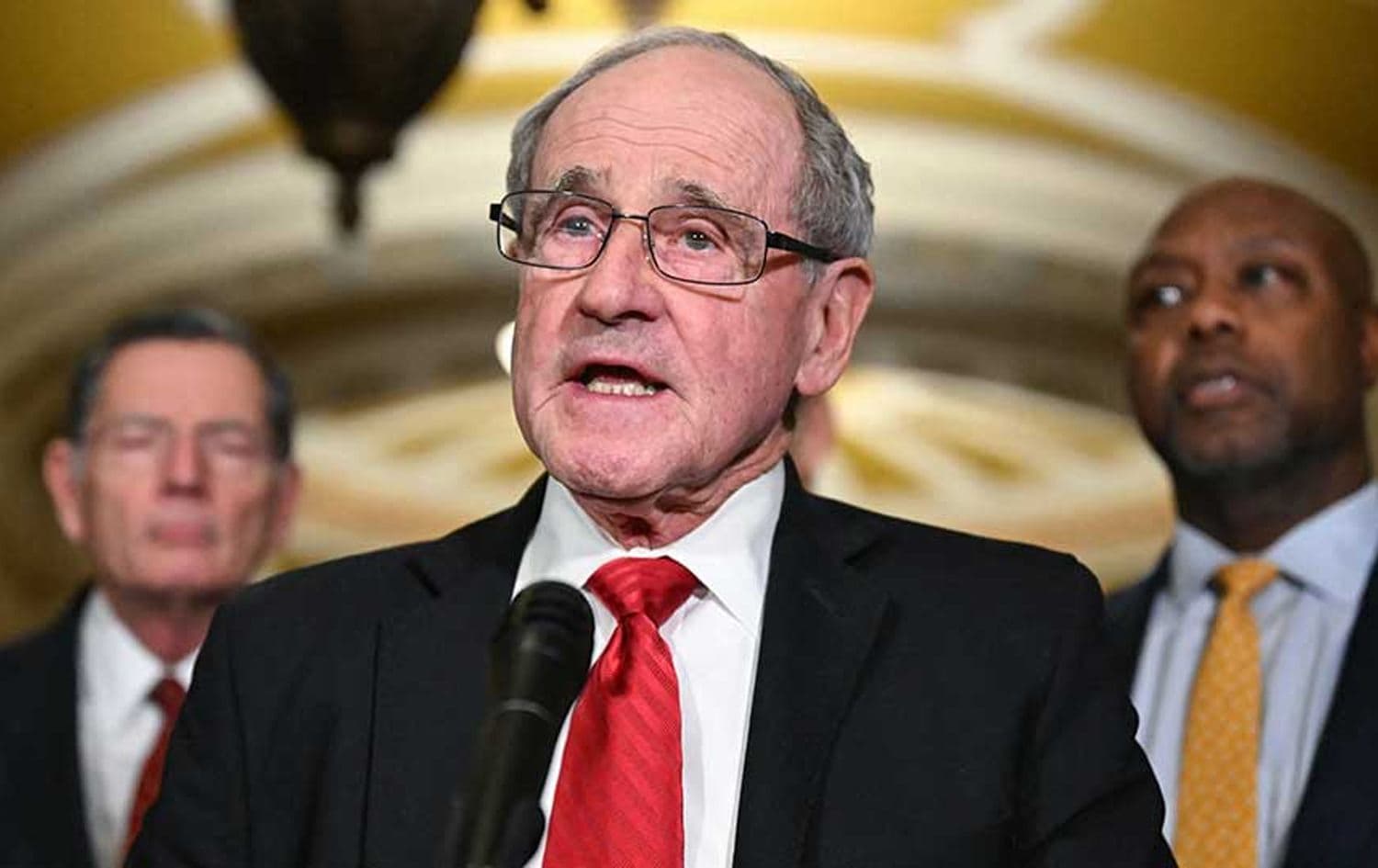
ERBIL, Kurdistan Region - The controversial bill to restructure the Popular Mobilization Forces (PMF, or Hashd al-Shaabi) without prior disarmament is “ill-advised” and would solidify Iranian influence over Iraq, a US senator said on Wednesday, calling on Baghdad to choose between Tehran and the West.
Washington has expressed increasing caution about a potential bill that seeks to organize the Popular Mobilization Commission (PMC) - a government board created to bring the PMF under state control. The bill, which has divided lawmakers, aims to regulate the PMF’s structure, salaries, and retirement benefits, a politically sensitive issue given the PMF’s central role in Iraq’s security framework and the political influence it wields.
“This move would be ill-advised. Integrating Iranian-aligned militias into the Iraqi military, without first requiring them to disarm and demobilize, gives Iran a back door into the Iraqi government to undermine its sovereignty,” Republican Senator James Risch, of Idaho, told Rudaw.
He called on Iraq to choose between Tehran and the West, saying, “This is where the rubber meets the road - Iraq must choose between being held back by Iran or a brighter future with the West.”
Although the PMF was officially incorporated into the Iraqi security apparatus and granted formal legal status by parliament in 2016, many of its factions still operate independently, with impunity, and reportedly maintain strong ties to Iran. Some have been involved in attacks on US forces in Iraq and Syria and remain openly hostile to Washington.
In late July, an attack by Kataib Hezbollah - a powerful Iran-backed Iraqi militia designated by the US as a Foreign Terrorist Organization and a PMF component - on an agriculture ministry office in Baghdad killed three people.
The PMF is composed of various armed factions, including groups designated as terrorist organizations by the US. Among them is Asaib Ahl al-Haq (AAH), whose leader Qais al-Khazali is a senior member of the Shiite-led Coordination Framework, a key component of Iraq’s governing coalition. In March, AAH and the State of Law Coalition boycotted a parliamentary session after the PMF bill was excluded from the agenda, forcing its postponement.
Rebaz Ali contributed to this report.
Washington has expressed increasing caution about a potential bill that seeks to organize the Popular Mobilization Commission (PMC) - a government board created to bring the PMF under state control. The bill, which has divided lawmakers, aims to regulate the PMF’s structure, salaries, and retirement benefits, a politically sensitive issue given the PMF’s central role in Iraq’s security framework and the political influence it wields.
“This move would be ill-advised. Integrating Iranian-aligned militias into the Iraqi military, without first requiring them to disarm and demobilize, gives Iran a back door into the Iraqi government to undermine its sovereignty,” Republican Senator James Risch, of Idaho, told Rudaw.
He called on Iraq to choose between Tehran and the West, saying, “This is where the rubber meets the road - Iraq must choose between being held back by Iran or a brighter future with the West.”
Although the PMF was officially incorporated into the Iraqi security apparatus and granted formal legal status by parliament in 2016, many of its factions still operate independently, with impunity, and reportedly maintain strong ties to Iran. Some have been involved in attacks on US forces in Iraq and Syria and remain openly hostile to Washington.
In late July, an attack by Kataib Hezbollah - a powerful Iran-backed Iraqi militia designated by the US as a Foreign Terrorist Organization and a PMF component - on an agriculture ministry office in Baghdad killed three people.
The PMF is composed of various armed factions, including groups designated as terrorist organizations by the US. Among them is Asaib Ahl al-Haq (AAH), whose leader Qais al-Khazali is a senior member of the Shiite-led Coordination Framework, a key component of Iraq’s governing coalition. In March, AAH and the State of Law Coalition boycotted a parliamentary session after the PMF bill was excluded from the agenda, forcing its postponement.
Rebaz Ali contributed to this report.
Comments
Rudaw moderates all comments submitted on our website. We welcome comments which are relevant to the article and encourage further discussion about the issues that matter to you. We also welcome constructive criticism about Rudaw.
To be approved for publication, however, your comments must meet our community guidelines.
We will not tolerate the following: profanity, threats, personal attacks, vulgarity, abuse (such as sexism, racism, homophobia or xenophobia), or commercial or personal promotion.
Comments that do not meet our guidelines will be rejected. Comments are not edited – they are either approved or rejected.
Post a comment