


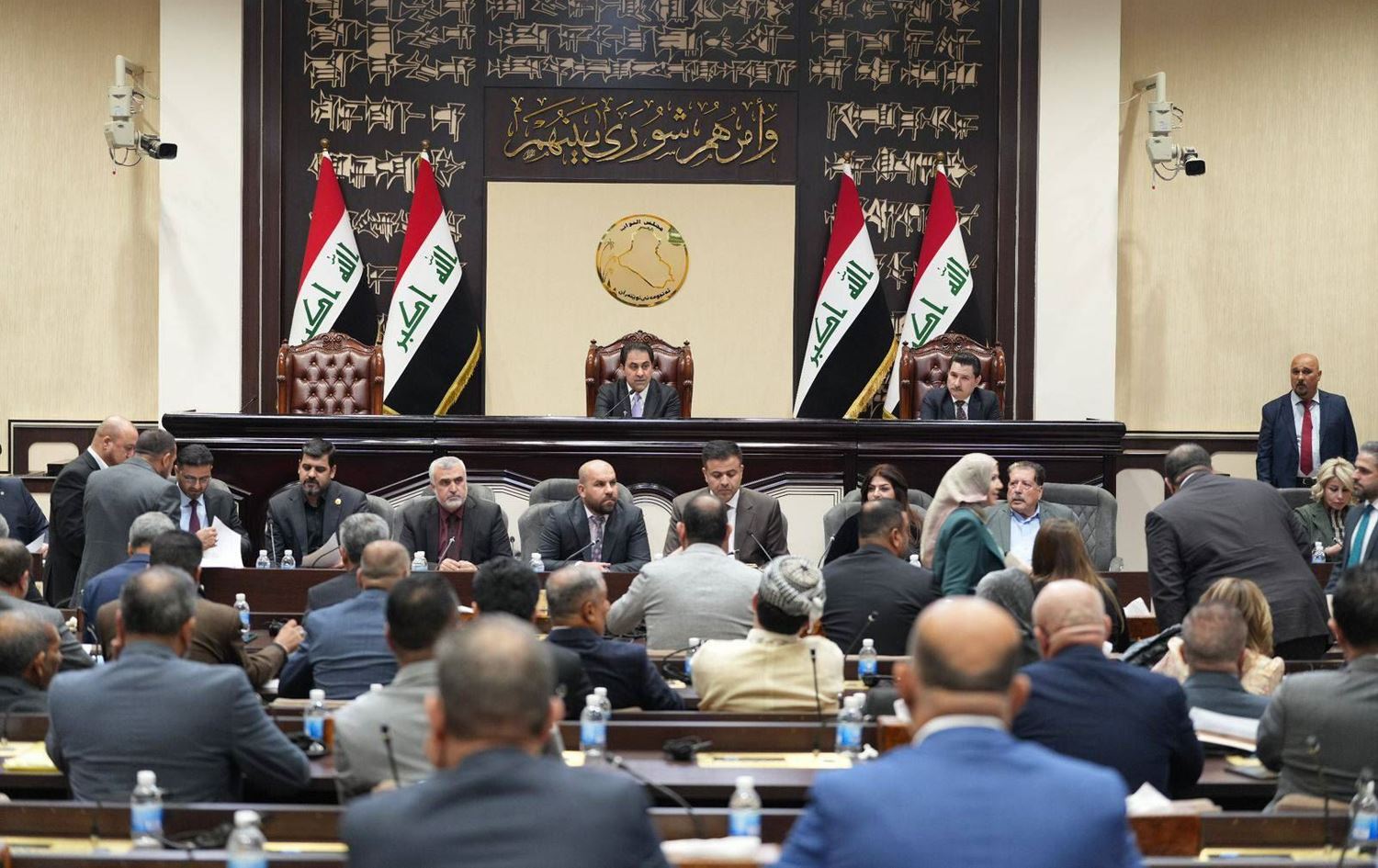
ERBIL, Kurdistan Region - Iraq’s main Sunni Arab political blocs are set to meet on Sunday to agree on one or two candidates for parliament speaker, as they seek to unify their position ahead of negotiations to form the next federal government, bloc members said.
“A meeting will be held today… during which the selection of one or two candidates for the position of Speaker of Parliament will be decided,” Salah al-Marawi, a member of the Azm Alliance, told state-run Al-Sabah newspaper.
The meeting is set to take place at the headquarters of the Azm Front, led by businessman and politician Muthanna al-Samarrai.
Marawi added that “it is not possible to discuss the candidates' chances currently, because discussions are still ongoing and agreement on names has not been reached yet.”
In November, leaders of Iraq’s Sunni political forces announced the formation of a “National Political Council,” aimed at unifying Sunni positions during negotiations over the next government.
The council includes the Takaddum Front, led by former parliament speaker Mohammed al-Halbousi (2018–2023); the Sovereignty Alliance, headed by politician Khamis al-Khanjar; the National Hasm Alliance, led by caretaker Defense Minister Thabet al-Abbasi; and the National Masses Party, headed by former Salahaddin governor Ahmed al-Jabouri.
According to final results released by the Independent High Electoral Commission (IHEC), Takaddum won 27 seats in the 329-member parliament, Azm secured 15 seats, Sovereignty nine, Hasm five, and the National Masses Party three.
Salah al-Kubaisi, a member of the Sovereignty Alliance, told Al-Sabah that “the five blocs in the (National Political Council) are still in the process of [reaching] understandings among themselves to select a candidate for the next Speaker.” He added that “most blocs have candidates.”
Kubaisi ruled out internal disputes, saying there were no longer tensions among the blocs. He said they had “surpassed the stage of disputes, media undermining and hostile discourse between Sunni political blocs,” and that “understandings and commonalities are greater among them.”
Iraq held early legislative elections on November 9, followed by general voting on November 11. Final results were announced in mid-November.
Since the 2003 US-led invasion, Iraq’s informal power-sharing system has allocated the premiership to Shiites, the speakership to Sunni Arabs, and the presidency to Kurds.


Comments
Rudaw moderates all comments submitted on our website. We welcome comments which are relevant to the article and encourage further discussion about the issues that matter to you. We also welcome constructive criticism about Rudaw.
To be approved for publication, however, your comments must meet our community guidelines.
We will not tolerate the following: profanity, threats, personal attacks, vulgarity, abuse (such as sexism, racism, homophobia or xenophobia), or commercial or personal promotion.
Comments that do not meet our guidelines will be rejected. Comments are not edited – they are either approved or rejected.
Post a comment