


Iraq

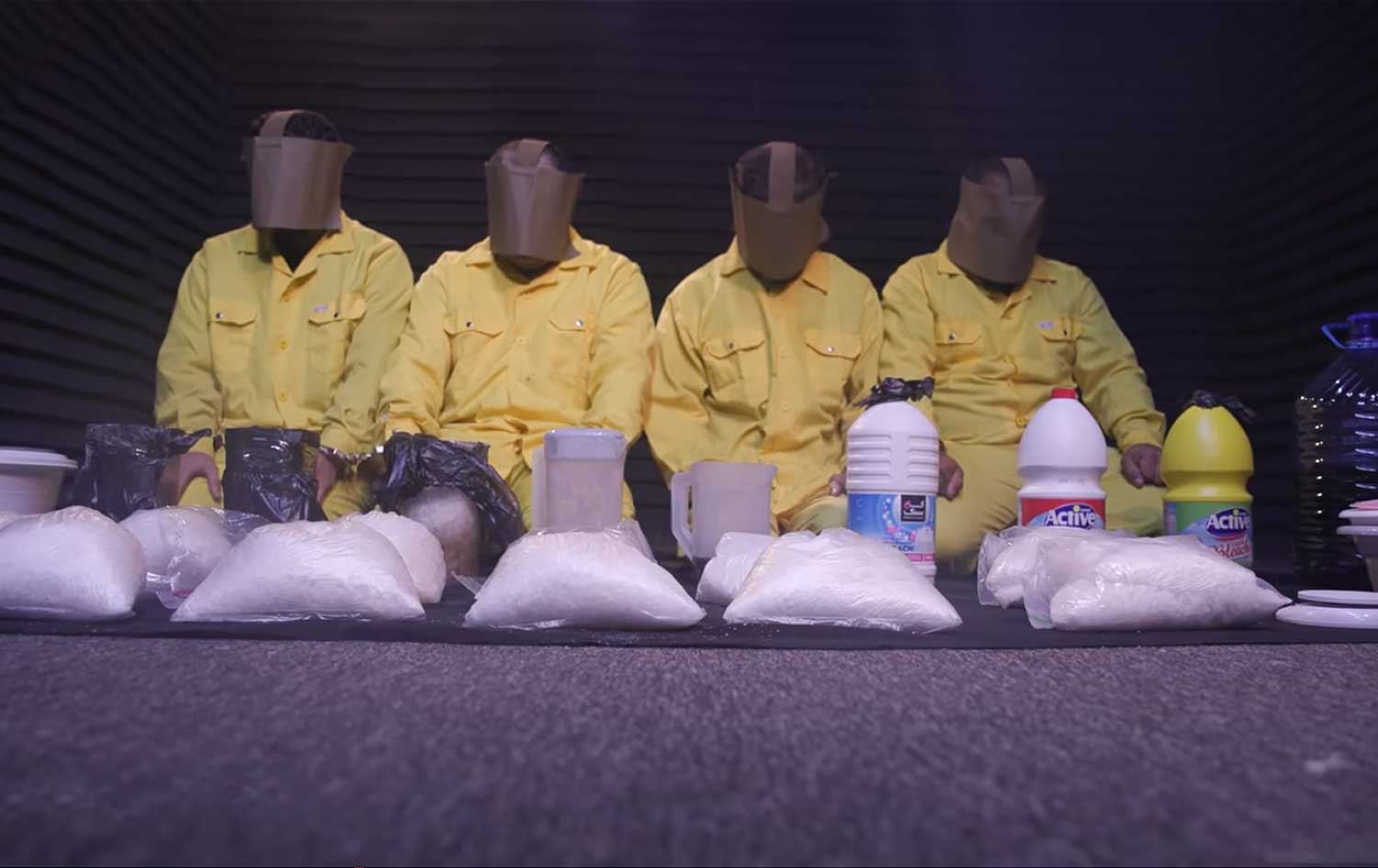
Suspected members of a drug trafficking network arrested by the Iraqi National Security Service (INSS) in Basra on December 14, 2025. Photo: Screengrab/INSS
ERBIL, Kurdistan Region - Iraq’s internal security agency said Sunday it has dismantled an international drug trafficking network, arresting more than a dozen suspects during a major security operation and seizing a crystal meth production laboratory in the southern province of Basra.
In a statement posted on its official Facebook page, the Iraqi National Security Service (INSS) said it “successfully carried out a specialized security operation” that led to the dismantling of “an international criminal network involved in the manufacturing and trafficking of narcotics.”
INSS said the operation was “based on precise intelligence and intensive field surveillance across several Iraqi provinces,” resulting in “the arrest of 17 suspects, including 14 foreign nationals, who were part of an organized criminal network producing and trafficking crystal meth.”
The operation also resulted in “the seizure of approximately 20 kilograms of crystal meth, some of which was confiscated in flagrante delicto during the manufacturing process inside a secret lab,” in addition to “eight liters of chemical precursors used in narcotics production.”
In late November, Iraq’s interior ministry said authorities had dismantled more than 1,200 drug trafficking and promotion networks over the past three years, including 171 international groups.
The ministry then reported seizing more than 14 tons of narcotics and issuing more than 2,300 drug-related sentences, including 300 death penalties.
At a press conference in Baghdad, interior ministry Spokesperson Colonel Abbas al-Bahadli said authorities had seized “14 tons, 20 kilograms, and 17 grams of narcotic substances” over the past three years. He added that “2,318 sentences were issued against those involved in drug cases, including 300 death sentences and 1,147 life imprisonment sentences.”
Bahadli also confirmed that Baghdad issued around “140 arrest warrants” for foreign nationals and conducted “40 security operations outside Iraq’s borders,” noting the establishment of 33 communication points with regional and international counterparts to facilitate cooperation and advanced intelligence exchange.
Importantly, the INSS said on Sunday that the primary suspect in the Basra bust “is a foreign national who arrived from a neighboring country,” adding that he had “rented a house in Basra province and converted it into a secret lab for manufacturing crystal meth.”
The security operation reportedly spanned the Iraqi capital, Baghdad, as well as the southern provinces of Basra, Diwaniyah, and Najaf. The agency said “simultaneous security strikes were carried out, leading to the complete paralysis of the network’s activities and the arrest of its main traffickers.”
In recent years, Iraqi authorities have intensified their campaign against drug trafficking, as Iraq, once primarily a transit route, has increasingly become a destination for narcotics.
Around mid-August, the interior ministry said Iraq had become a “regional leader” in combating drugs, highlighting the country’s role in providing intelligence on international narcotics networks. The ministry cited Iraqi intelligence contributions to a raid on one of the Middle East’s largest Captagon manufacturing facilities in eastern Lebanon.
In late October, Iraqi authorities announced the seizure of hundreds of kilograms of narcotics during a major security operation conducted inside Syrian territory in direct coordination with Damascus. Around the same time, Baghdad reported intercepting several kilograms of drugs smuggled into the country from Saudi Arabia.
In a statement posted on its official Facebook page, the Iraqi National Security Service (INSS) said it “successfully carried out a specialized security operation” that led to the dismantling of “an international criminal network involved in the manufacturing and trafficking of narcotics.”
INSS said the operation was “based on precise intelligence and intensive field surveillance across several Iraqi provinces,” resulting in “the arrest of 17 suspects, including 14 foreign nationals, who were part of an organized criminal network producing and trafficking crystal meth.”
The operation also resulted in “the seizure of approximately 20 kilograms of crystal meth, some of which was confiscated in flagrante delicto during the manufacturing process inside a secret lab,” in addition to “eight liters of chemical precursors used in narcotics production.”
In late November, Iraq’s interior ministry said authorities had dismantled more than 1,200 drug trafficking and promotion networks over the past three years, including 171 international groups.
The ministry then reported seizing more than 14 tons of narcotics and issuing more than 2,300 drug-related sentences, including 300 death penalties.
At a press conference in Baghdad, interior ministry Spokesperson Colonel Abbas al-Bahadli said authorities had seized “14 tons, 20 kilograms, and 17 grams of narcotic substances” over the past three years. He added that “2,318 sentences were issued against those involved in drug cases, including 300 death sentences and 1,147 life imprisonment sentences.”
Bahadli also confirmed that Baghdad issued around “140 arrest warrants” for foreign nationals and conducted “40 security operations outside Iraq’s borders,” noting the establishment of 33 communication points with regional and international counterparts to facilitate cooperation and advanced intelligence exchange.
Importantly, the INSS said on Sunday that the primary suspect in the Basra bust “is a foreign national who arrived from a neighboring country,” adding that he had “rented a house in Basra province and converted it into a secret lab for manufacturing crystal meth.”
The security operation reportedly spanned the Iraqi capital, Baghdad, as well as the southern provinces of Basra, Diwaniyah, and Najaf. The agency said “simultaneous security strikes were carried out, leading to the complete paralysis of the network’s activities and the arrest of its main traffickers.”
In recent years, Iraqi authorities have intensified their campaign against drug trafficking, as Iraq, once primarily a transit route, has increasingly become a destination for narcotics.
Around mid-August, the interior ministry said Iraq had become a “regional leader” in combating drugs, highlighting the country’s role in providing intelligence on international narcotics networks. The ministry cited Iraqi intelligence contributions to a raid on one of the Middle East’s largest Captagon manufacturing facilities in eastern Lebanon.
In late October, Iraqi authorities announced the seizure of hundreds of kilograms of narcotics during a major security operation conducted inside Syrian territory in direct coordination with Damascus. Around the same time, Baghdad reported intercepting several kilograms of drugs smuggled into the country from Saudi Arabia.


Comments
Rudaw moderates all comments submitted on our website. We welcome comments which are relevant to the article and encourage further discussion about the issues that matter to you. We also welcome constructive criticism about Rudaw.
To be approved for publication, however, your comments must meet our community guidelines.
We will not tolerate the following: profanity, threats, personal attacks, vulgarity, abuse (such as sexism, racism, homophobia or xenophobia), or commercial or personal promotion.
Comments that do not meet our guidelines will be rejected. Comments are not edited – they are either approved or rejected.
Post a comment