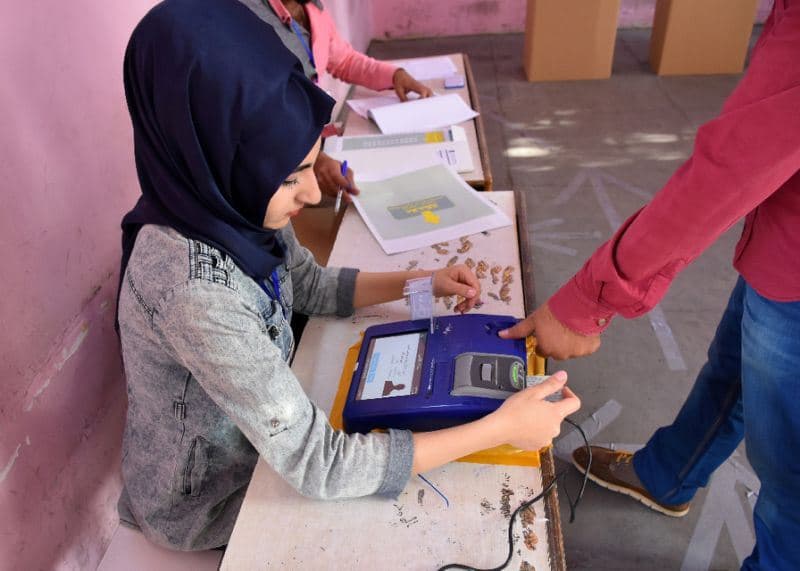

ERBIL, Kurdistan Region - Iraq's elections body has introduced facial recognition technology added to the new biometric devices to avoid voter identification issues for the November legislative vote.
"Applying the new technology in next month's election is to avoid the same issue that happened in the Kurdistan Region's October 2024 parliamentary election, when voting machines did not recognize the fingerprints of around 400,000 individuals," Khalid Abbas, in charge of Duhok office of the Independent High Electoral Commission (IHEC), told Rudaw. This number made up approximately 20 percent of all eligible voters.
"For this election, those voters who may have problems with fingerprint identification, can vote using cameras to be set up for facial recognition," he Abbas said.
The IHEC official went on to detail that they have already carried out tests on those who have done facial plastic surgeries.
"They were able to vote," he said. "Maybe someone who has made 90 to 100 percent changes to their faces will not be able to vote," he added.
According to the commission’s guidelines, only five percent of voters registered at a polling station are allowed to cast their votes without fingerprint verification, and that once the threshold is exceeded, only those with valid fingerprints are permitted to vote, the official said.
In July, the Iraqi electoral commission cancelled the use of indelible ink in the November elections, citing full reliance on biometric voter cards.
Iraq’s parliamentary elections are scheduled for November 11, with a special vote on November 10. The 329-seat parliament includes 320 general seats and nine minority quota seats.
Based on the final results of the 2024 general population and housing census released in February, the population of Iraq and the Kurdistan Region, stands at 46.1 million. Of this, approximately 27 million are eligible voters aged 19 and above. However, only those who possess biometric voting cards will be allowed to vote.