


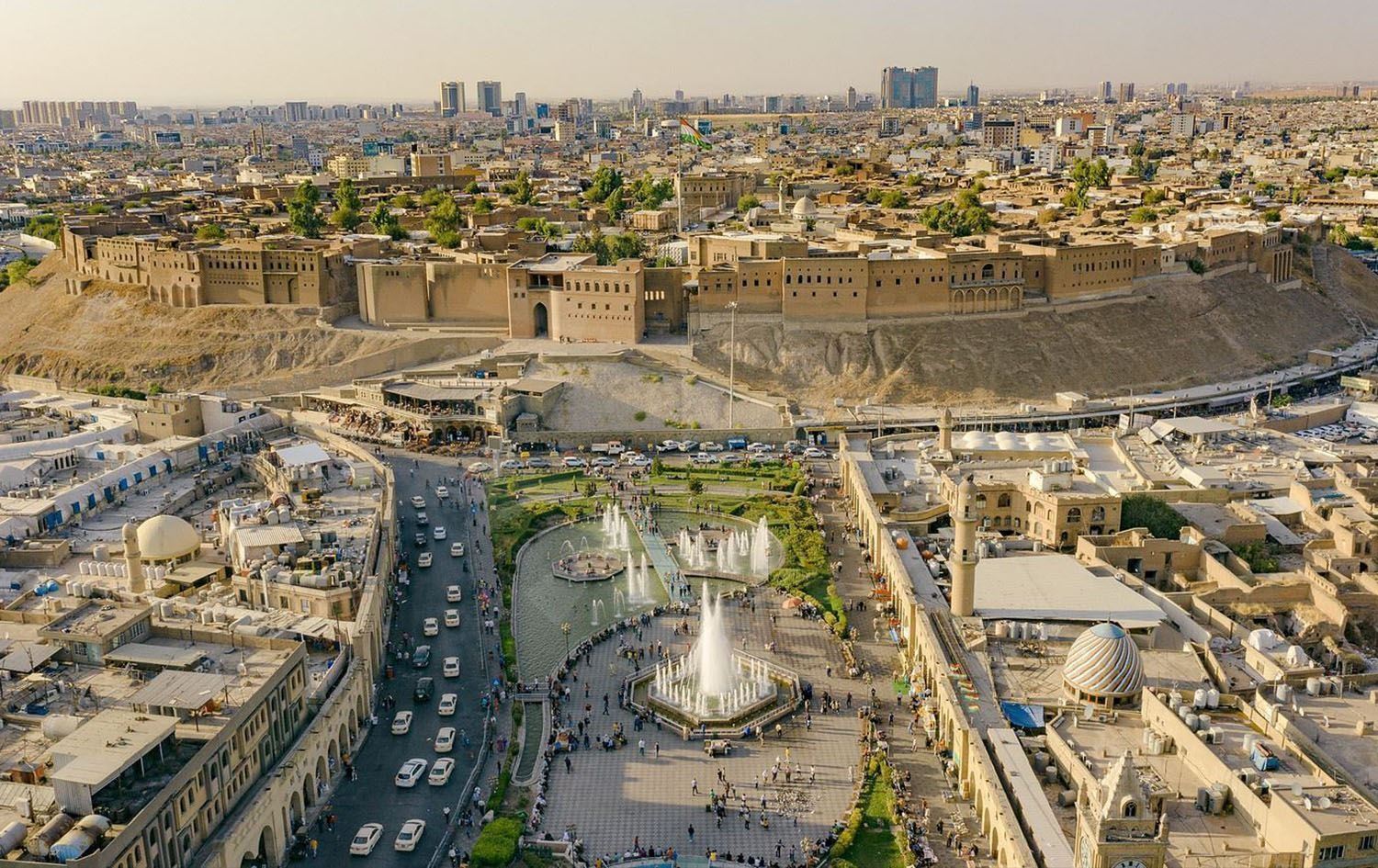
ERBIL, Kurdistan Region - Voters are evaluating the track records of the political parties, both on Kurdistan Region issues and in Baghdad, as they decide who to cast a ballot for in Iraq’s upcoming parliamentary election.
“Vote for whoever serves,” said a voter near Erbil’s ancient citadel.
As part of Rudaw’s special election coverage, the program Who is Stronger (Ke Baheza in Kurdish) spoke to voters in Erbil and Soran. The two largest parties competing for votes within the Kurdistan Region are the Kurdistan Democratic Party (KDP) and the Patriotic Union of Kurdistan (PUK). Erbil and Soran are traditional KDP strongholds.
“We have constant electricity and constant water,” said a voter, referring to the Kurdistan Regional Government’s (KRG) Runaki project that now provides nearly four million people with uninterrupted power, according to the electricity ministry.
The project, launched under KRG Prime Minister Masrour Barzani, addressed one of the public’s most persistent complaints - frequent power cuts that forced people to rely on expensive, polluting private generators. Barzani is a deputy leader of the KDP.
Water shortages, another recurring issue, are also being addressed by the KRG through major infrastructure projects. The $200 million Emergency Water Supply Project in Erbil, covering 40 neighborhoods, is expected to be completed in November, with a similar project planned for Sulaimani province.
Amid the improvements, several voters voiced support for the KDP.
“The protector of the rights of the Kurdish nation is the KDP, therefore, the KDP will obtain many more seats because it can put up a fight in Baghdad,” said one man wearing traditional Kurdish clothing.
“The KDP means the magnificence of a nation, means stability, means the identity of the Kurdish people,” a man chimed in.
One man said that PUK supporters in Erbil were reluctant to speak openly. “If one is a PUK [supporter] here, they will not say it,” he said. “People will not allow them.”
During the KDP’s campaign launch event, party leader Masoud Barzani called for a calm and fair election, saying, “With genuine democracy, all rights will be achieved.”
In Soran, an elderly man surrounded by a group of KDP supporters declared, “Our vote is for the KDP, our vote is only for the KDP.”
“If I do not vote, I have to die… I would not vote for anyone else,” said another, praising KDP leader Masoud Barzani.
Though the KDP enjoys strong support in Erbil and Soran, it is not universal.
“I am not a KDP [supporter], but the KDP is strong,” said one man. Another added, “Frankly, I want the entire Kurdish nation to be number one.”
A young man in the same crowd spoke up in support of the rival party, saying PUK leader Bafel Talabani is “brave” and “has the key to unravel the knots. Whenever he goes to Baghdad, he resolves the problems.”
Launching his party’s election campaign earlier this month, Talabani said the PUK maintains strong ties with Baghdad through its alliance with the Shiite-led Coordination Framework - a key component of Iraq’s ruling coalition backing Prime Minister Mohammed Shia’ al-Sudani. The PUK also holds the Iraqi presidency, a largely ceremonial position currently occupied by Abdul Latif Rashid.
“The PUK is always a winner, wherever it is,” PUK deputy leader Qubad Talabani told Rudaw’s Hevidar Ahmed in Erbil earlier this week. He is also the KRG’s deputy prime minister.
Not everyone was optimistic about the political divide. “Besides the two provinces that the KDP holds - Duhok and Erbil - the rest, from Sulaimani to Basra, have problems,” one middle-aged man said. “Sulaimani has no prosperity, no services, no roads.”
As the crowd near the citadel grew louder, voices rose saying “Biji [long live] KDP. “Biji Barzani,” echoing deep party loyalty.
Campaigning will continue until November 8. Security forces and special voters will cast their ballots on November 9, followed by the general election on November 11.
“Vote for whoever serves,” said a voter near Erbil’s ancient citadel.
As part of Rudaw’s special election coverage, the program Who is Stronger (Ke Baheza in Kurdish) spoke to voters in Erbil and Soran. The two largest parties competing for votes within the Kurdistan Region are the Kurdistan Democratic Party (KDP) and the Patriotic Union of Kurdistan (PUK). Erbil and Soran are traditional KDP strongholds.
“We have constant electricity and constant water,” said a voter, referring to the Kurdistan Regional Government’s (KRG) Runaki project that now provides nearly four million people with uninterrupted power, according to the electricity ministry.
The project, launched under KRG Prime Minister Masrour Barzani, addressed one of the public’s most persistent complaints - frequent power cuts that forced people to rely on expensive, polluting private generators. Barzani is a deputy leader of the KDP.
Water shortages, another recurring issue, are also being addressed by the KRG through major infrastructure projects. The $200 million Emergency Water Supply Project in Erbil, covering 40 neighborhoods, is expected to be completed in November, with a similar project planned for Sulaimani province.
Amid the improvements, several voters voiced support for the KDP.
“The protector of the rights of the Kurdish nation is the KDP, therefore, the KDP will obtain many more seats because it can put up a fight in Baghdad,” said one man wearing traditional Kurdish clothing.
“The KDP means the magnificence of a nation, means stability, means the identity of the Kurdish people,” a man chimed in.
One man said that PUK supporters in Erbil were reluctant to speak openly. “If one is a PUK [supporter] here, they will not say it,” he said. “People will not allow them.”
During the KDP’s campaign launch event, party leader Masoud Barzani called for a calm and fair election, saying, “With genuine democracy, all rights will be achieved.”
In Soran, an elderly man surrounded by a group of KDP supporters declared, “Our vote is for the KDP, our vote is only for the KDP.”
“If I do not vote, I have to die… I would not vote for anyone else,” said another, praising KDP leader Masoud Barzani.
Though the KDP enjoys strong support in Erbil and Soran, it is not universal.
“I am not a KDP [supporter], but the KDP is strong,” said one man. Another added, “Frankly, I want the entire Kurdish nation to be number one.”
A young man in the same crowd spoke up in support of the rival party, saying PUK leader Bafel Talabani is “brave” and “has the key to unravel the knots. Whenever he goes to Baghdad, he resolves the problems.”
Launching his party’s election campaign earlier this month, Talabani said the PUK maintains strong ties with Baghdad through its alliance with the Shiite-led Coordination Framework - a key component of Iraq’s ruling coalition backing Prime Minister Mohammed Shia’ al-Sudani. The PUK also holds the Iraqi presidency, a largely ceremonial position currently occupied by Abdul Latif Rashid.
“The PUK is always a winner, wherever it is,” PUK deputy leader Qubad Talabani told Rudaw’s Hevidar Ahmed in Erbil earlier this week. He is also the KRG’s deputy prime minister.
Not everyone was optimistic about the political divide. “Besides the two provinces that the KDP holds - Duhok and Erbil - the rest, from Sulaimani to Basra, have problems,” one middle-aged man said. “Sulaimani has no prosperity, no services, no roads.”
As the crowd near the citadel grew louder, voices rose saying “Biji [long live] KDP. “Biji Barzani,” echoing deep party loyalty.
Campaigning will continue until November 8. Security forces and special voters will cast their ballots on November 9, followed by the general election on November 11.


Comments
Rudaw moderates all comments submitted on our website. We welcome comments which are relevant to the article and encourage further discussion about the issues that matter to you. We also welcome constructive criticism about Rudaw.
To be approved for publication, however, your comments must meet our community guidelines.
We will not tolerate the following: profanity, threats, personal attacks, vulgarity, abuse (such as sexism, racism, homophobia or xenophobia), or commercial or personal promotion.
Comments that do not meet our guidelines will be rejected. Comments are not edited – they are either approved or rejected.
Post a comment