


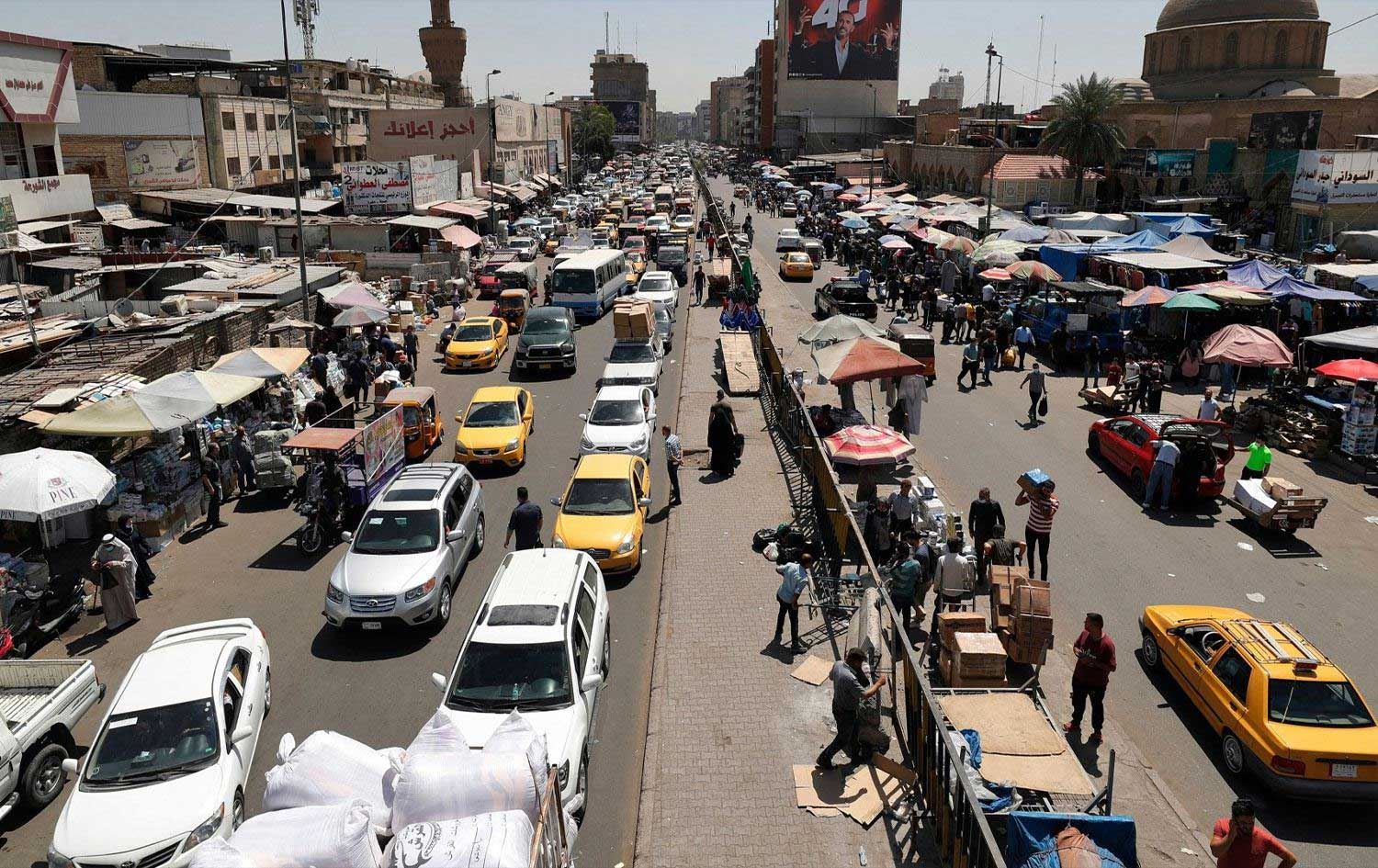
ERBIL, Kurdistan Region - Iraq has turned into a "dumping ground” for damaged and second-hand cars, an Iraqi economic expert warned on Tuesday, as new figures show billions of dollars spent on vehicle imports amid weak regulation and a lack of quality control.
Manar al-Obaidi, head of the Iraq Future Foundation for economic research, told Rudaw that the widespread importation of second-hand and accident-damaged vehicles has had serious consequences. "The import of accident-damaged and used cars has resulted in Iraq becoming a dumping ground for cars from countries around the world," Obaidi said.
He added that the country’s growing reliance on car imports reflects deeper structural problems in economic planning and data management.
Obaidi criticized the scale and nature of these imports, warning that unregulated inflows have overwhelmed Iraqi cities and infrastructure. "In recent years, an immense congestion in the number of vehicles has been created due to unregulated imports and a lack of quality control," he said.
According to figures from the Central Bank of Iraq, the country imported goods worth over 63 billion dollars during the first nine months of this year. The private sector accounted for 57.7 billion dollars of those imports, while the government sector imported 5.3 billion dollars.
Cars alone made up a significant share of that total, with vehicle imports reaching 6.6 billion dollars in just nine months.
While welcoming recent government steps to curb the import of such vehicles, including a 30 percent increase in customs duties and stricter quality control requirements, Obaidi stressed that such measures address symptoms rather than root causes. "If Iraq had public transport and good roads, it would not need such a massive number of vehicles," he noted.
Beyond the automotive sector, Obaidi also warned about Iraq’s broader trade dependencies. On food security, he cautioned against excessive reliance on Turkey, arguing that it carries political and strategic risks. "Turkey has gained control over Iraq’s food security. This has allowed it to have full control over the water file as well, enabling it to impose its conditions," he said.
He described dependence on a single trading partner as a "strategic risk," calling for diversification of food import sources.
Addressing trade with Iran, Obaidi said the lack of transparent data and international sanctions make it difficult to determine the exact volume of exchange, though he indicated it is lower than Iraq’s trade with Turkey.
He also raised concerns about gold imports, pointing to unexplained trends in recent years. "Last year, $22 billion worth of gold was imported," Obaidi said. "We must ask: where did this precious metal go? Was it a substitute for the dollars previously used in wire transfers or for financing other commercial processes?"
Earlier this month, Fayyad Mohammed Abd from the Iraqi planning ministry’s quality control department told Rudaw that Iraq imported nearly 50 tons of gold in 2025, noting that Baghdad lacks data on imports to the Kurdistan Region due to insufficient coordination between the two sides.
The country’s gold reserves have risen to record levels in 2025, with holdings estimated at around 170–171 tons. This places the country 29th globally and fourth in the Arab world, according to the World Gold Council.


Comments
Rudaw moderates all comments submitted on our website. We welcome comments which are relevant to the article and encourage further discussion about the issues that matter to you. We also welcome constructive criticism about Rudaw.
To be approved for publication, however, your comments must meet our community guidelines.
We will not tolerate the following: profanity, threats, personal attacks, vulgarity, abuse (such as sexism, racism, homophobia or xenophobia), or commercial or personal promotion.
Comments that do not meet our guidelines will be rejected. Comments are not edited – they are either approved or rejected.
Post a comment