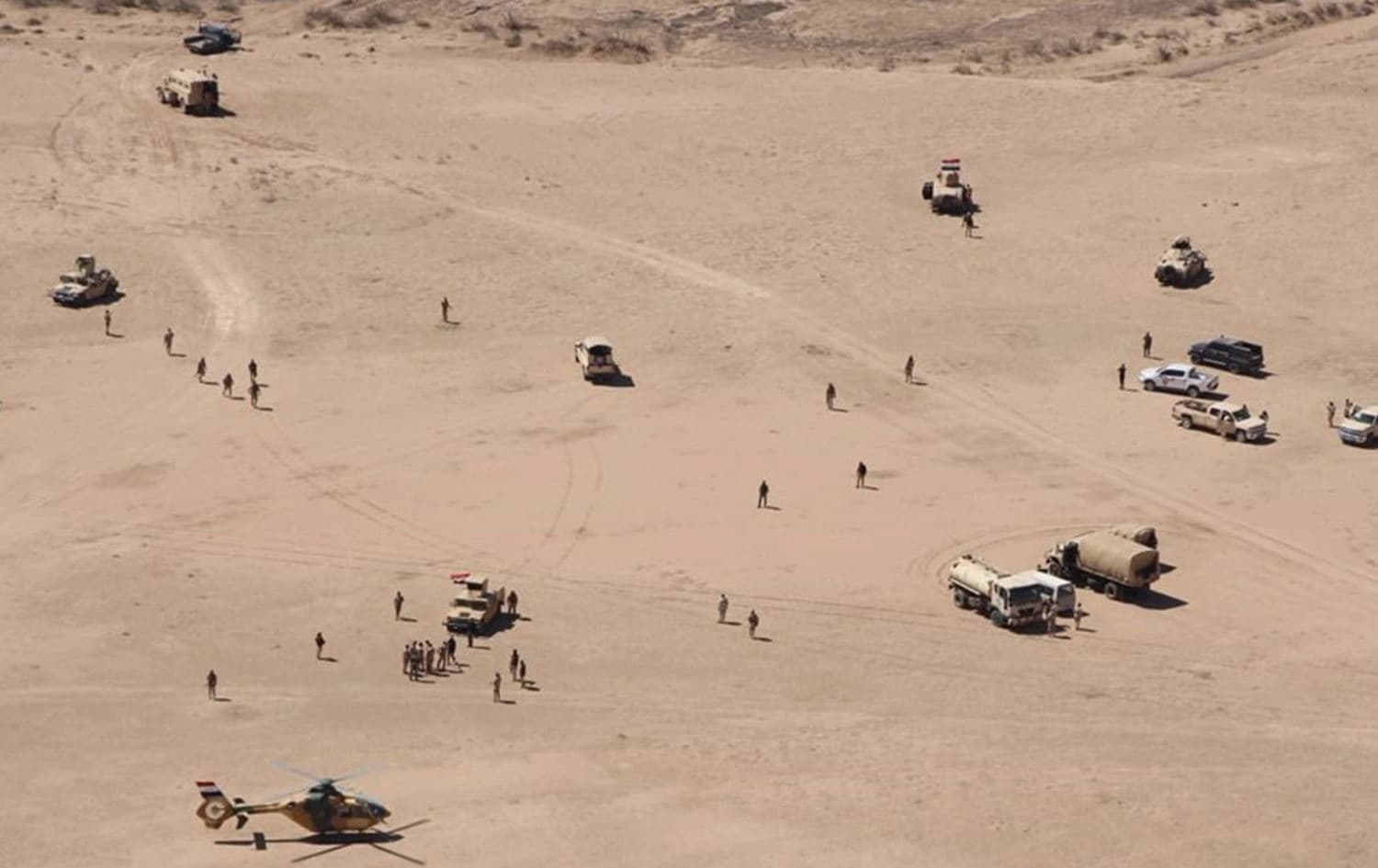

ERBIL, Kurdistan Region - The Iraqi army and Peshmerga forces on Thursday launched a fresh phase in an operation targeting remnants of the Islamic State (ISIS) in the provinces of Diyala and Salahaddin, a month after another similar operation was carried out.
The operation is conducted in the disputed territories between Erbil and Baghdad and is the fifth phase of an expansive operation dubbed Solid Will, this time targeting ISIS in Diyala and Tuz Khurmatu, Iraq's Security Media Cell reported.
"The uninhabited areas, villages, and separating borders will also be searched and cleared in areas of common interest, to pursue the remnants of terrorist elements ... to dry up the sources of terrorism and ensure security and stability," the cell said.
Nabil Mohammed Salih, director of the joint operations center between the Iraqi army and Peshmerga in Khanaqin, confirmed to Rudaw on Thursday that the operation stretching from Tuz Khurmatu in Salahaddin province to Khanaqin in Diyala province had begun.
Both forces last month launched the fourth phase of the operation near Makhmour town, targeting ISIS militants in the Qarachogh mountains, an infamous region synonymous with ISIS activity.
Iraqi army and Peshmerga have formed joint brigades to fight ISIS in the disputed territories, but government formation turmoil has prevented their work from materializing.
Earlier this month, five Iraqi soldiers were killed in Diyala by the terror group.
ISIS controlled vast lands in Iraq in 2014, but the jihadists became fully devoid of territorial control in 2017. While the group lacks any territory, it still continues to pose security risks through abductions, hit-and-run attacks, and bombings, especially in the disputed territories.