

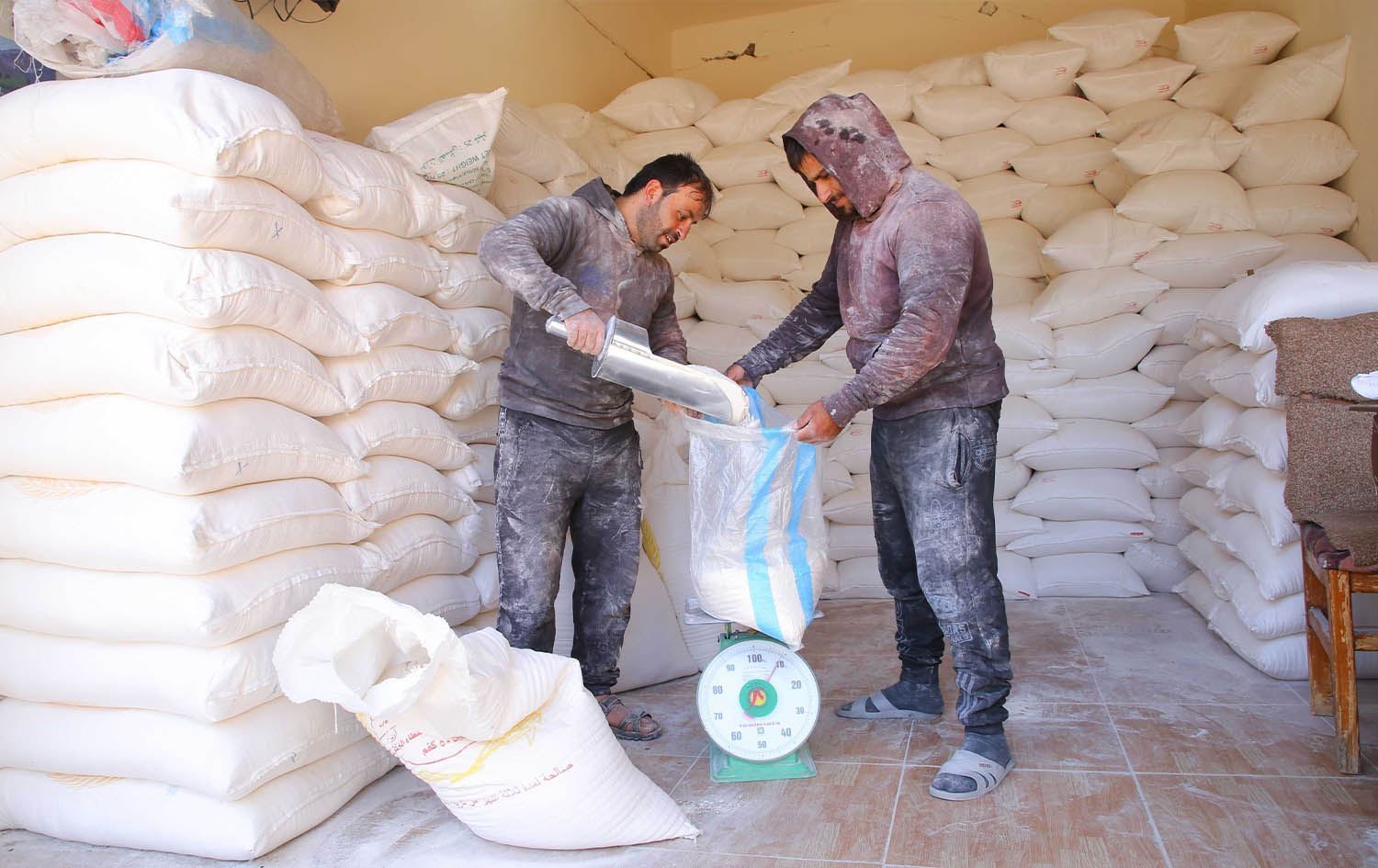
ERBIL, Kurdistan Region - More than 700,000 people in the Kurdistan Region will not receive this month’s food rations because they failed to register with the new electronic distribution system.
The registration for Iraq’s new electronic food distribution system began in early June and ended in early September, after a few extensions. Out of 5,386,052 people eligible across the Kurdistan Region, over 702,000 have failed to make the switch and will not receive their rations for September.
Iraq’s ration distribution started in the early 1990s under the Oil for Food Program run by the United Nations as a response to food shortages due to US-imposed sanctions. The rations include staple items such as flour, rice, sugar, and oil.
Iraq, in cooperation with the World Food Programme, adopted the electronic system to increase efficiency, transparency and accountability.
In the province of Erbil, “eleven percent of citizens have not filled out the form, which is about 250,000 people,” said Siamand Qadir Nanakali, director of Erbil’s Public Distribution System (PDS).
In Sulaimani, 260,000 people will temporarily be ineligible to receive the rations until they complete their registration. “Eighty-seven percent of citizens have filled out the form and 13 percent have not,” said Aras Mohammed, head of Sulaimani PDS.
In Duhok, this number is more than 187,600 and in Halabja it is 12,000 people, according to Hussein Sabri and Mariwan Hadi, the heads of Duhok and Halabja PDS respectively.
Those who have not registered yet will be allowed to complete the process in the coming days, but for a small fee and they must have a bank account as fees will be collected electronically.
The rations missed in the past will be given to families and individuals after their registrations are verified, according to Mohammed at Sulaimani PDS.


Comments
Rudaw moderates all comments submitted on our website. We welcome comments which are relevant to the article and encourage further discussion about the issues that matter to you. We also welcome constructive criticism about Rudaw.
To be approved for publication, however, your comments must meet our community guidelines.
We will not tolerate the following: profanity, threats, personal attacks, vulgarity, abuse (such as sexism, racism, homophobia or xenophobia), or commercial or personal promotion.
Comments that do not meet our guidelines will be rejected. Comments are not edited – they are either approved or rejected.
Post a comment