


Iraq

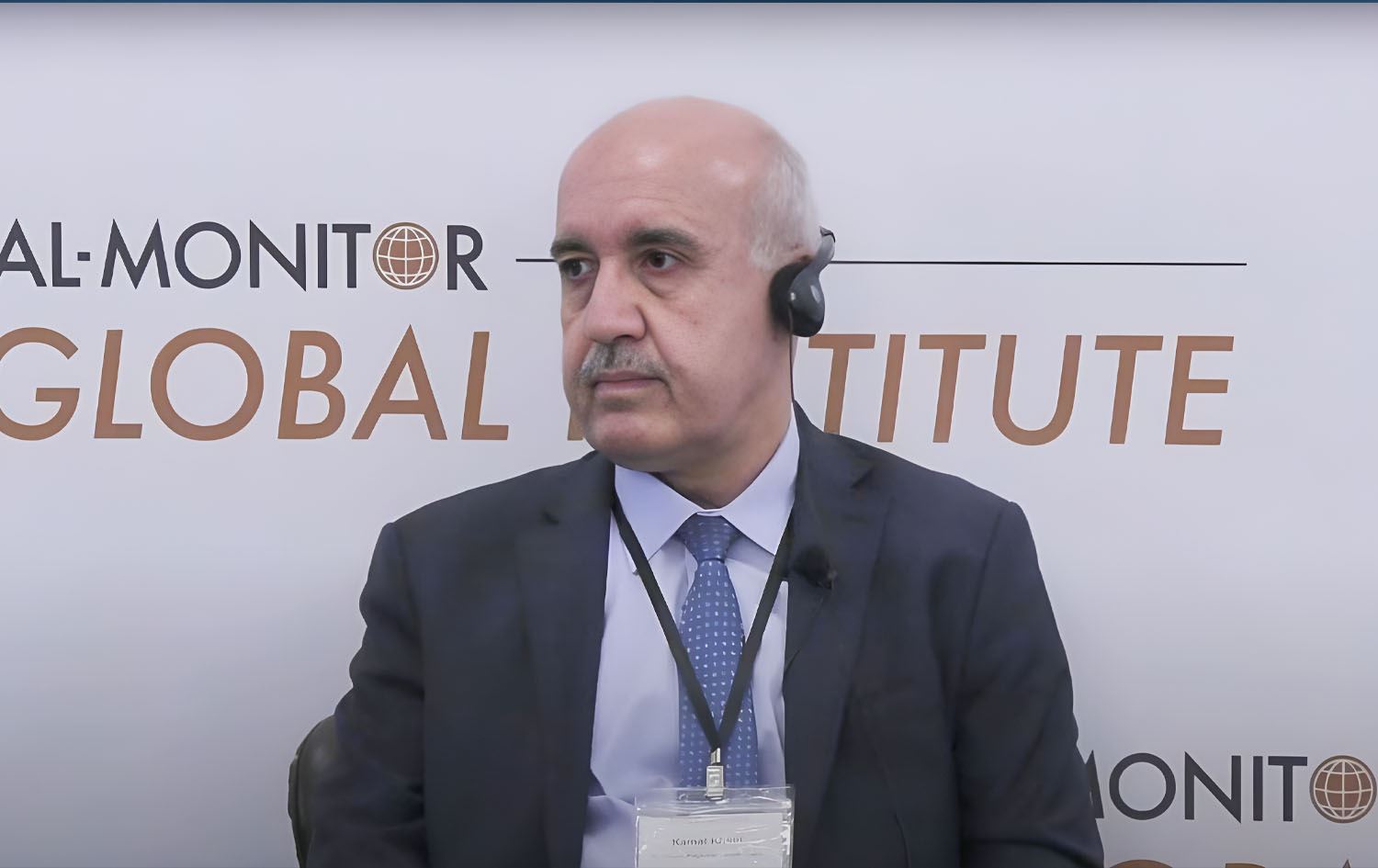
Kamal Mohammed, the KRG’s minister of natural resources, speaking at an event in Washington on May 22, 2025. Photo: screengrab/Rudaw
ERBIL, Kurdistan Region - A US-based firm operating in the Kurdistan Region produces over 60 percent of the Region’s electricity, revealed the Kurdish natural resources minister on Thursday. He also defended the recent major gas contracts with American companies.
“We currently produce 650 million cubic feet to produce electricity for the Kurdistan Region and part of Iraq. However, we need 1,100 million cubic feet. This means that our current production rate meets only 50 percent of electricity demand,” Kamal Mohammed said during a panel hosted by Al-Monitor Global Institute in Washington.
“Until 2007, we produced only 100-150 MW of electricity but now - thanks to the support of the Kurdistan Regional Government which has shown unwavering support for the electricity sector - we produce more than 8,000 MW of electricity. Of this, 5,250 MW is produced by the American GE [General Electric] company. We can say 64 percent of Kurdistan Region’s electricity is produced by American companies.
Two major energy contracts were signed in Washington between the Kurdistan Regional Government and US-based HKN Energy and WesternZagros on Tuesday. They were valued at a combined $110 billion over their lifespans.
The deals grant the American firms the rights to develop two oil and gas fields - the Miran Gas Field and the Topkhana-Kurdamir block - in the Kurdistan Region.
Baghdad’s oil ministry, however, slammed the deals as a “blatant violation of Iraqi law,” saying in a Tuesday statement that any investment in Iraq’s oil resources must go through the federal government.
The KRG’s natural resources ministry promptly issued a statement defending the deals and emphasizing Erbil’s “constitutional rights and authorities as a federal entity under the permanent Constitution of Iraq.”
“These contracts are not against any party,” Mohammed said during the panel discussion, adding that “they are intended to build stronger infrastructure in both the Kurdistan Region and Iraq.”
Representatives of US energy firms echoed similar concerns during the event. Matthew Zais, a vice president at Hillwood Energy and HKN Energy, blamed Iraq’s ongoing gas and electricity shortages on what he described as an “artificial dependency on Iran.”
The contracts come as Iraq continues to struggle with energy shortages and relies heavily on gas imports from Iran and the Kurdistan Region. Iranian gas supplies, critical for powering Iraq’s national grid, are often disrupted during winter due to domestic shortages and infrastructure issues.
In March, the United States revoked a waiver that had allowed Iraq to purchase electricity from Iran as part of Washington’s pressure campaign against Tehran. A US State Department spokesperson told Rudaw at the time that the US hoped Baghdad would tap into the Kurdistan Region’s gas resources instead.


Comments
Rudaw moderates all comments submitted on our website. We welcome comments which are relevant to the article and encourage further discussion about the issues that matter to you. We also welcome constructive criticism about Rudaw.
To be approved for publication, however, your comments must meet our community guidelines.
We will not tolerate the following: profanity, threats, personal attacks, vulgarity, abuse (such as sexism, racism, homophobia or xenophobia), or commercial or personal promotion.
Comments that do not meet our guidelines will be rejected. Comments are not edited – they are either approved or rejected.
Post a comment