Iraq
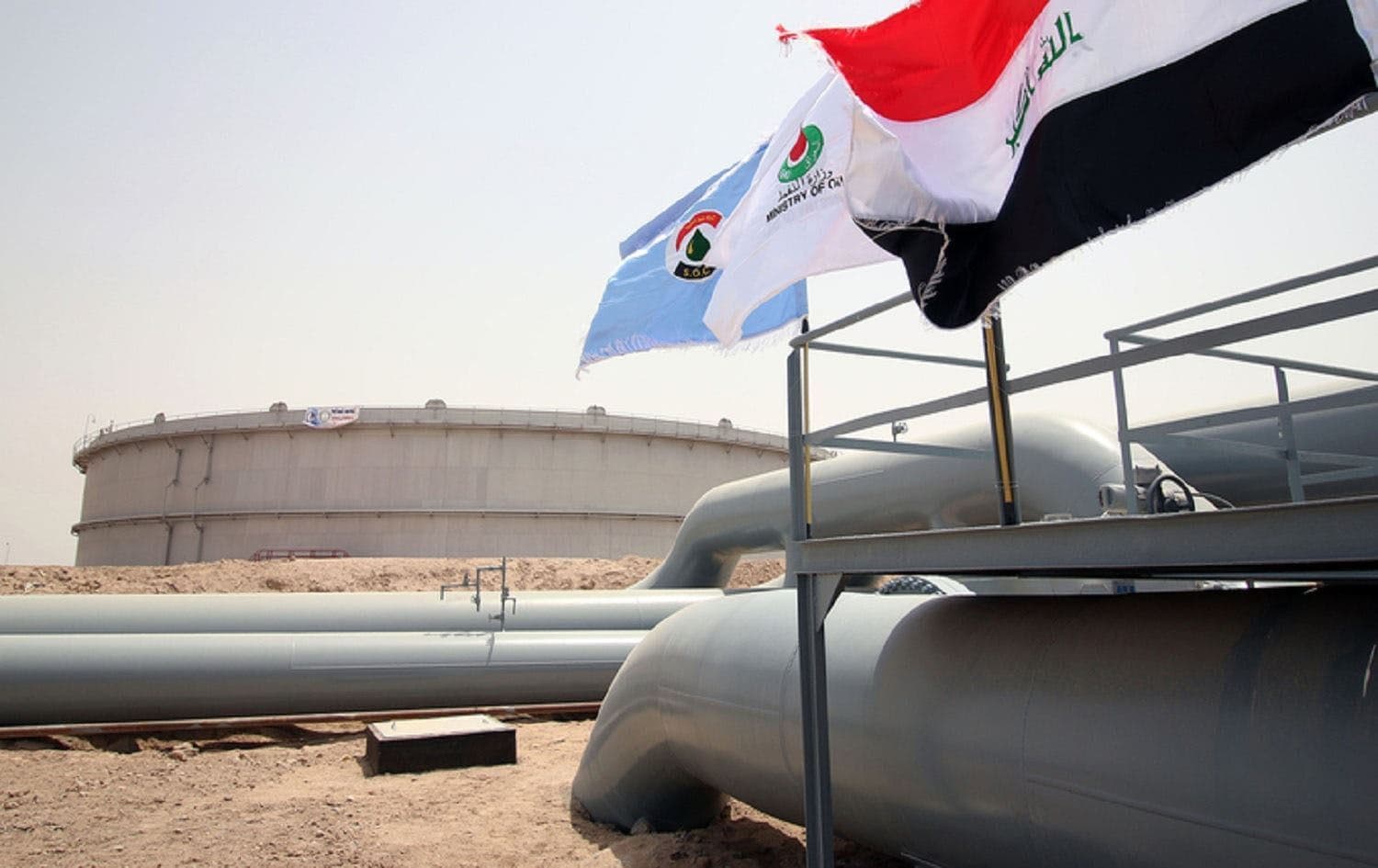
Flags flutter in front of an oil tank at al-Faw storage terminal, Basra province. File photo: AFP
ERBIL, Kurdistan Region - Iraq is implementing sweeping reforms aimed at building a sustainable, diversified economy less dependent on volatile oil revenues, a financial advisor to the prime minister said on Tuesday.
“The government has sought to implement a package of fundamental reforms aimed at increasing non-oil revenues and reducing dependence on volatile oil revenues,” Mazhar Mohammed Salih told state media, citing tax reform, service fee adjustments, and customs modernization as key measures.
He said Iraq’s “internal stability” is “a key pillar” of these efforts, creating an improved investment environment supported by positive international credit ratings.
"These combined indicators give Iraq a real opportunity to build a more stable and prosperous future,” Salih added, noting that dozens of previously stalled major projects have resumed.
The reforms include automating tax collection, combating evasion, revising government service pricing, and digitizing customs and border procedures in cooperation with international bodies such as the United Nations.
“What distinguishes this stability is its superiority over its turbulent regional surroundings,” he said, highlighting Iraq’s relative calm amid regional tensions.
Iraq is undertaking a significant push to overhaul its economy, aiming to reduce its entrenched dependence on volatile oil revenues and foster sustainable growth.
“The government is working to build a sustainable revenue base that is independent of oil market fluctuations, supports economic growth plans, and enhances the country’s financial stability, which is the main goal of prosperity and the essence of economic reform,” Salih explained.
Iraq’s economy is heavily reliant on its oil sector. It is also among the global nations most vulnerable to the effects of climate change, including food and water insecurity. This winter, Iraq has received just a fraction of the rainfall it saw the year before.
Iraq passed its highly-contentious budget bill for the years 2023, 2024, and 2025 in June 2023, which includes a record $152 billion in spending. The massive expenditure sparked concerns of instability should oil prices drop below the $70 per barrel threshold set in the bill.
Prime Minister Mohammed Shia’ al-Sudani said at the time that the record-high budget was aimed at addressing pressing social needs, enhancing infrastructure development, and fostering economic progress.
“The government has sought to implement a package of fundamental reforms aimed at increasing non-oil revenues and reducing dependence on volatile oil revenues,” Mazhar Mohammed Salih told state media, citing tax reform, service fee adjustments, and customs modernization as key measures.
He said Iraq’s “internal stability” is “a key pillar” of these efforts, creating an improved investment environment supported by positive international credit ratings.
"These combined indicators give Iraq a real opportunity to build a more stable and prosperous future,” Salih added, noting that dozens of previously stalled major projects have resumed.
The reforms include automating tax collection, combating evasion, revising government service pricing, and digitizing customs and border procedures in cooperation with international bodies such as the United Nations.
“What distinguishes this stability is its superiority over its turbulent regional surroundings,” he said, highlighting Iraq’s relative calm amid regional tensions.
Iraq is undertaking a significant push to overhaul its economy, aiming to reduce its entrenched dependence on volatile oil revenues and foster sustainable growth.
“The government is working to build a sustainable revenue base that is independent of oil market fluctuations, supports economic growth plans, and enhances the country’s financial stability, which is the main goal of prosperity and the essence of economic reform,” Salih explained.
Iraq’s economy is heavily reliant on its oil sector. It is also among the global nations most vulnerable to the effects of climate change, including food and water insecurity. This winter, Iraq has received just a fraction of the rainfall it saw the year before.
Iraq passed its highly-contentious budget bill for the years 2023, 2024, and 2025 in June 2023, which includes a record $152 billion in spending. The massive expenditure sparked concerns of instability should oil prices drop below the $70 per barrel threshold set in the bill.
Prime Minister Mohammed Shia’ al-Sudani said at the time that the record-high budget was aimed at addressing pressing social needs, enhancing infrastructure development, and fostering economic progress.
Comments
Rudaw moderates all comments submitted on our website. We welcome comments which are relevant to the article and encourage further discussion about the issues that matter to you. We also welcome constructive criticism about Rudaw.
To be approved for publication, however, your comments must meet our community guidelines.
We will not tolerate the following: profanity, threats, personal attacks, vulgarity, abuse (such as sexism, racism, homophobia or xenophobia), or commercial or personal promotion.
Comments that do not meet our guidelines will be rejected. Comments are not edited – they are either approved or rejected.
Post a comment