


Iraq

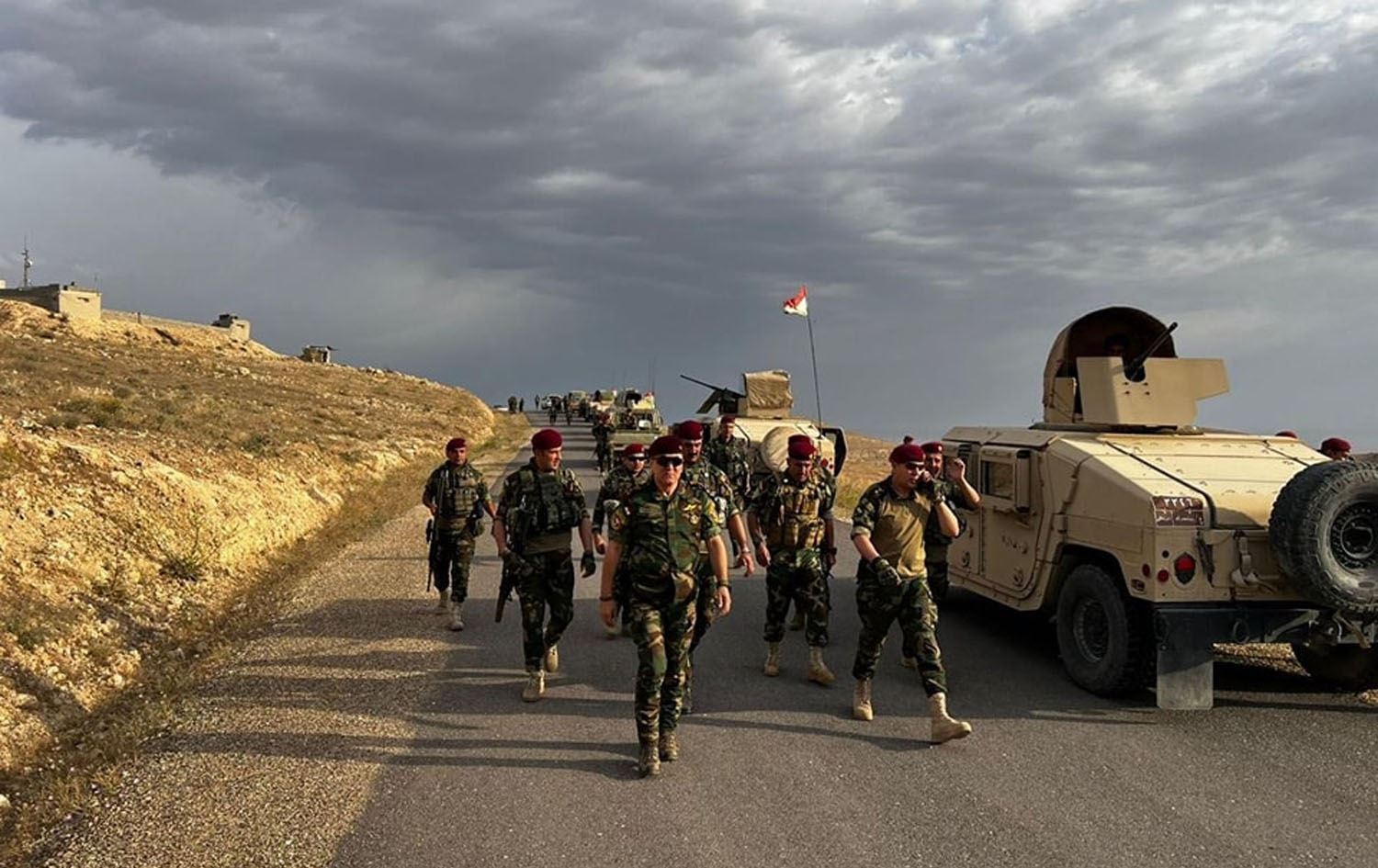
A convoy of Peshmerga forces sweeping through Qarachogh mountain in Makhmour district, Nineveh province, in May 2024. Photo: Minstry of Peshmerga/Facebook
ERBIL, Kurdistan Region - An Iraqi army official said on Wednesday that Islamic State (ISIS) remnants no longer pose a serious threat to the country’s stability, crediting ongoing military cooperation with Kurdish Peshmerga in disputed areas and continued ties with the US-led coalition despite the mission coming to an end.
"Daesh [ISIS] is no longer a big threat to Iraq. All they have is a little bit of movements and a number of sleeper cells in some areas of Kirkuk and deserts of Anbar [province], and we will destroy them," Qais al-Muhammadawi, deputy commander of Iraq's Joint Operations Command, told Rudaw on Wednesday.
ISIS seized vast territories in Iraq in 2014 but was declared territorially defeated by the Iraqi army in 2017. Despite this, the group continues to threaten security in parts of the country through abductions, hit-and-run attacks, and bombings - especially in disputed territories claimed by both the federal government and the Kurdistan Regional Government (KRG).
Muhammadawi added that "Daesh militants no longer have a place to hide, and they are unwelcome by people. We will continue our operations to eradicate them."
The fight against ISIS marked a key moment of cooperation between the Peshmerga and the Iraqi army, which had historically been at odds. In recent years, both sides have formed joint brigades and launched coordinated operations to close security gaps in the disputed territories.
The Iraqi army commander said they have “high-level” coordination with Peshmerga forces and hailed their “top-level” cooperation.
"We have two joint brigades with the Peshmerga. Together, we exert full efforts to minimize threats and fill security voids," he noted.
He delved into further details that they maintain "five joint operations centers that are located in Kirkuk, Nineveh, and Diyala provinces. They are set up to jointly combat security threats."
The US-led Global Coalition to Defeat ISIS, which consists of over 89 countries and international organizations, was formed in 2014 under then US President Barack Obama to degrade and ultimately defeat the group. Its military operations in Iraq began in October 2014 with airstrikes and later expanded to include advising and training Iraqi security forces. As of mid-2025, the US maintains around 2,500 troops in Iraq.
The coalition is scheduled to withdraw from Baghdad and Ain al-Asad airbase in western Iraq by the end of September 2025, with the mission set to fully conclude in September 2026.
"The coming of the coalition forces and the US was to fight against Daesh. There is an active committee currently engaged in talks and working with them to implement measures for the mission's end," the Iraqi army official said.
He noted that "the withdrawal of the American and coalition forces does not mean we will draw our coordination to an end. Our joint efforts to eradicate Daesh, once and for all, will persist."


Comments
Rudaw moderates all comments submitted on our website. We welcome comments which are relevant to the article and encourage further discussion about the issues that matter to you. We also welcome constructive criticism about Rudaw.
To be approved for publication, however, your comments must meet our community guidelines.
We will not tolerate the following: profanity, threats, personal attacks, vulgarity, abuse (such as sexism, racism, homophobia or xenophobia), or commercial or personal promotion.
Comments that do not meet our guidelines will be rejected. Comments are not edited – they are either approved or rejected.
Post a comment