


Iraq

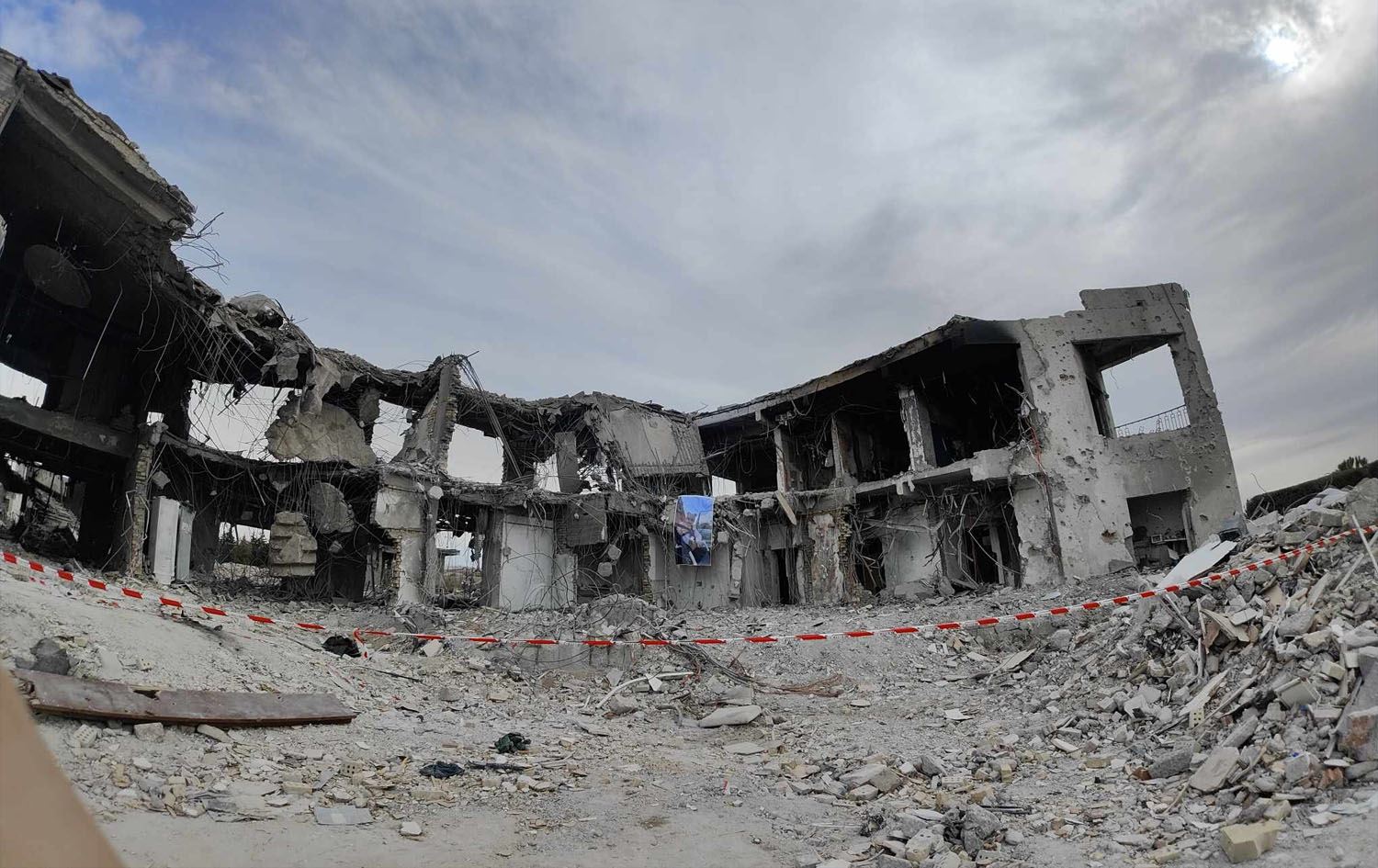
The aftermath of the IRGC ballistic missile attack on a civilian home in Erbil. Photo: Bilind T. Abdullah/Rudaw
ERBIL, Kurdistan Region - Sources in Baghdad and New York confirmed to Rudaw that Iraq did submit a five-point complaint letter against Iran to the UN Security Council (UNSC) and Secretary General Antonio Guterres, despite a UN official claiming no document was received.
Iran’s Islamic Revolutionary Guard Corps (IRGC) on January 15 launched several ballistic missiles toward Erbil, claiming to target a Mossad base. The strikes resulted in the death of Kurdish businessman Peshraw Dizayee and three others. Kurdish and Iraqi authorities have vehemently refuted Tehran’s claims, calling them “baseless.”
A day after the attack, Iraq’s foreign ministry announced it had summoned the Iranian chargé d’affaires in Baghdad to protest the IRGC aggression and officially submitted a complaint against Iran to the UNSC.
Nicolas de Riviere, permanent representative of France to the UN, which currently presides over the UNSC, told Rudaw’s Sinan Tuncdemir in New York on Wednesday that he has “not received any request” from the Iraqi government on the matter.
According to information obtained by Rudaw from sources in Baghdad and New York, the Iraqi Foreign Minister Fuad Hussein has sent the two identical complaint letters through the temporary Chargé d'Affaires of Iraq’s Permanent Representative to the UN in New York, Abbas Kazem Obaid, which were handed to both Guterres and de Riviere a day after the attack.
Baghdad highlighted five points in the letter.
In the letter’s first point, the Iraqi foreign ministry informed the UN that Tehran’s attack on Erbil constituted “an external aggression which damaged public and private properties,” grounded in “baseless claims,” stressing that the attack stands against the “principles of neighborliness.”
Additionally. The Iraqi government noted that Iran launched a similar ballistic missile attack against Erbil in March 2022, also targeting the house of a well-known Kurdish businessman. Following the attack, the IRGC claimed responsibility for targeting “the strategic center of the Zionist conspiracy and evil by point-to-point missile.”
Kurdish authorities vehemently rejected this accusation. A fact-finding committee set up by the Iraqi parliament to investigate the claims found no evidence of espionage activities.
In the letter, Iraq’s foreign ministry noted that Tehran’s claims regarding the alleged presence of anti-Iran groups in Erbil, do not grant Iran the right to carry out similar attacks, stressing that “Iraq is a member of the United Nations and enjoys its own sovereignty.”
The foreign ministry pointed out that Baghdad and Tehran enjoy “strong bilateral relations,” and both sides must “continue the dialogue” regarding the matters Iran considers a threat to its security.
Iraq reserves the right to claim its “legal and moral” rights in relation to the attack it suffered, in accordance with international law, said the foreign ministry in the letter.
Finally, the Iraqi foreign ministry urged the UN and the UN Security Council presidency, to call on Tehran to “stop these aggressions, respect dialogue and Iraqi sovereignty”.
On the sidelines of the World Economic Forum in Davos on January 17, Iranian Foreign Minister Hossein Amir-Abdollahian reiterated claims that the IRGC targeted an Israeli Mossad base in Erbil.
Amir-Abdollahian’s remarks were vehemently denied by Hussein, who referred to the attack as “not acceptable” and an “aggression,” categorically denying the presence of Israeli intelligence in the Kurdistan Region.
The attack drew criticism and condemnation from the international community, including diplomatic envoys in Iraq.
Iraqi Prime Minister Mohammed Shia’ al-Sudani and Kurdistan Region Prime Minister Masrour Barzani canceled their scheduled meetings with Amir-Abdollahian on the sidelines of the forum in reaction to the strike.
Speaking during a presser in Davos on January 16, Barzani condemned the “unjustifiable” attack by the IRGC, stressing that Erbil has always tried to maintain peaceful relations with neighboring countries.
Following the attack, Iranian media launched a disinformation campaign consisting of several doctored photos aimed at legitimizing Tehran’s attack on Erbil.


Comments
Rudaw moderates all comments submitted on our website. We welcome comments which are relevant to the article and encourage further discussion about the issues that matter to you. We also welcome constructive criticism about Rudaw.
To be approved for publication, however, your comments must meet our community guidelines.
We will not tolerate the following: profanity, threats, personal attacks, vulgarity, abuse (such as sexism, racism, homophobia or xenophobia), or commercial or personal promotion.
Comments that do not meet our guidelines will be rejected. Comments are not edited – they are either approved or rejected.
Post a comment