Iraq
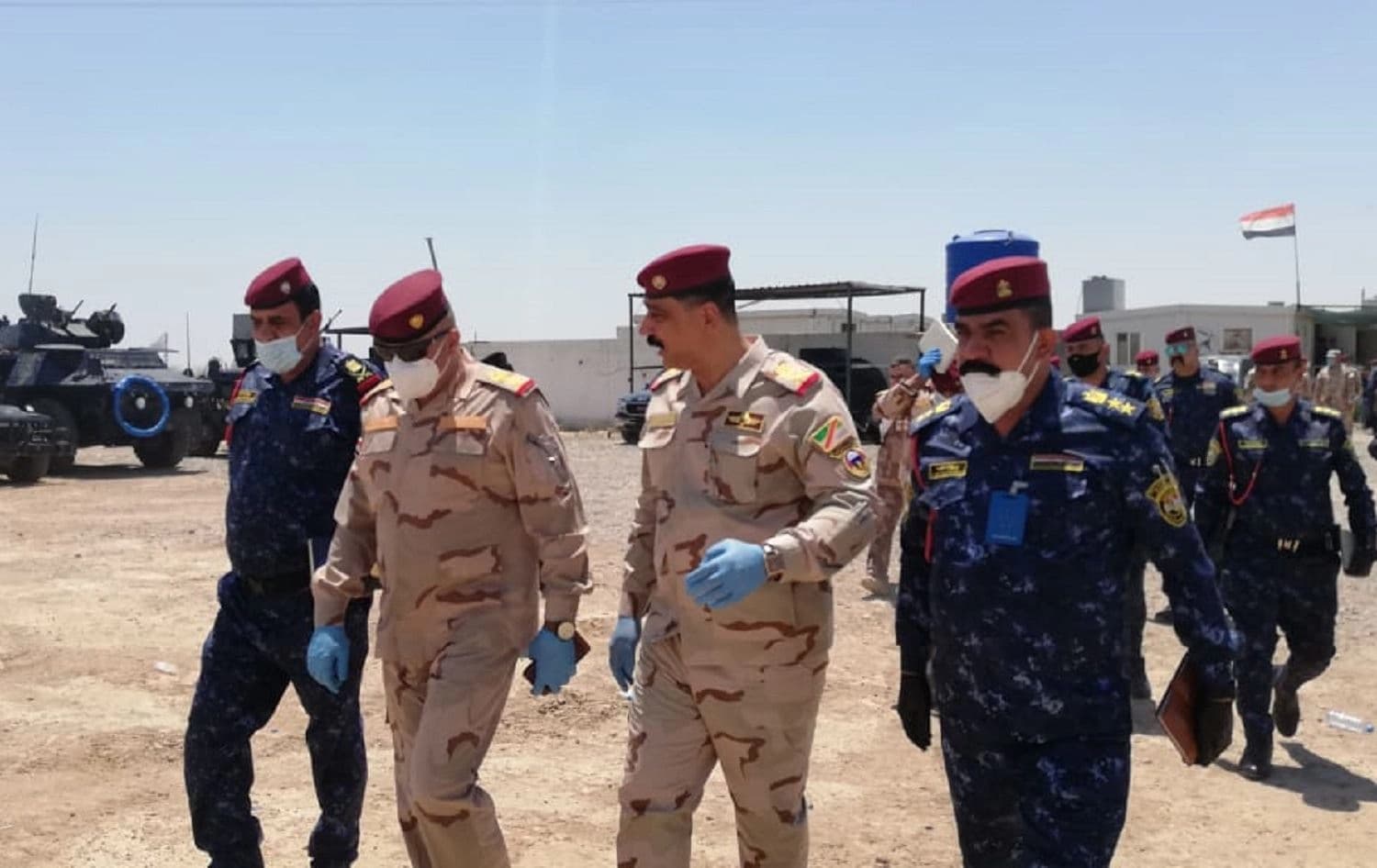
Military officials in Samarra, one of several areas where Operation Heroes of Iraq is taking place, on June 25, 2020. Photo: Iraqi defense ministry
ERBIL, Kurdistan Region — More than 500 civilians have been killed and 1,000 wounded in acts of terrorism across Iraq in 2019, with a lack of security coordination between the governments of Iraq and the Kurdistan Region in part to blame, according to a US State Department annual country report.
Islamic State (ISIS) carried out over 800 attacks in the country, the Iraq edition of the U.S. State Department Country Reports on Terrorism 2019 detailed, predominantly in the deserts and mountains of the disputed territories in the north of the country.
"According to the Federal Intelligence and Investigation Agency within Iraq's Ministry of Interior, acts of terrorism, violence, and armed conflict with ISIS killed more than 534 civilians and injured more than 1,121 in 2019 as of December 1," the report reads.
Since declaring the defeat of ISIS in December 2017, Iraq’s armed forces have carried out multiple air and ground operations against group remnants in the disputed area claimed by Erbil and Baghdad. In its latest string of campaigns, at least 12 ISIS militants were killed on Mount Qarachogh in the disputed territory of Makhmour, Erbil province, in a joint operation by Iraqi Security Forces (ISF) and the US-led coalition in the early hours of Wednesday.
The report attributes the opening up of security vacuums in territory disputed by Erbil and Baghdad to a lack of coordination between the governments of the Kurdistan Region and Iraq.
"In the Disputed Internal Boundaries, ISIS continues to exploit the security vacuum between Iraqi Security Forces and Peshmerga Forces. Recent attacks in the northern Diyala [sic] and activities along Qarachogh Mountain indicate ISIS presence," reads the US report.
"Counterterrorism efforts in the Disputed Internal Boundaries areas have been hampered by the lack of coordination between the Peshmerga and ISF, mainly due to the relationship between the KRG [Kurdistan Regional Government] and the Government of Iraq," it added.
The killing of several Kakai villagers in a suspected ISIS attack in Khanaqin last week prompted Kurdish leaders and Iraqi President Barham Salih to renew calls for joint security coordination in the disputed territories.
Talks have recently taken place between US and KRG officials over the deteriorating security situation in the disputed territories.
KRG Prime Minister Masrour Barzani received Ernest Tucker, Chief Defense Officer and the Military Attache to the American Embassy in Iraq on Tuesday, with both sides discussing ways to fill the security vacuum in the disputed territories by increasing the military coordination between Iraqi forces and the Kurdish Peshmerga.
"Barzani stressed the need for a joint security mechanism between the Iraqi army and the Peshmerga forces, which will pave the way for the return of stability to those areas [disputed territories]," read an official post-meeting statement from the KRG.
In addition to the ongoing fight against ISIS, Iraq is also gripped by frequent rocket attacks, mainly blamed at the Iran backed Shiite paramilitary groups. Rocket fire targets Baghdad's Green Zone – which houses the largest American embassy in the world – or military bases where American personnel are stationed.
The State Department report details that Iran-backed groups were "responsible for more than a dozen rocket or indirect fire attacks targeting US or Coalition targets in Iraq in 2019.”
Among them was a December 27 attack on the K-1 military base in Kirkuk, which killed an American contractor. The attack resulted in a spiraling of US-Iran hostility, culminating in the killing of General Qasem Soleimani, the architect of Iran's Middle East military strategy, in Baghdad early in January.
The report issues particular criticism to the Iraqi security forces for their "limited capability" to "fully secure Iraq's border with Iran and Syria", while praising the KRG for its "robust" control of their borders.
"Iran-backed PMF units continued to maintain a presence at Iraq's major border crossings," the report reads, "While border security along the periphery of the Iraqi Kurdistan Region (IKR) is robust and administered by various security units under the Kurdish Minister of Interior.”
Islamic State (ISIS) carried out over 800 attacks in the country, the Iraq edition of the U.S. State Department Country Reports on Terrorism 2019 detailed, predominantly in the deserts and mountains of the disputed territories in the north of the country.
"According to the Federal Intelligence and Investigation Agency within Iraq's Ministry of Interior, acts of terrorism, violence, and armed conflict with ISIS killed more than 534 civilians and injured more than 1,121 in 2019 as of December 1," the report reads.
Since declaring the defeat of ISIS in December 2017, Iraq’s armed forces have carried out multiple air and ground operations against group remnants in the disputed area claimed by Erbil and Baghdad. In its latest string of campaigns, at least 12 ISIS militants were killed on Mount Qarachogh in the disputed territory of Makhmour, Erbil province, in a joint operation by Iraqi Security Forces (ISF) and the US-led coalition in the early hours of Wednesday.
The report attributes the opening up of security vacuums in territory disputed by Erbil and Baghdad to a lack of coordination between the governments of the Kurdistan Region and Iraq.
"In the Disputed Internal Boundaries, ISIS continues to exploit the security vacuum between Iraqi Security Forces and Peshmerga Forces. Recent attacks in the northern Diyala [sic] and activities along Qarachogh Mountain indicate ISIS presence," reads the US report.
"Counterterrorism efforts in the Disputed Internal Boundaries areas have been hampered by the lack of coordination between the Peshmerga and ISF, mainly due to the relationship between the KRG [Kurdistan Regional Government] and the Government of Iraq," it added.
The killing of several Kakai villagers in a suspected ISIS attack in Khanaqin last week prompted Kurdish leaders and Iraqi President Barham Salih to renew calls for joint security coordination in the disputed territories.
Talks have recently taken place between US and KRG officials over the deteriorating security situation in the disputed territories.
KRG Prime Minister Masrour Barzani received Ernest Tucker, Chief Defense Officer and the Military Attache to the American Embassy in Iraq on Tuesday, with both sides discussing ways to fill the security vacuum in the disputed territories by increasing the military coordination between Iraqi forces and the Kurdish Peshmerga.
"Barzani stressed the need for a joint security mechanism between the Iraqi army and the Peshmerga forces, which will pave the way for the return of stability to those areas [disputed territories]," read an official post-meeting statement from the KRG.
In addition to the ongoing fight against ISIS, Iraq is also gripped by frequent rocket attacks, mainly blamed at the Iran backed Shiite paramilitary groups. Rocket fire targets Baghdad's Green Zone – which houses the largest American embassy in the world – or military bases where American personnel are stationed.
The State Department report details that Iran-backed groups were "responsible for more than a dozen rocket or indirect fire attacks targeting US or Coalition targets in Iraq in 2019.”
Among them was a December 27 attack on the K-1 military base in Kirkuk, which killed an American contractor. The attack resulted in a spiraling of US-Iran hostility, culminating in the killing of General Qasem Soleimani, the architect of Iran's Middle East military strategy, in Baghdad early in January.
The report issues particular criticism to the Iraqi security forces for their "limited capability" to "fully secure Iraq's border with Iran and Syria", while praising the KRG for its "robust" control of their borders.
"Iran-backed PMF units continued to maintain a presence at Iraq's major border crossings," the report reads, "While border security along the periphery of the Iraqi Kurdistan Region (IKR) is robust and administered by various security units under the Kurdish Minister of Interior.”

Comments
Rudaw moderates all comments submitted on our website. We welcome comments which are relevant to the article and encourage further discussion about the issues that matter to you. We also welcome constructive criticism about Rudaw.
To be approved for publication, however, your comments must meet our community guidelines.
We will not tolerate the following: profanity, threats, personal attacks, vulgarity, abuse (such as sexism, racism, homophobia or xenophobia), or commercial or personal promotion.
Comments that do not meet our guidelines will be rejected. Comments are not edited – they are either approved or rejected.
Post a comment