
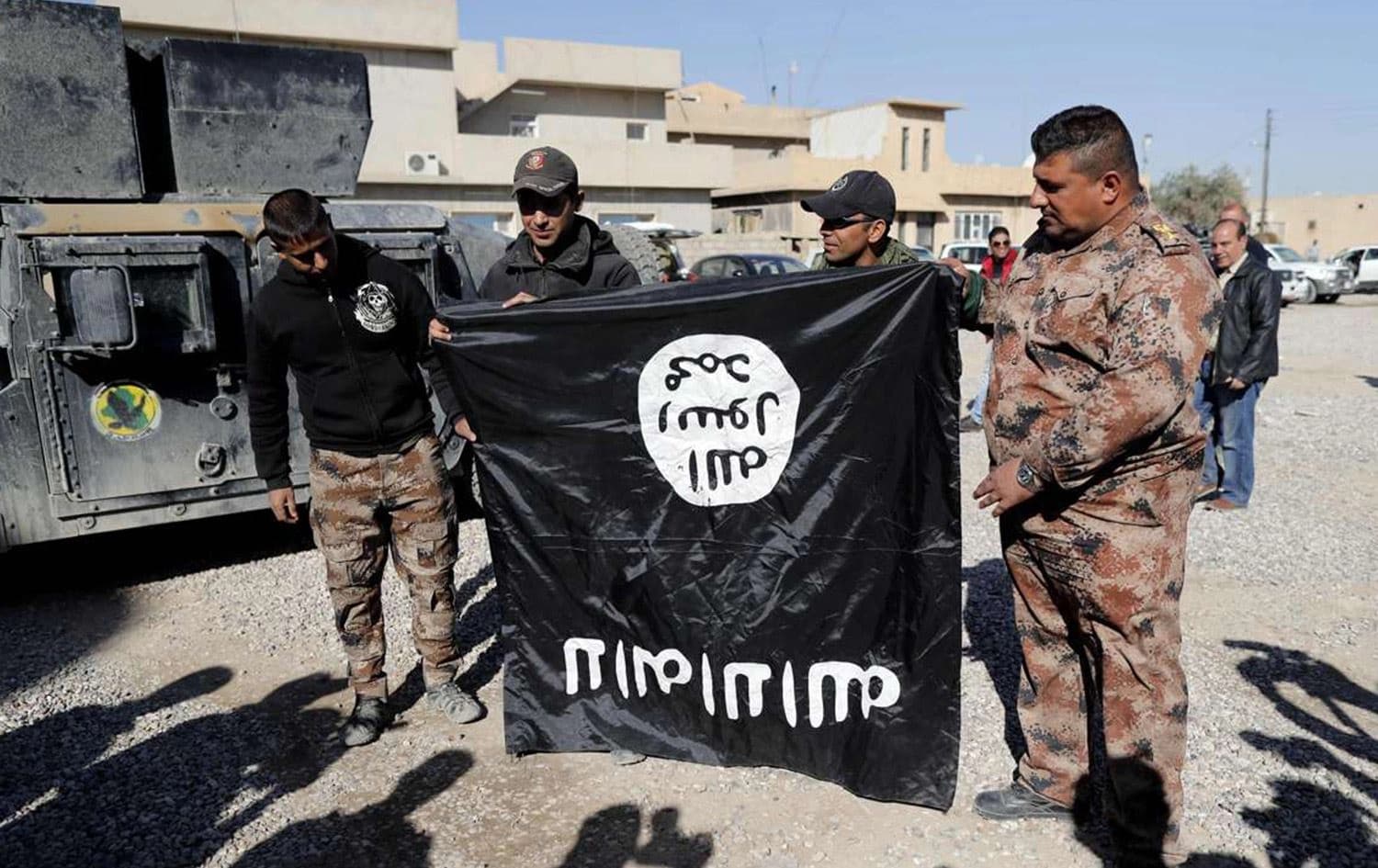

ERBIL, Kurdistan Region - Three Islamic State (ISIS) militants and one Iraqi soldier were killed in clashes near Kirkuk on Sunday, Iraq’s Security Media Cell announced.
“[The Iraqi army] clashed with these members [of ISIS] and was able to surround and kill them and detonate the explosive belts they were wearing,” read the statement from the Security Media Cell.
An Iraqi soldier was killed and an officer was injured due to the detonation of the explosive belts, according to the statement.
It added that the operation was in accordance with orders from the leadership of the joint operations, after receiving intelligence reports regarding the existence of the militants in the area near Kirkuk.
Kirkuk lies in territory disputed between the federal government in Baghdad and the Kurdistan Regional Government (KRG) in Erbil.
Baghdad and Erbil are still engaged in talks aimed at forming two joint brigades in the disputed areas. Earlier this year, the Iraqi defense ministry allocated a special budget for the joint brigades between Iraqi security forces and the Peshmerga to fight ISIS in the 2023 budget bill.
On June 11, two commanders of the Iraqi army were killed and five others were injured during an ISIS attack near Kirkuk. ISIS later claimed responsibility for the attack.
ISIS seized control of swathes of Iraqi land in 2014. The group was declared territorially defeated in 2017 but it continues to carry out bombings, hit-and-run attacks, and abductions across several provinces.
The militants have particularly taken shelter in the security vacuum in parts of northern Iraq that are disputed between Baghdad and Erbil, stretching across several provinces including Diyala, Salahaddin, and Kirkuk.
In April the global coalition to fight ISIS said there had been a drop in ISIS attacks on both sides of the border between Syria and Iraq.
.png&w=3840&q=75)