


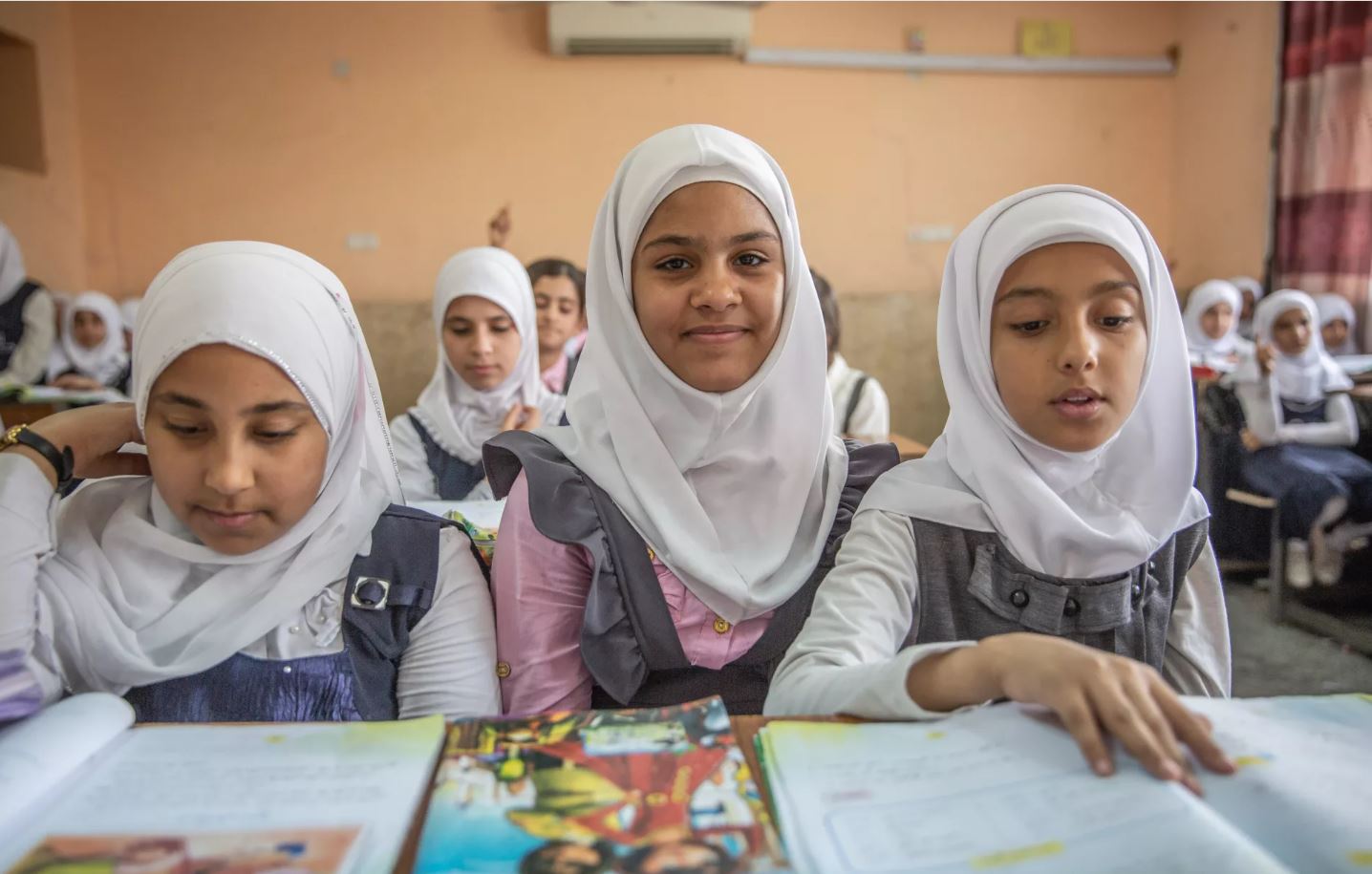
ERBIL, Kurdistan Region - The Iraqi government is offering financial incentives to encourage students who left school to return to their studies as part of an initiative to tackle poverty.
The Ministry of Labor and Social Affairs, in collaboration with the Ministry of Education, is giving a monthly stipend of 30,000 dinars ($22.8) to each elementary student and 50,000 dinars ($38.1) to each high school student, Hassan Khawam, spokesperson for the labour ministry told Rudaw on Friday.
In addition, “780,000 students are being assisted through the school meals program,” he said. The goal of the program is to alleviate the financial burden on low income families that are on social welfare.
The initiative has seen some success.
“The total number of students who have returned to school has reached 134,000,” Khawam said.
According to Iraq’s 2024 census, close to eight million people live under the poverty-income threshold.
The government has a five-year plan aimed at combating “multidimensional poverty,” Abdul-Zahra al-Hindawi, spokesperson for the planning ministry, said in March. Beyond financial hardship, the strategy will address access to education, food, health, housing, and income.
While poverty rates in Iraq have decreased from 20.5 percent in 2018 to 17.5 percent in 2024, Hindawi noted that the trends vary across different regions of the country.
In the Kurdistan Region, poverty has increased in Sulaimani, rising from four to eight percent, while Erbil saw a modest uptick from 6.7 percent to 7.1 percent over the same period. Hindawi attributed this rise to economic conditions, including project shortages and the devaluation of the Iraqi dinar against the US dollar.
In Iraq, Muthanna province remains the poorest, despite a decline in its poverty rate from 52 percent to 40 percent. Babil follows with a 37 percent poverty rate. Poverty levels have significantly decreased in provinces such as Dhi Qar, Diwaniyah and Maysan. In Nineveh, poverty rates have dropped from over 50 percent to around 15 percent.
Nahro Mohammed contributed to this article.


Comments
Rudaw moderates all comments submitted on our website. We welcome comments which are relevant to the article and encourage further discussion about the issues that matter to you. We also welcome constructive criticism about Rudaw.
To be approved for publication, however, your comments must meet our community guidelines.
We will not tolerate the following: profanity, threats, personal attacks, vulgarity, abuse (such as sexism, racism, homophobia or xenophobia), or commercial or personal promotion.
Comments that do not meet our guidelines will be rejected. Comments are not edited – they are either approved or rejected.
Post a comment